163 additional edge AI cameras added — 60 new installations and 103 replacements of aging units — bringing the total to 196; cameras analyze footage on-site without routing it through a control center server, speeding up crisis response and eliminating blind spots
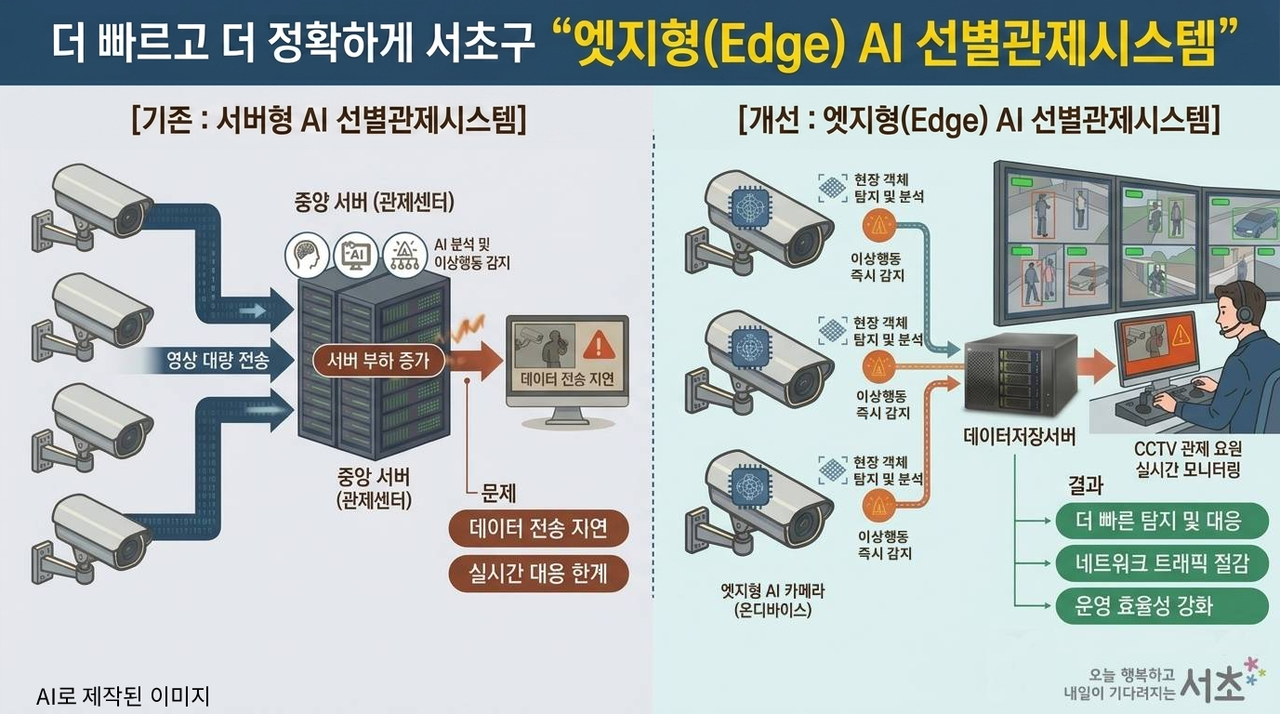
Seoul's Seocho-gu is expanding its edge AI intelligent CCTV selective-monitoring system — in which AI cameras detect and analyze dangerous situations directly on-site — to strengthen the district's smart safety surveillance network.
The intelligent CCTV selective-monitoring system uses AI technology to automatically detect objects such as people and vehicles in CCTV footage and identify abnormal behavior including loitering, falls, trespassing and assault, alerting control center operators immediately when a dangerous situation arises.
The district introduced the system in 2023 to enable faster responses to accidents and crimes, but the original server-based approach — which transmitted all footage to a control center server for analysis — faced limitations as data volumes grew and server loads increased.
In response, the district proactively adopted an edge AI system in April, in which the cameras themselves analyze footage in real time on-site. Under this approach, the edge AI cameras detect dangerous situations directly at the scene and transmit only selected data to the control center.
Compared with the previous method of sending all footage to a server for analysis, the edge AI approach reduces data transmission volumes and server load while enabling faster detection of dangerous situations and quicker initial response. The district also expects the system to lower network usage and operating costs.
After installing 33 edge AI cameras at 15 vulnerable locations in the first half of this year, the district added 163 more units in September through new security camera installations and replacements of aging cameras, bringing the total edge AI CCTV network to 196 units.
The additional units comprise 60 newly installed security cameras and 103 replacements of aging cameras.
In addition to expanding the system, the district plans to use real-world field monitoring data to improve operational stability and detection accuracy. It will continuously compare and analyze cases of accurate threat detection against false positives, assess detection performance across different on-site environments, and upgrade the system to enable more precise and efficient selective monitoring.
Going forward, the district will take into account the characteristics of each installation site and the primary detection objectives when installing new cameras or replacing aging ones, gradually extending the use of edge AI cameras. Building on the 196 units deployed this year, the district plans to add 215 more in 2027 and continue expanding coverage thereafter to build a denser intelligent safety surveillance network.
Seocho-gu District Mayor Jeon Seong-su said the expansion of the edge AI system — in which cameras detect dangerous situations directly on-site — is expected to reduce surveillance blind spots and enable faster responses to emergencies. "We will continue to analyze AI detection accuracy and system performance based on field monitoring data, further develop our smart safety surveillance framework, and build a safe city where residents can go about their daily lives with peace of mind," he said.
seouldream01@heraldcorp.com