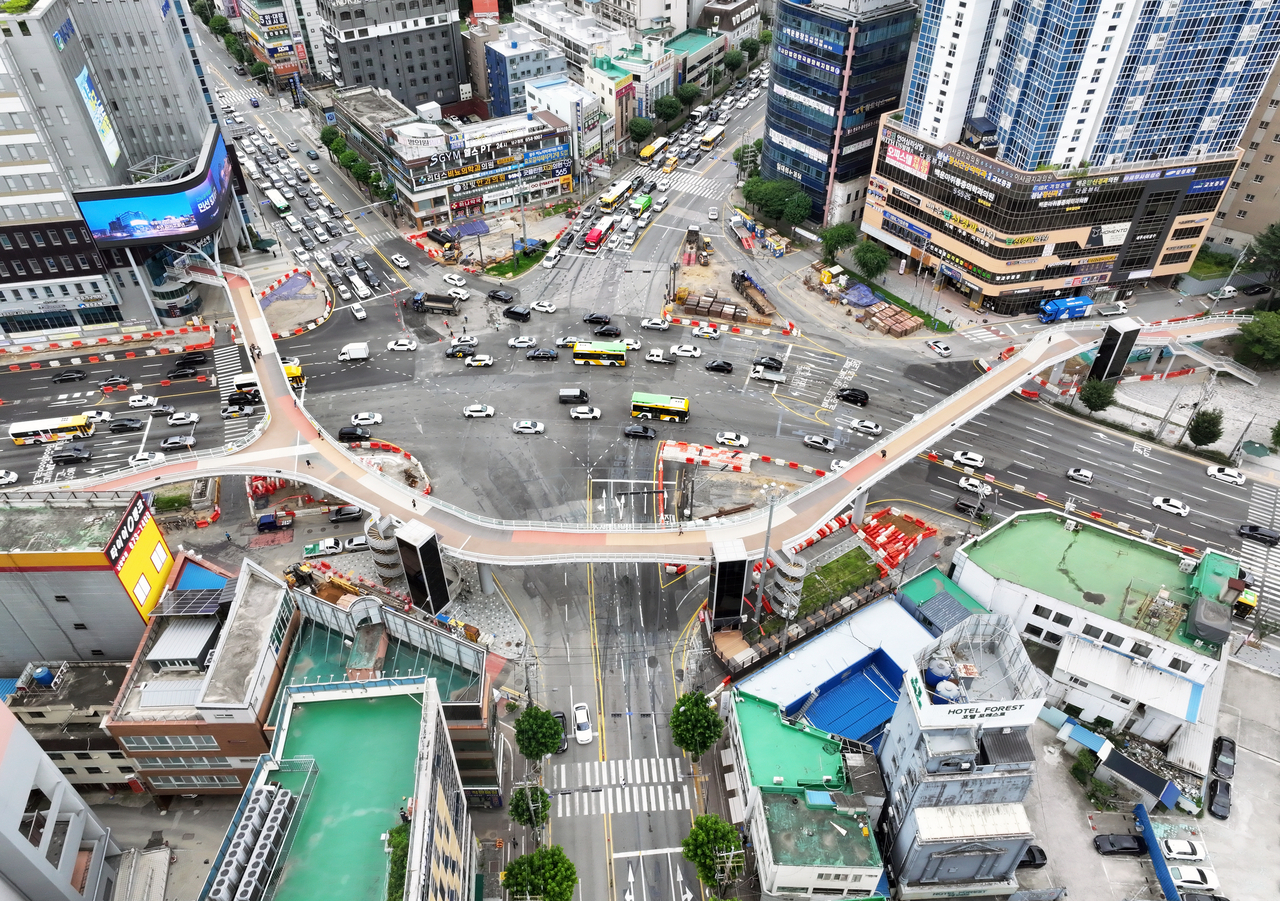
The opening of Phase 1 of Gwangju Metro Line 2 has been pushed back again, with completion now not expected until late 2028 — well past the original target date.
The full-line opening through Phase 2 has also been pushed from 2030 to 2035, meaning prolonged disruption for Gwangju residents and local businesses.
According to a comprehensive progress review released Friday by the South Jeolla Province-Gwangju integrated special city government, the Phase 1 opening has been moved from December 2027 to December 2028.
When Phase 1 broke ground in 2019, the city had targeted an opening by late 2023.
Early construction delays and difficult terrain pushed that back to late 2024. Subsequent scheduling adjustments — accounting for follow-on work and test-run timelines — have now pushed the opening back a total of four times: to late 2026, late 2027, and now late 2028.
The city attributed the delays to unexpected on-site variables during civil engineering work, including bedrock and underground obstacles, as well as inadequate integrated management of the full construction sequence — spanning architectural, mechanical, electrical, communications, signaling, rolling stock and trial-run phases.
The Phase 2 schedule has slipped even further.
The full 20-kilometer route runs through Gwangju Station, Chonnam National University, Ilgok, Yangsan, Cheomdan and Suwan district before looping back to City Hall. That opening has been pushed to December 2035.
Phase 2 had targeted a 2029 opening when project costs were recalculated in 2022, but repeated failed bids on sections 7 and 10, along with difficult construction conditions in some areas, had already pushed that back once to December 2030.
Given the extended delays across the full line, the city said it would also consider opening sections 11 through 14 — an 11.9-kilometer stretch covering Yangsan-dong, Cheomdan, Suwan and Singa, with nine stations — ahead of schedule in April 2034.
However, any such early opening would require changes to the operating plan and an increase in the total project budget, and the city said it would decide whether to proceed after consulting with central government ministries.
Project delays and changes to design and construction methods have also driven up total costs significantly.
The original budget of 1.74 trillion won ($764 million) has grown by 1.5 trillion won to 3.24 trillion won.
Price increases account for 1 trillion won of the added cost, or 66.6 percent, followed by construction method changes at 354.7 billion won (23.6 percent) and adjustments reflecting detailed design outcomes and on-site conditions at 146.8 billion won (9.8 percent).
With construction set to continue for years, further cost increases are expected as inflation accumulates before the full-line opening in 2035.
The city said it would overhaul integrated management of the entire construction schedule based on actual opening targets and redraw its annual investment plan.
It also plans to release monthly updates on construction progress and opening preparations, and to reopen roads along the Phase 2 priority opening corridor by the first half of 2030.
sij@heraldcorp.com