Without AI skills, young jobseekers fall behind — Seoul looks for answers on the 'AI divide'
A 30,000-won monthly subscription fee is a barrier for many young people, widening the gap in opportunity
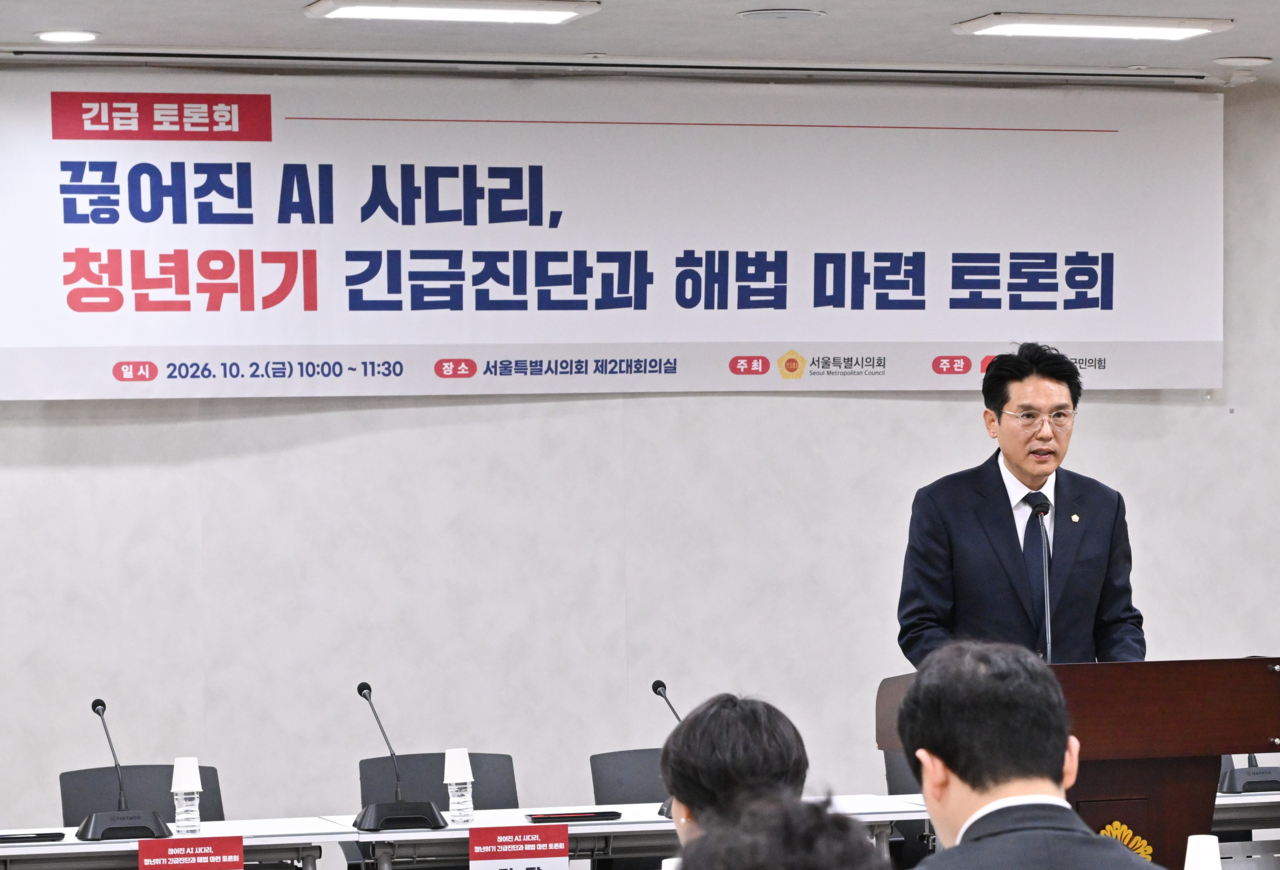
As AI proficiency emerges as a decisive factor in employment and workplace competitiveness, the "AI access gap" among young people is drawing attention as a pressing social challenge. Growing consensus holds that public support must go beyond basic education to cover access to high-performance AI services and real-world work experience.
The People Power Party caucus of the Seoul Metropolitan Council held a forum Friday at the council building to discuss policy directions for supporting youth AI use. Titled "Responding to the Youth Crisis in the AI Era — Emergency Diagnosis and Solutions for the Broken AI Ladder," the event brought together experts, researchers and young people to debate how Seoul should act.
'Learning alone is not enough' — access and hands-on experience are key
Participants at the forum said expanding AI education was not enough — what mattered was creating an environment where young people could actually use high-performance AI tools.
Lee Dong-hyun, a university student who presented youth policy proposals at the event, said a monthly subscription fee of around 30,000 won ($22) was "a significant barrier for college students" and called on the public sector to broaden young people's access to advanced AI services.
Bong Gang-ho, a senior researcher at the Software Policy Research Institute, and Park Jeong-ho, a Yonsei University professor, said the job-entry environment for young people was changing rapidly with the spread of AI and pointed to the limits of conventional course-based education. They argued that policy should ensure AI services are accessible regardless of economic circumstances and connect young people with opportunities to solve real problems at companies and startups.
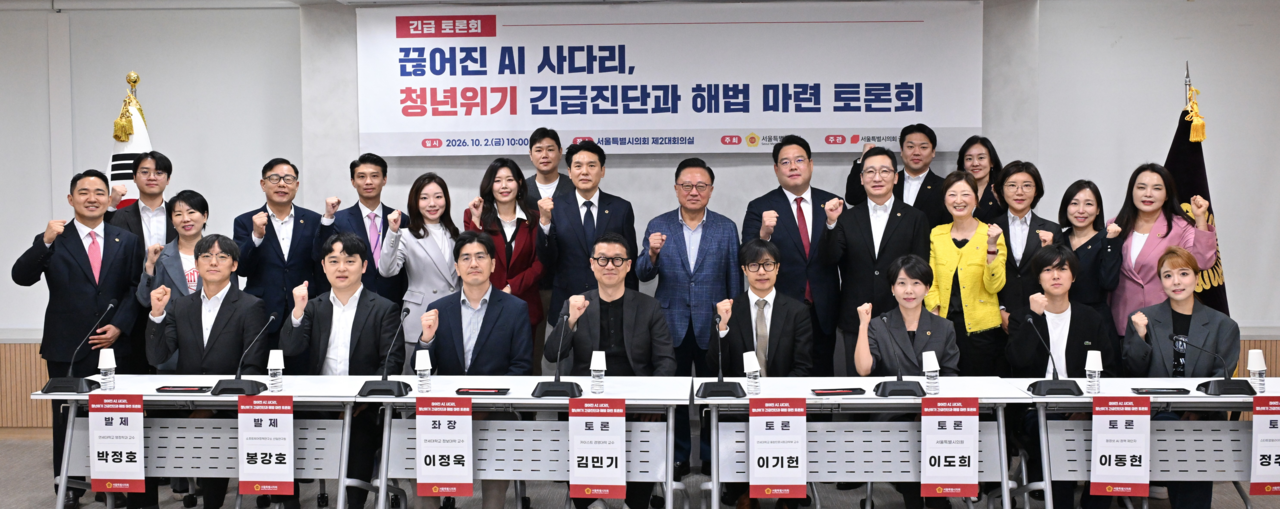
Kim Min-gi, a KAIST professor, and Jeong Ju-yeon, a senior specialist at Startup Alliance, proposed a platform model that would use Seoul as a hands-on space for AI transformation, linking startup challenges with young people's AI capabilities. Lee Ki-heon, a Yonsei University professor, said education covering the division of roles between humans and AI — along with ethical judgment — was essential, calling for a "Human-AI Thinking" curriculum.
Scrapped 5.62 billion won youth AI budget at center of main budget debate
The forum was held after Seoul's youth AI support project budget was cut entirely. According to the People Power Party caucus of the Seoul Metropolitan Council, the pilot project budget allocated to strengthen youth AI capabilities stood at 5.62 billion won ($4.14 million).
Kim Gil-young, floor leader of the People Power Party caucus at the Seoul Metropolitan Council, said "there is no ruling or opposition party when it comes to youth policy" and pledged to revive the related project during the year-end main budget review, drawing on input from experts and young people directly affected.
Lee Do-hee, vice chairwoman of the Seoul Metropolitan Council's Urban Planning and Balanced Development Committee and a People Power Party member, said that given the pace of technological change, "the cost of policy delays ultimately falls on young people." She said she would work to address shortcomings raised during the supplementary budget review and push to have the project included in the 2027 main budget.
The event was attended by National Assembly member Ko Dong-jin, Seoul Metropolitan Council Vice Speaker Lee Seong-bae, Urban Planning and Balanced Development Committee Chairman Ko Gwang-min and Culture, Sports and Tourism Committee Chairman Hwang Cheol-gyu.
Whether youth AI support policy can move beyond simply providing access and translate into meaningful gains in employment and practical skills is expected to be a central issue in the upcoming main budget review.
7toy7@heraldcorp.com