
The district earned its fourth consecutive top rating in the Ministry of Interior and Safety's 2026 disaster management evaluation, receiving a ministerial commendation and 300 million won in special local allocation tax — the only Seoul district to secure the grant — in recognition of its crowd management in Seongsu-dong, round-the-clock disaster response, and protection of heat-vulnerable residents.
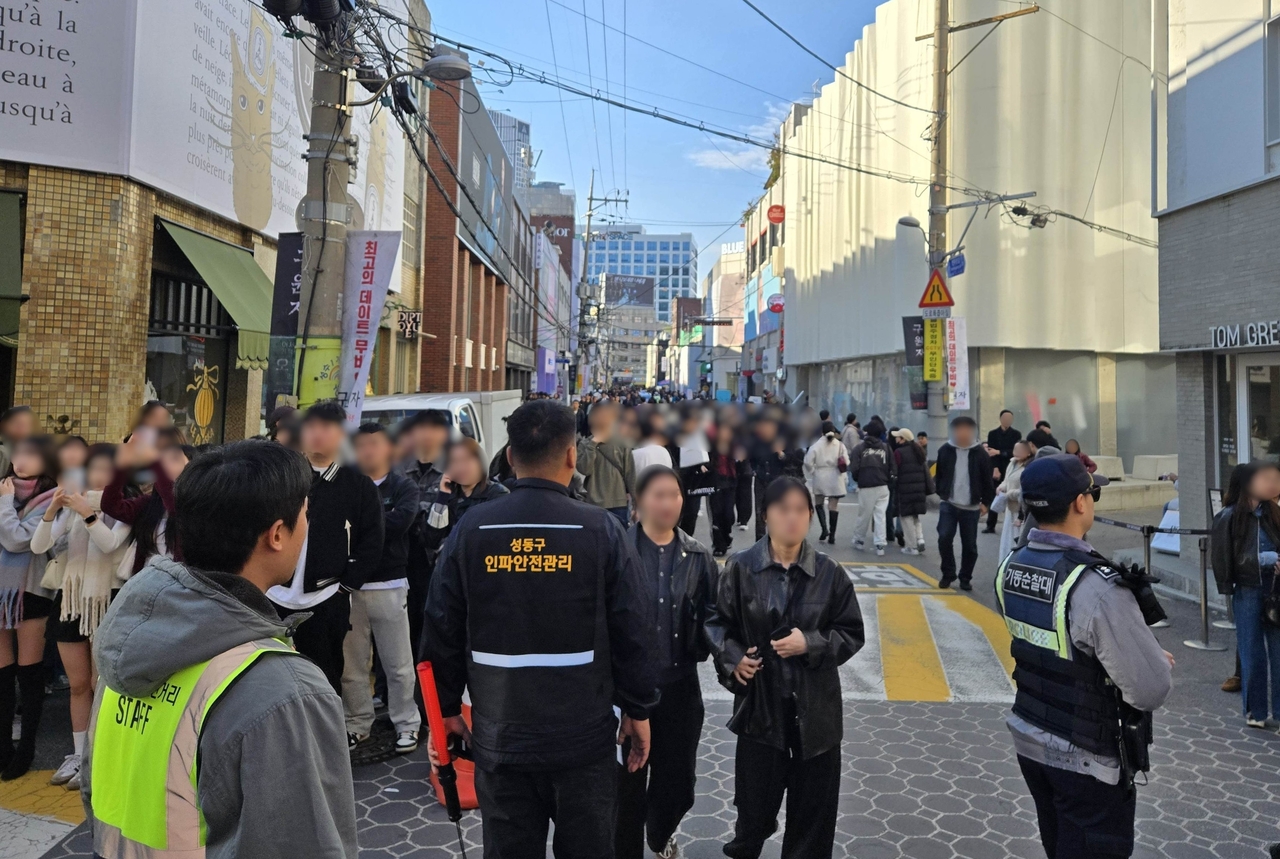
Seoul's Seongdong-gu has been named an outstanding institution for the fourth consecutive year in the Ministry of Interior and Safety's 2026 disaster management evaluation, securing a ministerial commendation and 300 million won ($224,000) in special local allocation tax, the district announced.
Seongdong-gu was the only autonomous district in Seoul to receive the special local allocation tax, a recognition of its disaster management capabilities.
The disaster management evaluation is a system under which the Ministry of Interior and Safety comprehensively assesses the capabilities of disaster management agencies in accordance with the Framework Act on Disaster and Safety Management. It covers performance and management capacity across all phases — prevention, preparedness, response and recovery. Seongdong-gu was highly rated for its systematic disaster management and its track record of advancing safety policies grounded in on-the-ground operations.
The district plans to use the 300 million won in special local allocation tax to strengthen disaster prevention and response capabilities and build a safer urban environment.
Seongdong-gu has been operating an integrated disaster management system covering prevention, response and recovery under the goal of "a safer Seongdong, 365 days a year." The district has focused particularly on safety policies tailored to local conditions, including crowd safety management, 24-hour disaster monitoring and seasonal disaster prevention.
In Seongsu-dong, which draws large numbers of domestic and international visitors, the district has deployed intelligent closed-circuit television cameras to enable real-time crowd monitoring and strengthen on-site safety management. It has worked to identify risk factors in major high-density areas in advance and collaborated with relevant agencies to prevent crowd incidents.
A 24-hour disaster safety operations center serves as the hub for rapid situational assessment and initial response when disasters occur. The center immediately relays disaster information to relevant agencies and maintains close coordination to ensure that necessary measures are taken swiftly in the field.
The district has also taken a proactive approach to seasonal disasters such as heat waves. It has worked to minimize harm to residents through community-level safety management measures, including protecting heat-vulnerable populations, operating cooling centers and inspecting heat-mitigation facilities.
Building on the evaluation results, Seongdong-gu said it will examine disaster risk factors across the district in greater detail and consistently strengthen its prevention and response systems to match each type of disaster.
"Being named an outstanding institution for the fourth consecutive year in the disaster management evaluation, on top of securing the special local allocation tax, is the result of consistently putting residents' safety first," Seongdong-gu District Mayor Yoo Bo-hwa said. "We will continue to reinforce proactive disaster prevention and rapid response systems so that every resident of Seongdong can live with peace of mind."
seouldream01@heraldcorp.com





