Kospi, Kosdaq each tumble more than 6%
Samsung Electronics falls 7%, SK hynix drops 9%
Volatility index tops 50 again
Foreigners net-sell 680 billion won in early trade
US inflation shock compounds AI investment return fears
![The trading board at Hana Bank's headquarters in Jung-gu, Seoul, displays the Kospi on Thursday. The index opened down 335.8 points, or 5.59 percent, at 5,673.01, compared with the previous session's close of 6,008.81. [Yonhap]](https://wimg.heraldcorp.com/news/cms/2026/10/15/rcv.YNA.20261015.PYH2026101502460001300_P1.jpg)
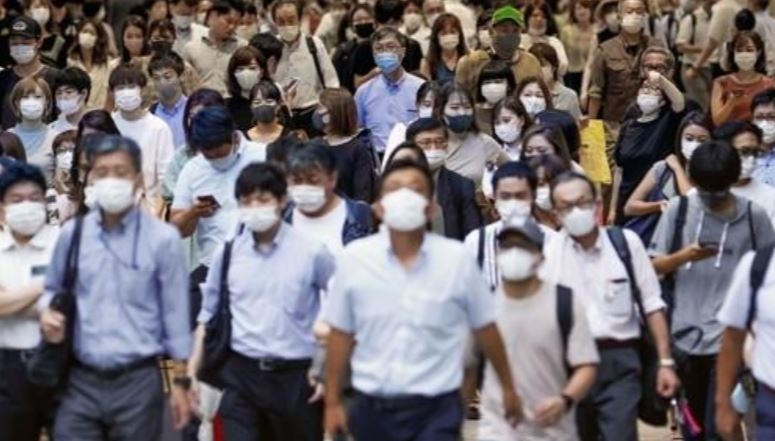
South Korea's stock market took a direct hit Thursday as inflation, interest rate and AI investment risks converged. A stronger-than-expected rise in US consumer prices heightened rate concerns, while growing doubts about the profitability of AI infrastructure spending triggered a wave of technology-led selling that swept into domestic markets. Heavy foreign selling pushed the Kospi below the 5,600 level, with the Kosdaq and major semiconductor stocks also tumbling sharply.
According to Korea Exchange, the Kospi stood at 5,621.12 as of 9:20 a.m., down 387.69 points, or 6.45 percent, from the previous session. Foreign investors net-sold 678.3 billion won ($506 million), while institutions and retail investors net-bought 610.7 billion won and 28.3 billion won, respectively. The Kosdaq fell 56.94 points, or 6.91 percent, to 766.94. On the Kosdaq, retail investors net-sold 44.4 billion won while foreign investors net-bought 37.3 billion won.
At the same time, the KOSPI 200 volatility index, known as V-Kospi, rose 7.50 points, or 16.70 percent, to 52.41. The gauge had stayed below the 50 mark since closing above it on Aug. 28, and its return above that threshold signaled a sharp rise in market anxiety.
As the selloff deepened, a sell-side sidecar — a short-term program trading halt — was triggered on the main Kospi market at 9:07:42 a.m. A separate sell-side sidecar was also activated on the Kosdaq at 9:17:23 a.m.
Selling was concentrated in semiconductor shares. Samsung Electronics fell 7.44 percent to 214,750 won, while SK hynix dropped 9.16 percent to 1.29 million won. SK Square shed 9.51 percent and Samsung Electro-Mechanics plunged 12.08 percent.
The domestic market's decline had been widely anticipated. Overnight, US markets were hit by simultaneous macroeconomic and industry-specific risks. The US September consumer price index rose 3.7 percent year-on-year on Wednesday (local time), topping the market consensus of 3.6 percent and dimming hopes for an interest rate cut while stoking fears of further tightening. The NASDAQ Composite fell 1.88 percent and the S&P 500 dropped 1.11 percent.
Confidence that AI investment would quickly translate into profits also cracked. CoreWeave, an AI cloud company that has poured massive capital into data center construction, plunged 15.46 percent, while Oracle fell 8.8 percent, as concerns over capital recovery and debt burdens weighed on share prices.
Some analysts say Thursday's sharp decline reflected not only rate pressures but also investors proactively trimming their exposure to risk assets ahead of major upcoming events. While doubts about AI investment returns have grown, the prevailing view is that earnings improvement expectations remain intact — and that the current positioning adjustment will continue until uncertainty clears.
"We are in the final stretch of pain, and once the uncertainty lifts, the discounted earnings will be priced back in," said Yang Hyeong-mo, a researcher at DS Investment Securities. "The CPI was the trigger for the selloff, but the selling that began Wednesday was not about interest rates — it is a position cleanup to reduce uncertainty ahead of earnings season and the election."
Yang added that selling pressure should ease and markets should find their footing in late October to November, after the Federal Open Market Committee meeting on Oct. 27-28 and the US midterm elections, when business-to-business demand in the AI sector is expected to become more clearly visible.

kacew@heraldcorp.com