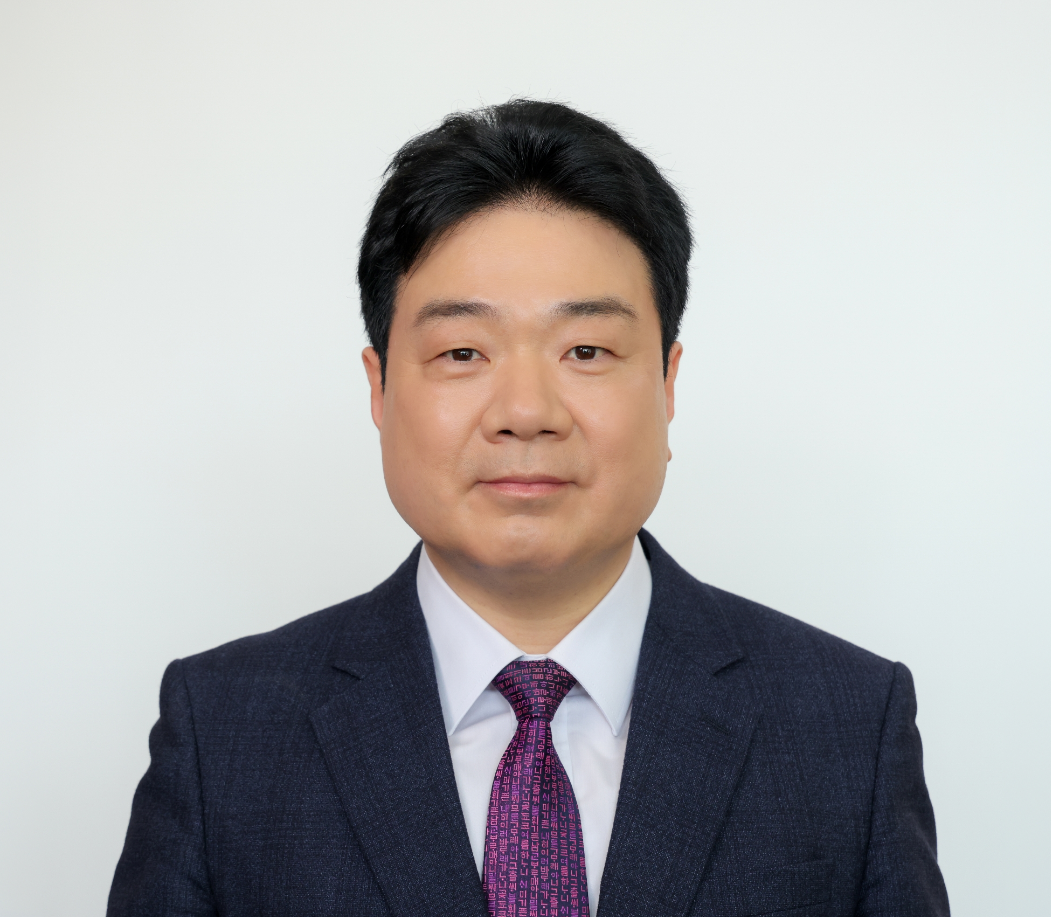
Inauguration held Friday at Daegu headquarters; Kim begins work as 13th chairperson
Manufacturing AI transition, carbon neutrality, balanced regional growth set as priorities
Aging complex upgrades, safety improvements and company-centered reform also on agenda
Kim Dae-ja, former head of the Korean Agency for Technology and Standards under the Ministry of Trade, Industry and Energy, took office Friday as the 13th chairperson of Korea Industrial Complex Corp. She outlined plans to drive innovation across the country's industrial complexes, centering her agenda on the AI transformation of manufacturing, carbon neutrality and balanced regional development.
Korea Industrial Complex Corp. said Kim held her inauguration ceremony at the organization's Daegu headquarters on Friday and formally began her duties. In her inaugural address, she said the industrial environment is changing rapidly — with AI rewriting the rules of manufacturing and carbon footprints becoming a condition of trade — and called for industrial complexes to become the driving force behind that transformation. "Industrial complexes must now become the core spaces that lead the transition of industry," she said.
She added that she would redefine the organization's role, moving it beyond a body that manages industrial complexes to one that actively leads industrial transformation.
To strengthen the competitiveness of industrial complexes, Kim said she would actively support the AI transformation of manufacturing and the shift to carbon neutrality, and work to implement the government's "5 poles, 3 special zones" balanced growth strategy at industrial sites.
To that end, she plans to expand data, communications and renewable energy infrastructure across industrial complexes, and to build environments for testing new technologies along with standards and certification frameworks. She also intends to foster regional industrial ecosystems by strengthening cooperation among businesses, universities, research institutions and local governments.
Improving working conditions and strengthening safety management at aging industrial complexes were also highlighted as key priorities. Kim said she would renovate outdated factories and infrastructure and expand residential, transportation, cultural and amenity facilities to create industrial complexes where young workers want to work.
On organizational management, Kim emphasized field-centered execution. "What matters more than how much of the budget was spent is what real help was actually provided to companies," she said, calling for businesses' views to be actively reflected from the policy planning stage onward.
Kim graduated from Seoul National University with a degree in architecture and earned a master's degree in public administration from the Maxwell School at Syracuse University in the United States. After passing the 31st national technical service examination in 1996, she held a series of positions at the Ministry of Trade, Industry and Energy — including director of industrial technology policy, director general of nuclear power industry policy, spokesperson, policy planning officer and head of the trade and investment bureau — before serving as head of the Korean Agency for Technology and Standards.
hong@heraldcorp.com