National Assembly's Legislation and Judiciary Committee holds national audit of Seoul High Court and other courts
Responding to question on whether Lee's trial suspension constitutes dereliction of duty: 'No … it was suspended based on constitutional provisions'
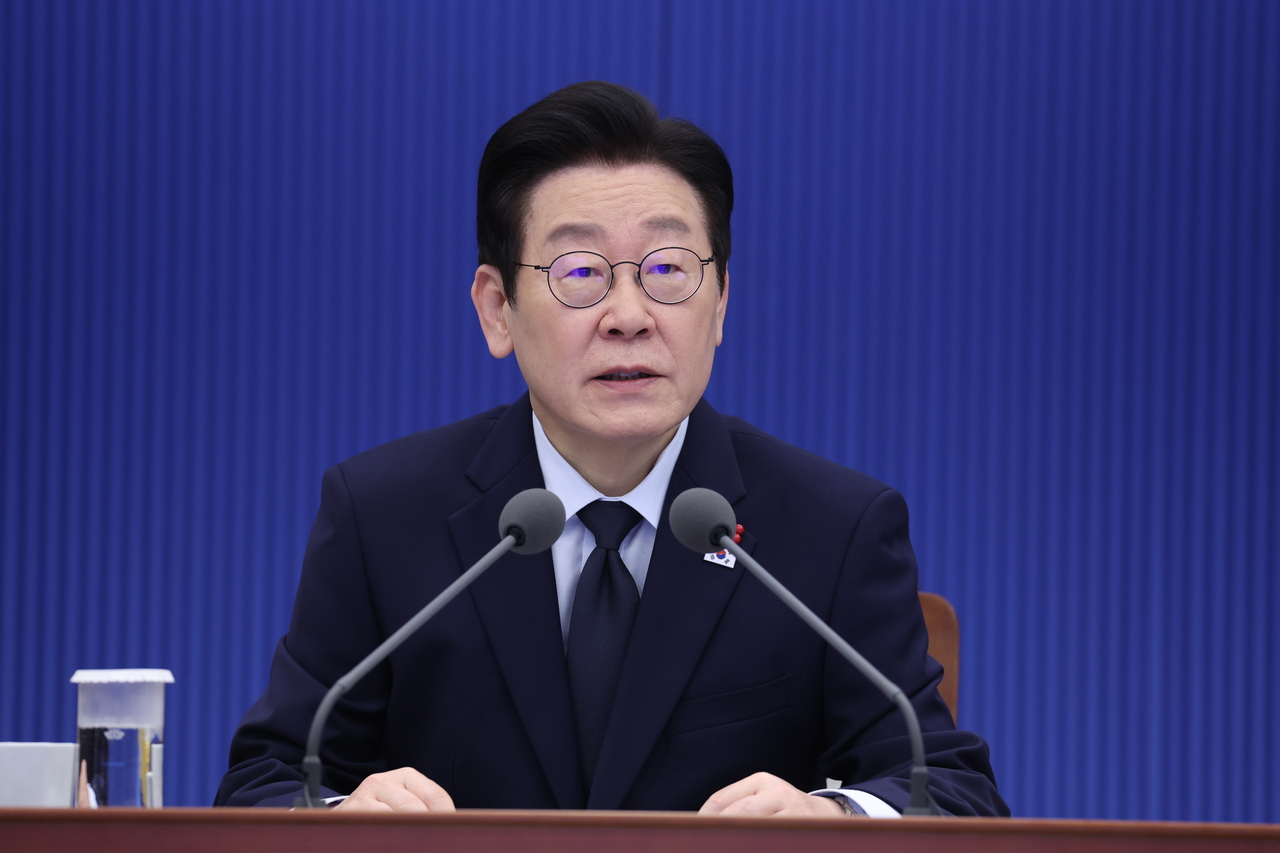
![Seoul High Court President Kim Dae-woong answers questions from lawmakers during a national audit of the Seoul High Court and Seoul Central District Court held by the National Assembly's Legislation and Judiciary Committee on Friday. [Yonhap]](https://wimg.heraldcorp.com/news/cms/2026/10/16/rcv.YNA.20261016.PYH2026101605600001300_P1.jpg)
Seoul High Court President Kim Dae-woong said Friday that no hierarchy exists among the chief justice's power to nominate Supreme Court justices, the National Assembly's power to consent to appointments, and the president's power to make appointments.
Kim made the remarks during a national audit of the Seoul High Court conducted by the National Assembly's Legislation and Judiciary Committee, responding to a question from People Power Party lawmaker Yun Sang-hyun, who asked whether the three powers — the chief justice's nomination right, the Assembly's consent right and the president's appointment right — were equal branches of authority. "I do not think there is a hierarchy among them," Kim said. Article 104, Paragraph 2 of the Constitution states that Supreme Court justices are appointed by the president upon the recommendation of the chief justice and with the consent of the National Assembly.
On the vacancy on the Supreme Court bench, Kim said it was "not desirable for the vacancy to continue." The seat has remained empty for more than six months since former Justice Noh Tae-ak retired in March without a successor in place. Concerns have repeatedly been raised that the unresolved vacancy is adding to the caseload burden on the appellate bench.
What makes the situation more serious, observers note, is that there is no clear timeline for resolving the vacancy. Chief Justice Jo Hee-dae has formally rejected Cheong Wa Dae's demand that he submit a new nomination, while Cheong Wa Dae has refused to back down, leaving the process deadlocked. Jo nominated Daegu District Court Senior Judge Son Bong-gi on Aug. 18 as Noh's successor, but Cheong Wa Dae responded on Aug. 28, calling on Jo to instead nominate a different candidate from an existing pool of candidates.
The national audit also drew questions about the suspension of President Lee Jae Myung's criminal trial. When Democratic Party of Korea lawmaker Kim Han-gyu asked whether the opposition's repeated characterization of the suspension as dereliction of duty or abuse of litigation authority by the presiding panel was accurate, Kim said: "That is not the case. My understanding is that the trial was suspended based on constitutional provisions."
Asked whether the panel's decision to defer the hearing date — rather than formally declaring a stay — was unlawful, Kim said: "In my view, I do not believe a criminal offense is established. I believe the panel used a method available under the current system."
When asked whether he intended to resume the criminal proceedings related to President Lee, Kim said: "A court president cannot and does not intervene in individual trials. It is a matter for each panel to decide, and I respect what each panel has determined."
yg@heraldcorp.com