Korail Tourism Networks, GKL and Yeoncheon-gun collaborate on regular DMZ tour product for foreign visitors
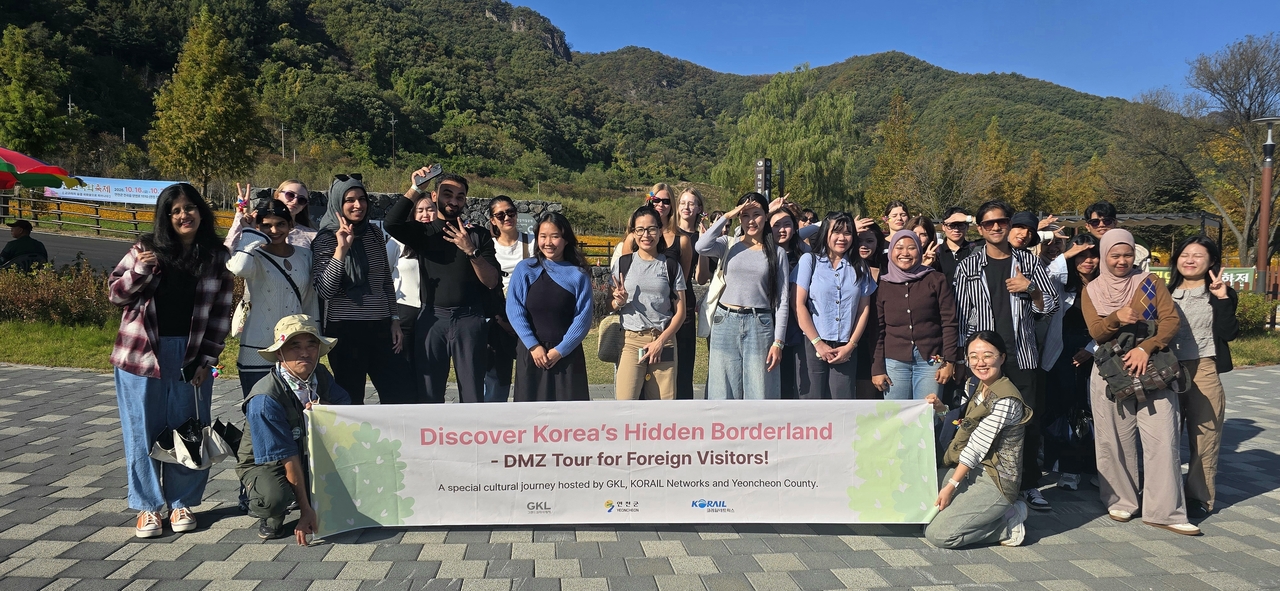
A Yeoncheon DMZ tour drawing more than 40 foreign tourists was held for the third time this year, accelerating efforts to turn the border region's security and geological attractions into a regular tourism product.
Korail Tourism Networks announced that it hosted the "DMZ Rail Tourism Foreign Visitor Attraction Event" on Saturday alongside Grand Korea Leisure (GKL) and Yeoncheon-gun, inviting more than 40 foreign tourists to take part.
The event was the third program held under an agreement with the Yongsan Tourism Council, organized to boost tourism in Yeoncheon-gun — designated a population-decline area by the Ministry of Interior and Safety — and to develop a regular DMZ tour product for foreign visitors.
Participants included foreign tourists who had come to South Korea for high-value experiences such as K-medical tourism, as well as foreign social media supporters, totaling more than 40 people. Korail Tourism Networks handled product planning and on-site operations, GKL managed participant recruitment and promotion, and Yeoncheon-gun provided dedicated vehicles and cultural tourism guides.
Participants boarded the DMZ Train at Seoul Station and traveled to Munsan Station, taking part in onboard programs including a military uniform photo event and a trivia quiz.
They then continued by connecting bus to Jeongok Traditional Market, where they shopped and had lunch using 10,000-won ($7) Onnuri gift vouchers, before visiting Taepung Observatory and Jaein Falls to see the divided peninsula's front line and natural scenery firsthand.
"The DMZ Train is a rail tourism product that lets foreign visitors witness the reality of the Korean Peninsula's division and reflect on the meaning of peace," said Song Gwang-seok, chief executive of Korail Tourism Networks. "We will strengthen cooperation with GKL and Yeoncheon-gun to develop the DMZ tour into a regular tourism product for foreign visitors, and work to draw tourists to population-decline areas through rail travel."
terry@heraldcorp.com