Autonomous shuttle, smart tolling technology showcased at Gangneung ITS World Congress
Company targets 300% mobility sales growth by 2030, eyes overseas expansion
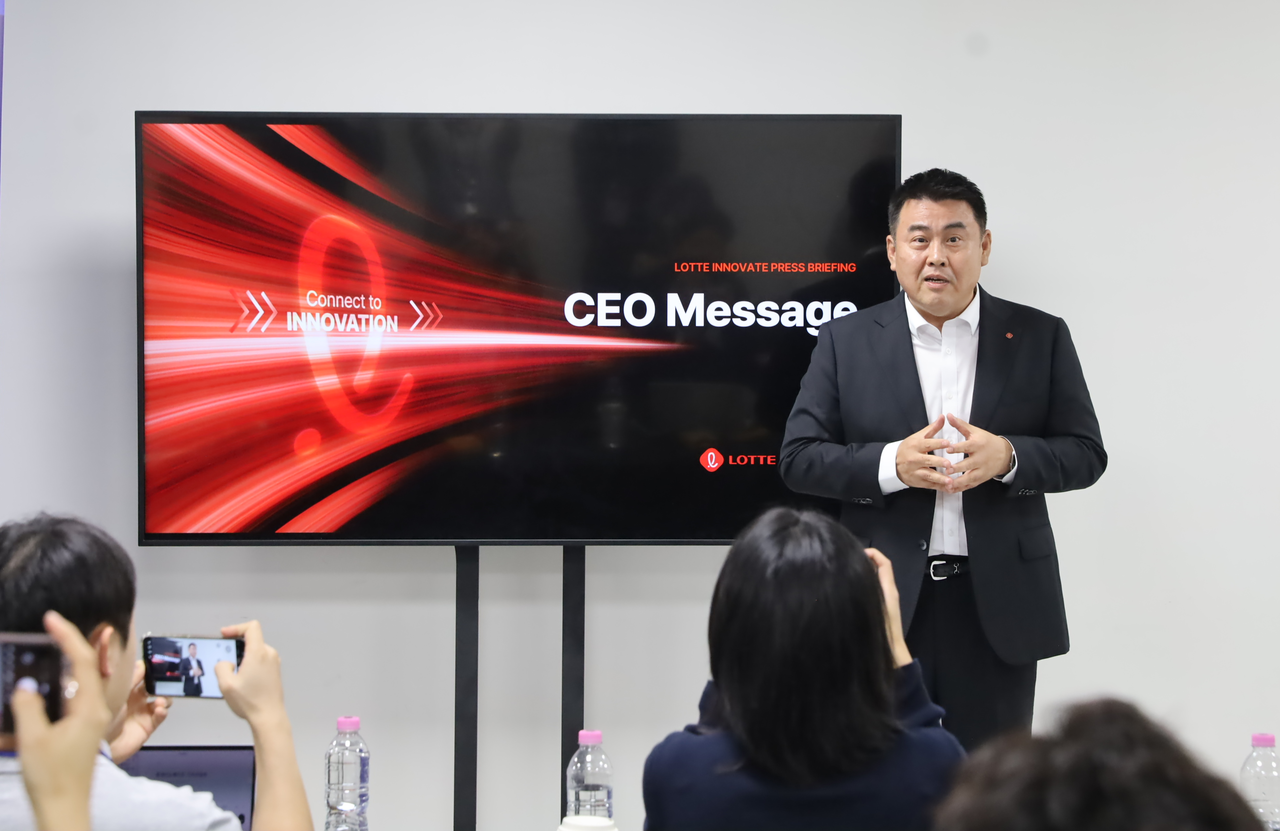
Lotte Innovate is pushing into the future mobility market, leading with AI-based traffic technology. The company plans to grow its mobility business by around 300 percent by 2030 and secure overseas project opportunities worth hundreds of billions of won.
Lotte Innovate CEO Kim Kyung-yeop announced the plans Monday at a press briefing held at Olympic Park in Gangneung, Gangwon Province, on the sidelines of the 2026 Gangneung ITS World Congress.
Known as the "Olympics of transportation," the ITS World Congress is a major international event for intelligent transport systems. This year's edition runs through Friday in Gangneung.
Lotte Innovate is the main sponsor of the event. Gangneung holds particular significance for the company, as it has operated autonomous driving services there since January 2023, building up technical expertise and operational experience in the city.
Kim said the company aims to grow mobility sales — currently less than 10 percent of total revenue — by around 300 percent by 2030.
"We believe it is entirely achievable once our domestic pilot projects convert into full-scale operations and we start seeing results from overseas projects in Malaysia and Mexico," he said.
The company also plans to press ahead with bold investment in future technologies. Kim said Lotte Innovate plans to invest about 30 billion won ($22.3 million) by the end of this year for in-house AI research and development, adding that the funds are being used to develop vision AI and license plate recognition technology.
Kim expressed confidence in the capabilities the company has built up in the mobility sector. "Mobility is a business we have been pursuing for some time. The market was not yet mature, but we now believe it has entered a phase of full-scale growth," he said. "The area we are most excited about is overseas business — the projects currently under discussion amount to hundreds of billions of won."
Yoon Tae-eun, executive director of Lotte Innovate's mobility business division, who was also present at the event, said the company has now secured sufficient solutions and technology for exports. "There is real demand in Southeast Asia and Latin America," he added.
Kim stressed the importance of connecting different technologies in the company's future mobility business. "There is always movement in the journey of finding new value for customers," he said. "Our business goal is to link diverse technologies to achieve safety, convenience and freedom of movement."
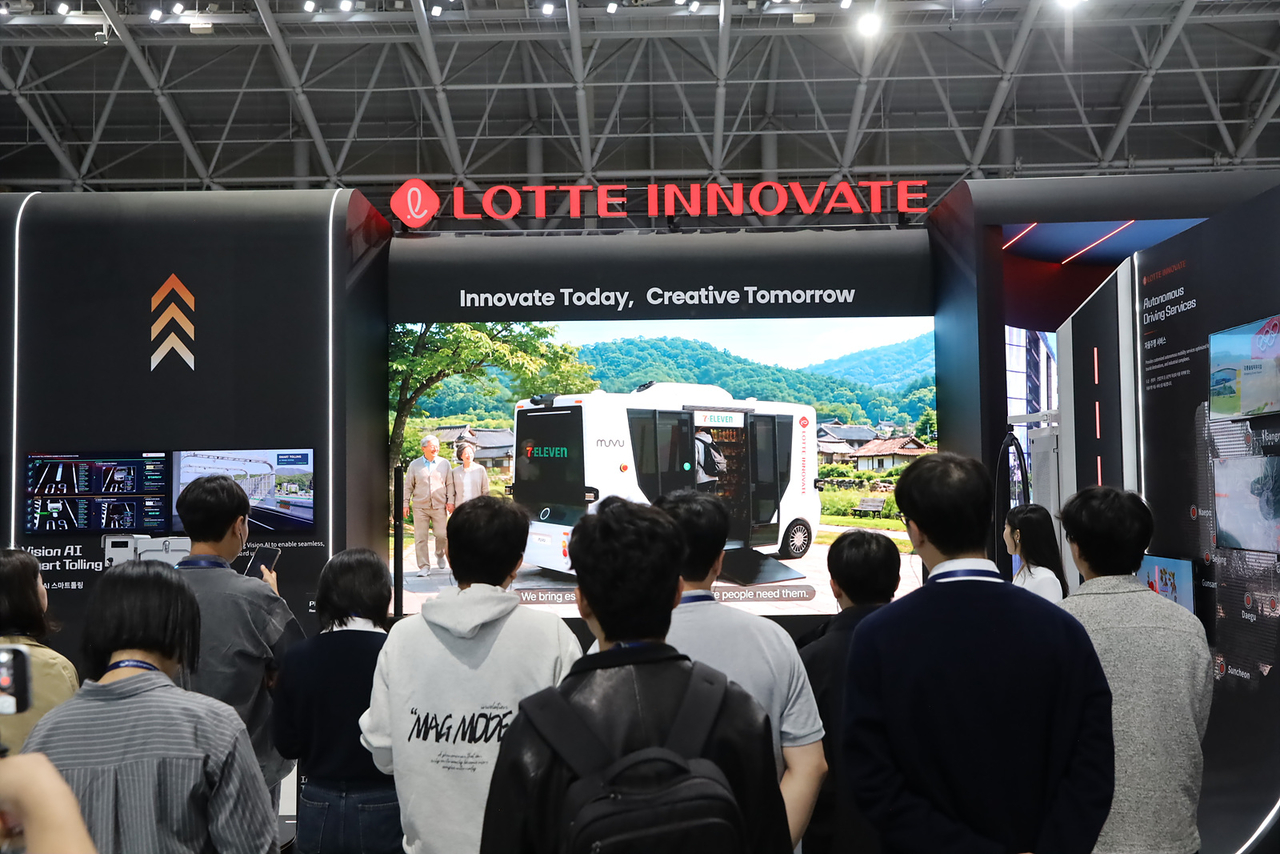
Lotte Innovate set up its own exhibition space at the event, showcasing future traffic technologies including autonomous driving, next-generation cooperative intelligent transport systems (C-ITS) and smart tolling.
Despite it being a weekday lunchtime, more than 50 visitors crowded in front of the 135-square-meter booth, and lines formed at some experience zones as visitors waited several minutes for their turn.
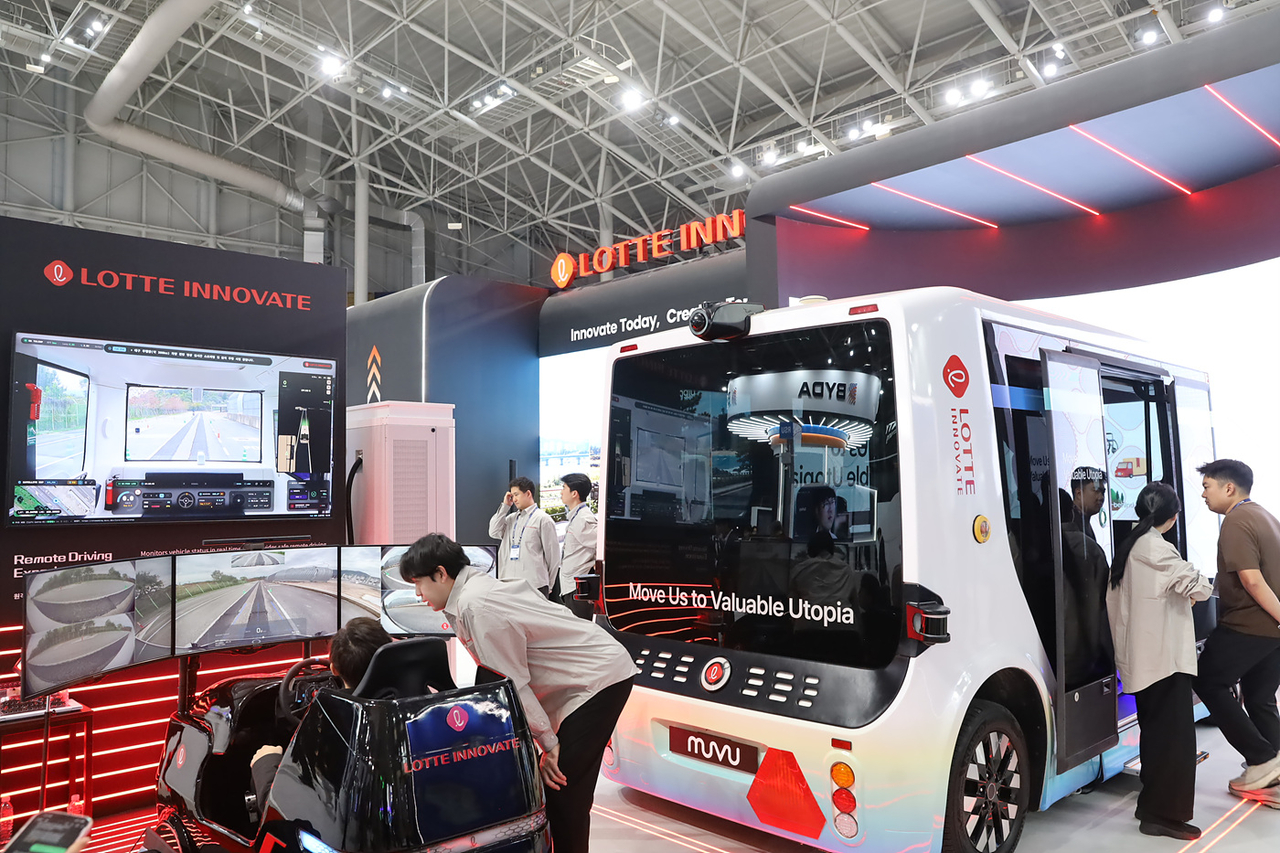
The autonomous driving zone drew particular interest, featuring the company's self-driving shuttle MUVU. Visitors could try a virtual ride experience and remotely control an actual MUVU vehicle operating in Daegu. Sitting in a driver's seat set up at the booth, visitors could press the accelerator and turn the steering wheel while the vehicle's movements were displayed in real time across four screens.
The C-ITS zone introduced vehicle-to-infrastructure (V2I) communication technology using AI cameras and lidar sensors, while the smart tolling zone demonstrated an AI video-based toll collection system that processes payments through license plate recognition alone.
Lotte Innovate said it plans to use the exhibition as a springboard to strengthen its integrated mobility business combining AI and autonomous driving technology. The company intends to connect its previously separate traffic infrastructure projects into a single unified platform, which it plans to launch in 2028.
sjpark@heraldcorp.com