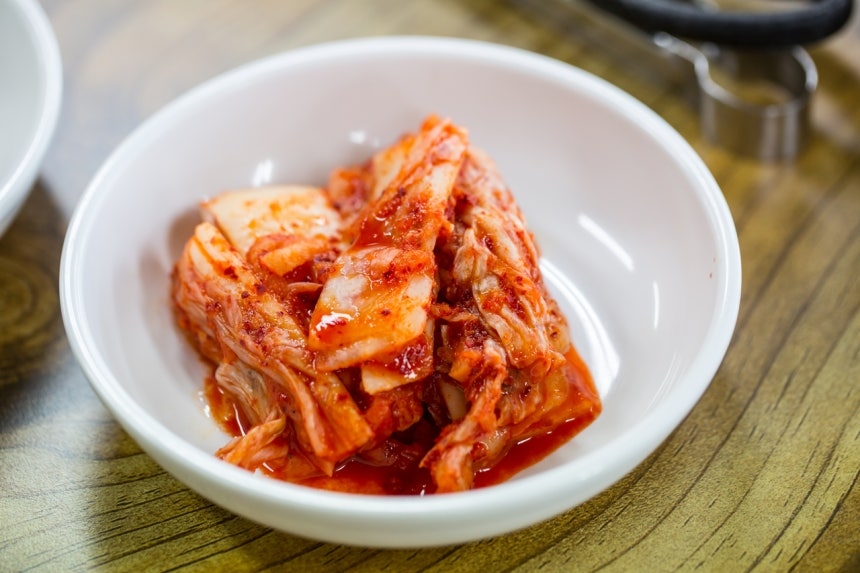
Koreans consume about 2.3 grams of sugar a day through kimchi — roughly twice as much as they get from snacks such as cookies and ice cream, according to new research.
Seoul National University's Health Culture Project analyzed data from the Korea National Health and Nutrition Examination Survey and found that among processed foods, carbonated beverages were the top source of sugar in 2023, at an average of 4.43 grams per day.
Bread came second at 3.15 grams, followed by coffee at 2.74 grams, sugar products at 2.34 grams and kimchi at 2.30 grams. Total daily sugar intake from processed foods averaged 35.5 grams, with kimchi accounting for about 6.5 percent of that.
The routes through which Koreans consume sugar have also shifted. Sugar intake from snacks fell from an average of 17.7 grams per day in 2019 to 15.6 grams in 2023, a drop of 2.1 grams.
Over the same period, sugar consumed through meals rose from 19.0 grams to 19.9 grams. While total sugar intake from processed foods edged down slightly, the share coming from meals climbed 4.3 percentage points, from 51.8 percent to 56.1 percent.
Researchers pointed to commercially sold kimchi and banchan as key factors. Kim Cho-il, a special appointment professor in the Department of Food and Nutrition at Seoul National University, said growing consumption of store-bought kimchi was driving the trend, noting that sugar or corn syrup is often added for flavor.
Ready-made banchan such as braised quail eggs and pickled garlic can also contain sugar or fruit syrup. Foods with strong salty or sour flavors tend to mask sweetness, making it hard for consumers to detect the sugar they contain.
Kim said that because consumers have little way of knowing how much sugar is in any given product, a regulatory environment that helps people reduce their sugar intake is needed.
123@heraldcorp.com