About 5 Kospi, Kosdaq stocks flagged by NSDS in Sept.–Oct. under review; violations could bring fines, criminal charges
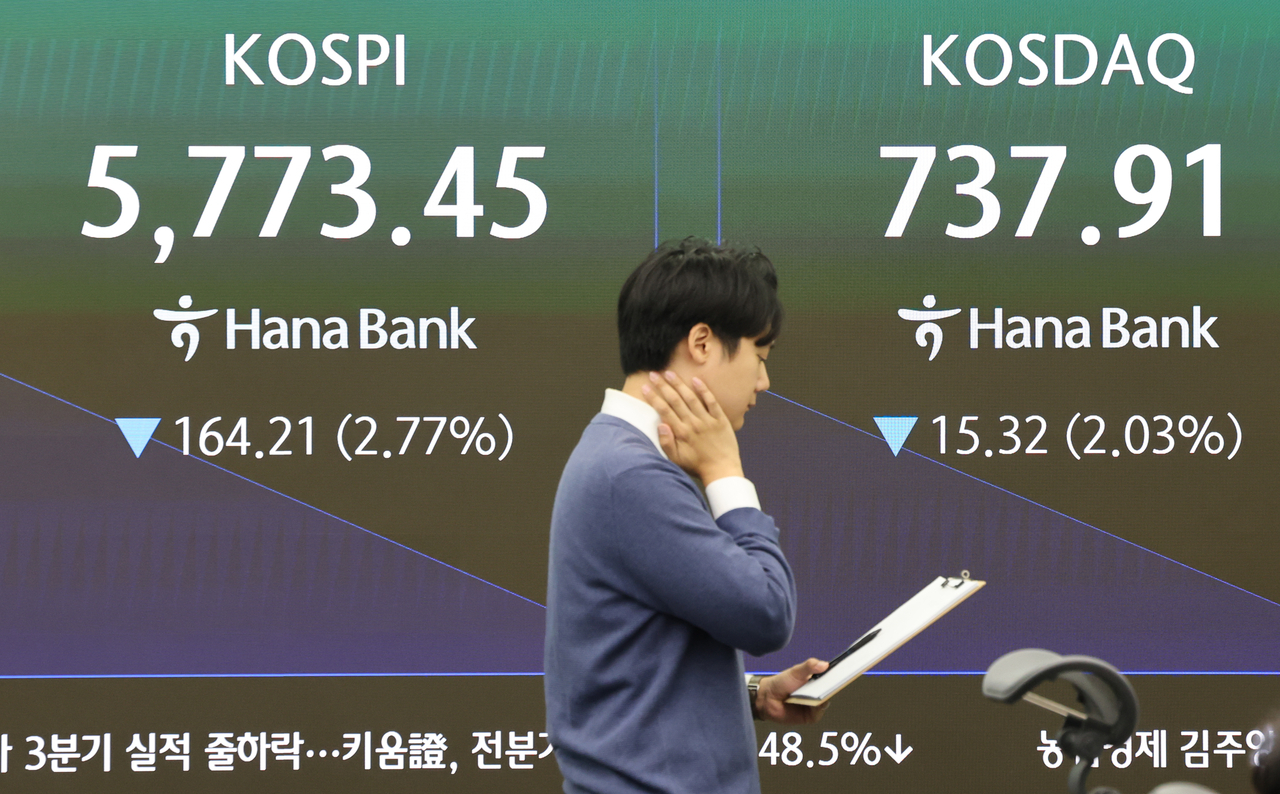
Growing volatility in South Korea's stock market is fueling investor anxiety, with suspicions mounting that illegal short selling may be amplifying share price declines. Financial regulators have launched an investigation into related transactions, warning that confirmed cases of naked short selling could undermine market confidence.
The Financial Supervisory Service designated roughly five Kospi and Kosdaq stocks for investigation after an emergency review last week, according to financial industry and regulatory sources Sunday. The stocks were flagged by the Naked Short-selling Detection System, known as NSDS, as suspected naked short-selling transactions between September and October.
The FSS plans to cross-check domestic and foreign institutional investors' order and execution records against their stock holdings and borrowing histories to determine whether shares were sold without being borrowed first. Under the current framework, Korea Exchange continuously monitors institutional investor transactions through the NSDS, while the FSS investigates any suspicious activity the system flags.
Short selling is an investment technique in which an investor borrows shares and sells them, anticipating a price decline, then buys them back at a lower price to return them and pocket the difference. While short selling serves a legitimate function by supplying market liquidity, naked short selling — selling shares without borrowing them first — is banned in South Korea due to concerns it could be exploited for market manipulation and other unfair trading practices.
Illegal short selling is subject to surcharges regardless of the severity of the violation. Under the current Capital Markets Act, a surcharge may be imposed within the value of the unlawful short-selling orders, and criminal penalties are also possible — including imprisonment of one year or more, or fines equivalent to four to six times the profit gained or losses avoided.
"This is a preemptive measure to strengthen monitoring and investigation of market-disrupting activities amid heightened market volatility," an FSS official said. "If any violations are confirmed during the investigation, we will respond with strict enforcement."
Heightened volatility in domestic markets has put financial authorities on elevated alert against market-disrupting conduct. The Kospi surpassed the 7,000 mark, reaching 7,003.74 on Oct. 2, before retreating to trade in the 5,500–6,000 range in recent sessions. A sharp drop in major US indexes in New York on Friday (local time) has raised concerns that downward pressure on domestic markets could intensify Monday.
At an emergency market review meeting held Oct. 15, financial authorities and related agencies pledged to "respond strictly with a zero-tolerance policy toward market-disrupting activities — including the spread of false rumors, market manipulation and illegal short selling — that exploit market instability."
attom@heraldcorp.com