Large firms' interest coverage ratio hits 1,882%, vs. 322% for small firms — widest gap on record
Semiconductor boom drives large-firm profits and facility loans; small firms lag behind
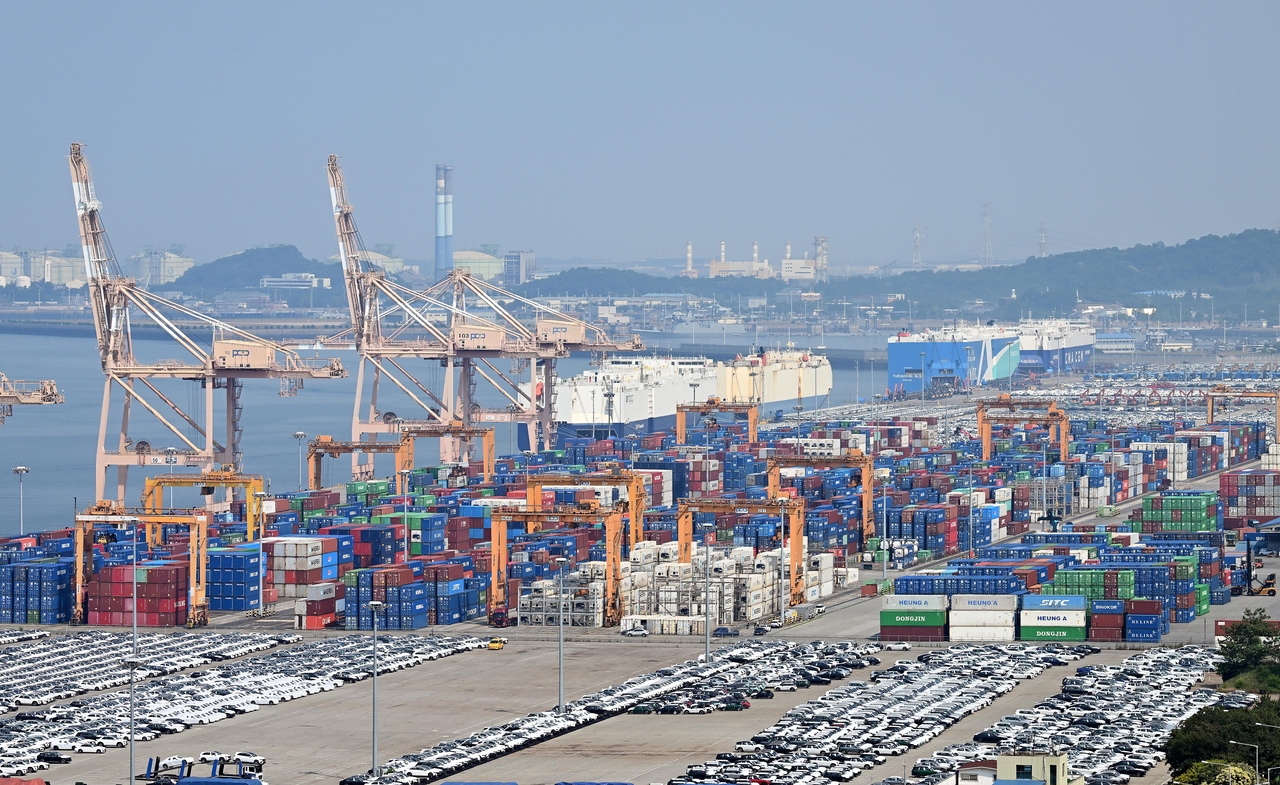
The semiconductor boom has lifted South Korea's exports and growth indicators, but the recovery's warmth has not spread across the broader economy. While large companies — led by chipmakers — have seen their profitability and debt-servicing capacity improve rapidly, small and medium-sized enterprises have been left behind with a sluggish recovery, and the gap in facility loan growth between the two groups has widened sharply. With semiconductors driving sectoral growth and earnings gains concentrated among large firms, concerns are mounting that the so-called K-shaped polarization is deepening — widening the gap between headline economic data and what businesses actually feel on the ground.
According to the Bank of Korea's Economic Statistics System, large firms posted an interest coverage ratio of 1,882 percent in the second quarter of this year, outpacing small and medium-sized enterprises at 322 percent by 1,560 percentage points. That is the widest gap since the data series began in the first quarter of 2015. The interest coverage ratio — operating profit divided by interest expenses — means large firms earned roughly 19 times their interest costs in operating profit, while small and medium-sized enterprises earned only about three times theirs.
Just a year earlier, in the second quarter of last year, the gap stood at a far narrower 136 percentage points, with large firms at 362 percent and small and medium-sized enterprises at 226 percent. The divide widened to 345 percentage points by the end of last year — large firms at 563 percent, small and medium-sized enterprises at 218 percent — and then expanded further to 864 percentage points in the first quarter of this year, with large firms at 1,115 percent and small and medium-sized enterprises at 251 percent. The second quarter of this year saw the gap widen again by an even larger margin.
Analysts attribute the growing profitability gap to the improvement in the semiconductor industry. The interest coverage ratio for large manufacturing firms surged to 3,903 percent in the second quarter of this year, roughly nine times the 440 percent recorded a year earlier. Small and medium-sized manufacturers also improved, rising from 263 percent to 401 percent over the same period, but the gain fell far short of the increase seen among large firms.
The divergence extends beyond debt-servicing capacity to how companies are using borrowed funds. Data from the five major banks — KB Kookmin, Shinhan, Hana, Woori Bank and NH NongHyup Bank — show that the outstanding balance of facility loans to large firms stood at 75.8 trillion won ($56.5 billion) at the end of September, up 16 percent from the same period last year. By contrast, the outstanding balance of facility loans to small and medium-sized enterprises edged up just 1.3 percent, from 333.63 trillion won to 337.85 trillion won.
Most of the growth in small-firm lending went into working capital. The total outstanding loan balance for small and medium-sized enterprises rose 17.5 trillion won, or 3 percent, from 583.87 trillion won at the end of September last year to 601.36 trillion won at the end of September this year, of which 13.28 trillion won came from an increase in working capital loans. The figures suggest demand was driven largely by the need to cover ongoing operating costs such as wages and raw materials purchases.
Over the same period, the outstanding loan balance for large firms grew 19 percent, from 163.37 trillion won to 194.34 trillion won. Facility loans rose 16 percent and working capital loans climbed 21 percent, with both categories posting gains. The increase in facility lending to large firms points to relatively active demand for capital to fund investment expansion. Small and medium-sized enterprises, by contrast, appear to have focused on securing funds for day-to-day operations rather than expanding capacity.
Bankers say the rise in corporate bond yields has pushed large firms to seek more bank financing, and that lenders' own push to expand productive lending has also contributed to the increase in large-firm loans. "Small and medium-sized corporations face growing pressure to borrow and expand their businesses amid high global economic volatility and elevated lending rates," an official at a commercial bank said. "Facility loans to sole proprietors were mostly for purchasing commercial real estate, but as the commercial property slump has continued, the volume of such loans has also declined," the official added.
The divergence reflects the broader dynamic in which semiconductors are driving South Korea's economic growth. Strong semiconductor exports have lifted overall export figures and growth indicators, but those gains have not been distributed evenly across all industries and firm sizes. Large firms in semiconductors and a handful of other sectors are improving their earnings and building capacity for investment, while small and medium-sized enterprises and the domestic and regional economies are recovering more slowly. Higher growth rates, in other words, do not necessarily mean that most businesses are seeing better operating conditions.
Some analysts caution against reading too much into the rise in small firms' interest coverage ratios as a sign of improving business conditions. "When the economy is weak, small firms sometimes make financial decisions to pay down debt and cut investment," a Bank of Korea official said. "A rise in the interest coverage ratio cannot be interpreted solely as the result of improved business conditions."
Cho Young-moo, head of NH Financial Research Institute, said that when a small number of sectors perform very well, overall indicators inevitably improve, but if the gains are concentrated in one area, many economic actors will perceive the improvement in the data as an "optical illusion." He also warned that if the AI semiconductor cycle continues to expand, export earnings will improve, tax revenues will rise and government spending will increase, supporting the broader economy — but if the semiconductor cycle turns and corporate tax revenues fall, placing a burden on government spending, economic conditions could deteriorate further.
As semiconductors continue to lead growth, spreading those gains to other industries and firm sizes has emerged as a key challenge. The greater the influence of the semiconductor cycle on exports, tax revenues and investment, the more South Korea's overall growth trajectory risks becoming hostage to the fortunes of a single industry.
attom@heraldcorp.com