New criteria designed to capture shocks like financial crisis, COVID-19
Government can expand job retention subsidies once threshold is met
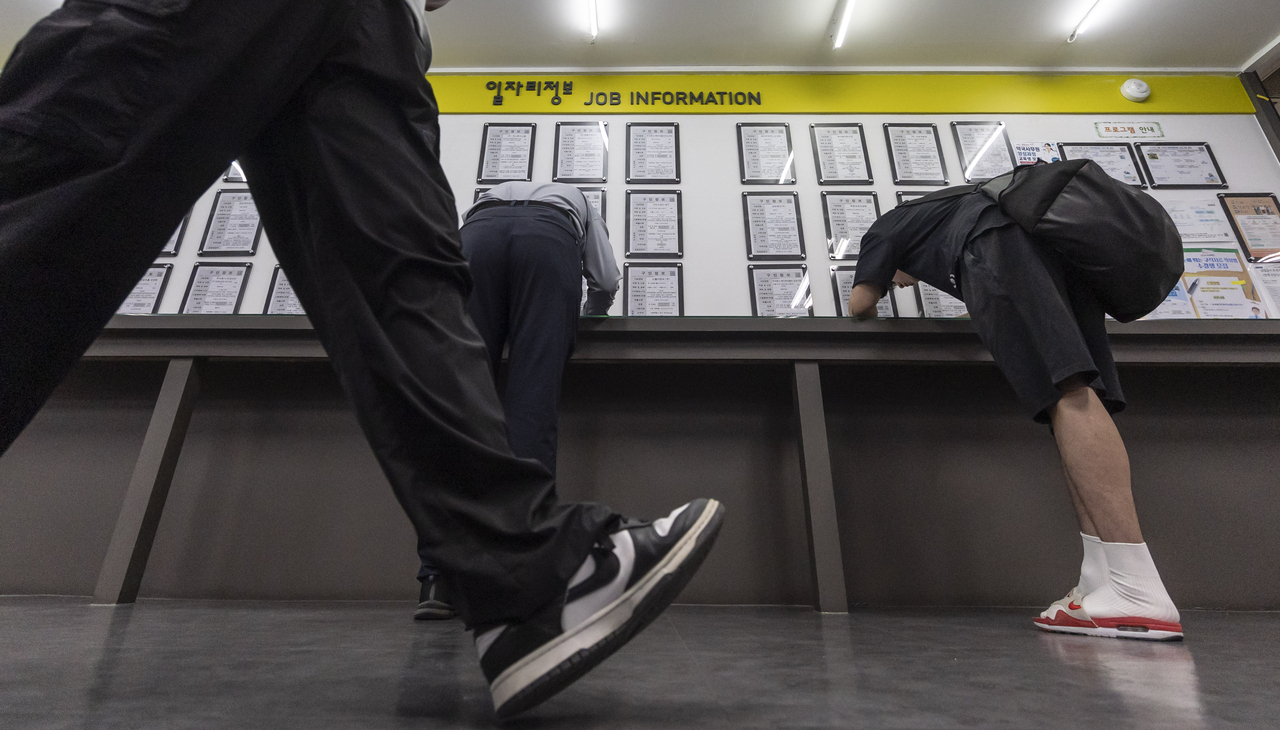
South Korea has established objective criteria for declaring a nationwide employment crisis — and for expanding job retention subsidies — when labor market conditions deteriorate sharply across the country, as they did during the COVID-19 pandemic and the global financial crisis. The threshold is met when at least three of five key employment indicators exceed defined danger levels for two consecutive months.
A research report commissioned by the Ministry of Employment and Labor and conducted by the Korea Labor Economics Association identified five core indicators for assessing a nationwide employment crisis: the employment rate, the three-month moving average of the employment rate, the number of job seekers receiving unemployment benefits, the number of insured workers who lost coverage due to business-driven workforce reductions, and the unemployment rate.
When three or more of those indicators breach their respective thresholds for two consecutive months, the nationwide employment crisis criteria are satisfied. The two-month consecutive requirement was built in to prevent temporary fluctuations — such as those caused by holiday effects or base effects — from triggering a false crisis signal.
Researchers applied the criteria retroactively to past employment shocks and found that the framework would have captured the major crisis periods of January through September 2009, during the global financial crisis, and June 2020 through February 2021, during the COVID-19 pandemic. The analysis also found that even during the 2003 credit card crisis, when employment insurance data were insufficient, shifts in the employment and unemployment rates alone would have been enough to detect a crisis.
Until now, the government had response mechanisms for regional and sector-specific employment crises but no formal trigger criteria for a nationwide one. During both the global financial crisis and COVID-19, authorities responded by creating temporary special provisions and providing support after the fact, following deliberation by the Employment Policy Deliberation Council and a judgment call by the minister.
To close that gap, an amended Employment Insurance Act — which took effect last May — allows the government to expand job retention subsidies when employment conditions deteriorate significantly on a national scale. The research was conducted to establish the specific indicators and thresholds needed to make that determination in practice.
Once the crisis criteria are met, the government can pursue an expansion of job retention subsidies through a deliberation process. The system supports employers facing financial difficulties who choose to keep workers on through reduced hours or temporary leave rather than laying them off, covering part of the associated allowances.
Currently, support is available to employers facing unavoidable workforce adjustments — such as a revenue decline of more than 15 percent compared with the average of the preceding six months. The subsidy cap is 68,100 won ($51) per insured worker per day, with support available for up to 180 days per year.
"During COVID-19, there were criticisms that the government had to improvise because there were no special support requirements in place for a nationwide employment crisis," a Ministry of Employment and Labor official said. "We will use the existing system to address regional and sector-specific crises, and apply the new criteria to differentiate support for national-level emergencies."
attom@heraldcorp.com