Equity-accumulation model to debut in Goyang in December, with buyers acquiring 25% stake at move-in
Profit-sharing model requiring low-interest loan of 70% of pre-sale price to follow after law revision
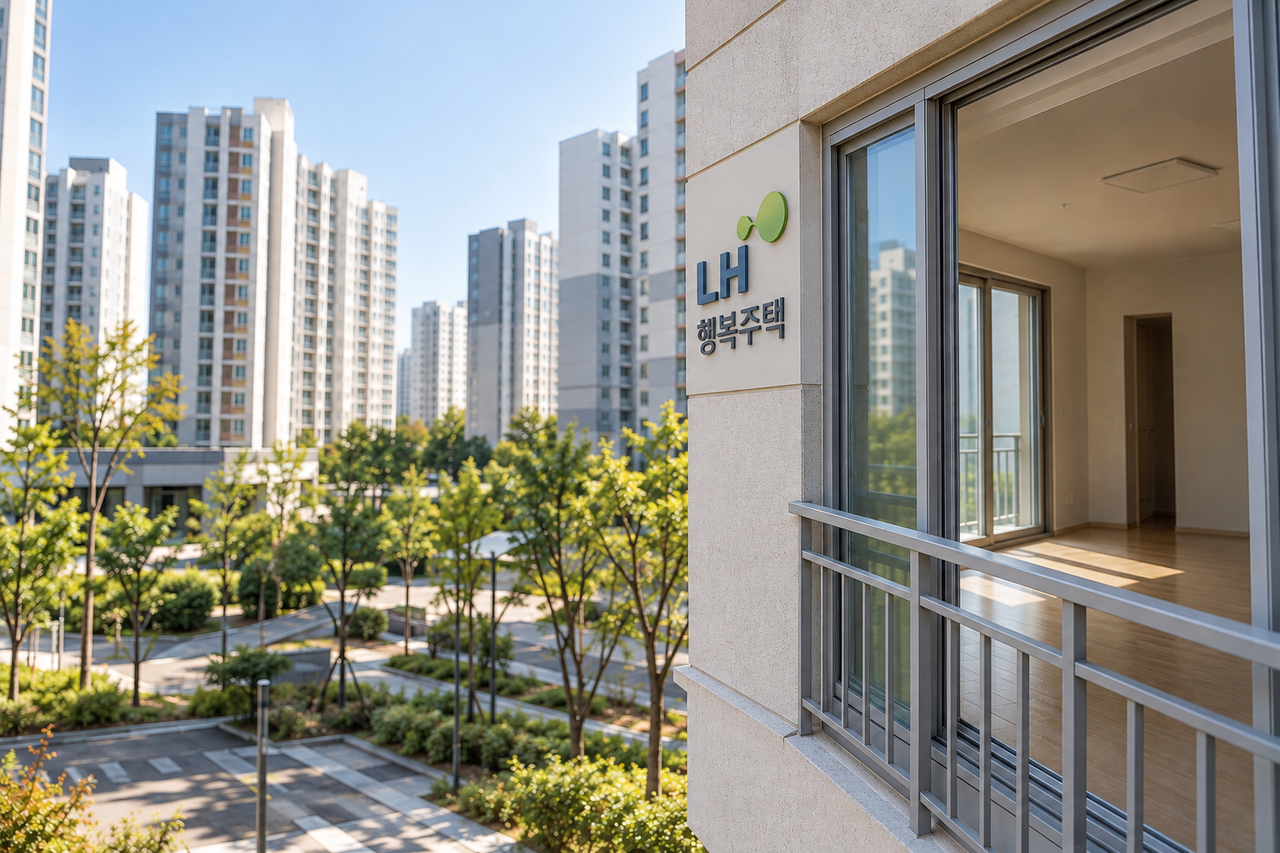
A total of 284 Korea Land and Housing Corporation apartments in Goyang Changneung will go on sale in December under a new equity-accumulation model that lets buyers move in for just 25% of the pre-sale price. For a 55-square-meter unit priced at 510 million won ($380,000), a buyer needs only 128 million won upfront to secure the home — with the remaining equity acquired in five installments of 15% every four years thereafter.
The Ministry of Land, Infrastructure and Transport announced the detailed implementation plan for "affordable public pre-sale housing" on Wednesday. The initiative is a follow-up to the Aug. 13 urban housing supply acceleration measures and is designed to help first-time buyers — particularly younger people with limited savings but improving purchasing power — get onto the property ladder.
The ministry presented two housing supply models: the equity-accumulation type and the profit-sharing type II.
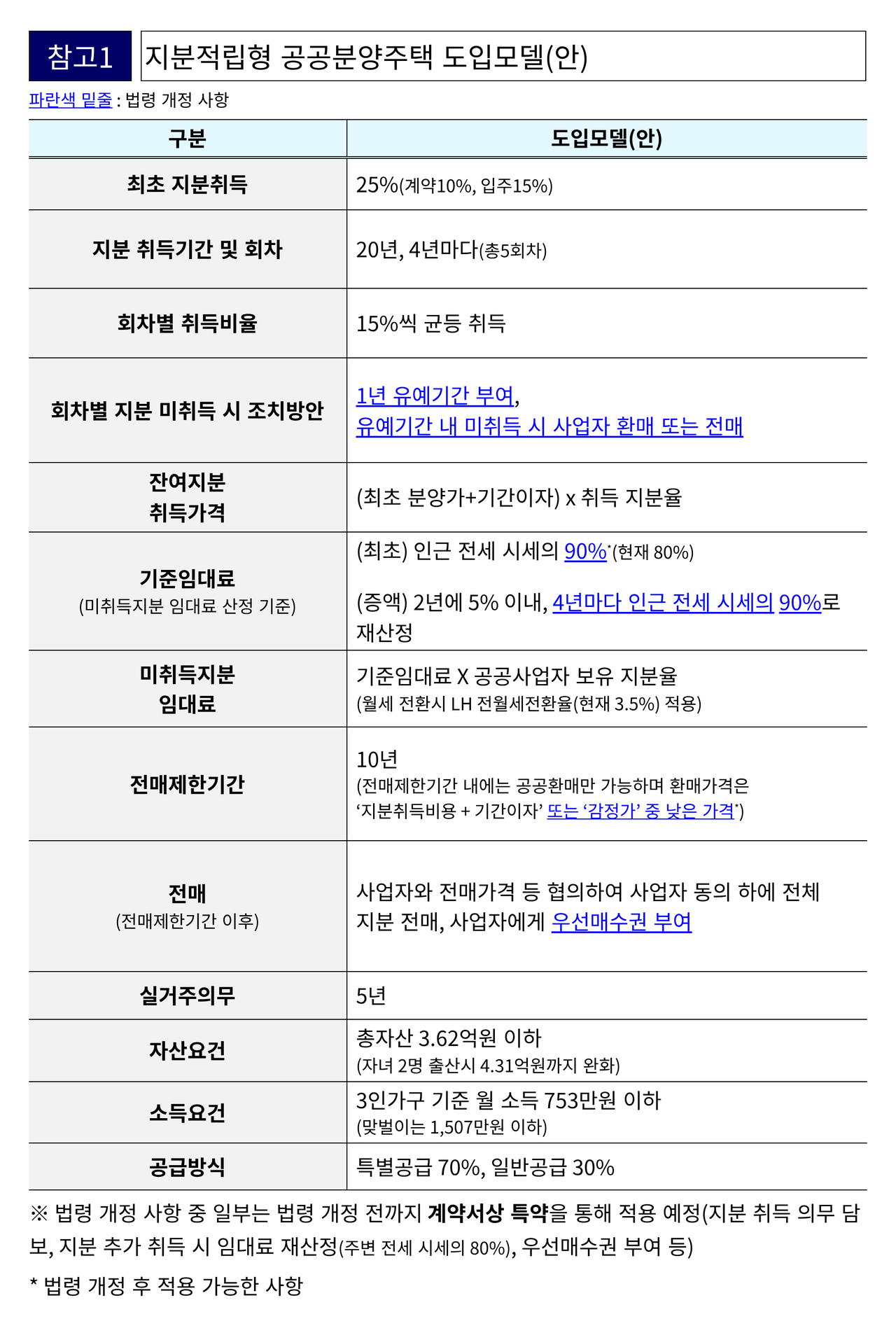
Under the equity-accumulation model, buyers acquire a 25% stake at move-in and then purchase the remaining equity in five rounds of 15% every four years. Each installment is mandatory, though buyers may defer a payment by up to one year based on financial circumstances. If a buyer fails to acquire the stake within the deferral period, the unit must be sold back to the developer or transferred to another party.
The price for each additional equity tranche is calculated by multiplying the sum of the original pre-sale price and accrued interest by the share being acquired. The base rent is set at 90% of the prevailing jeonse market price in the surrounding area, with increases capped at 5% every two years; the base rent is recalculated against the local jeonse market price every four years. Rent on the unacquired portion equals the base rent multiplied by the developer's remaining ownership share, and conversions to monthly rent apply Korea Land and Housing Corporation's jeonse-to-monthly-rent conversion rate, currently 3.5%.
The resale restriction period is 10 years, during which the full stake may be transferred only with the developer's agreement on price and other terms. The developer holds a right of first purchase. The owner-occupancy requirement is five years.
Applicants must have total assets of no more than 362 million won and monthly household income of no more than 7.53 million won for a three-person household.
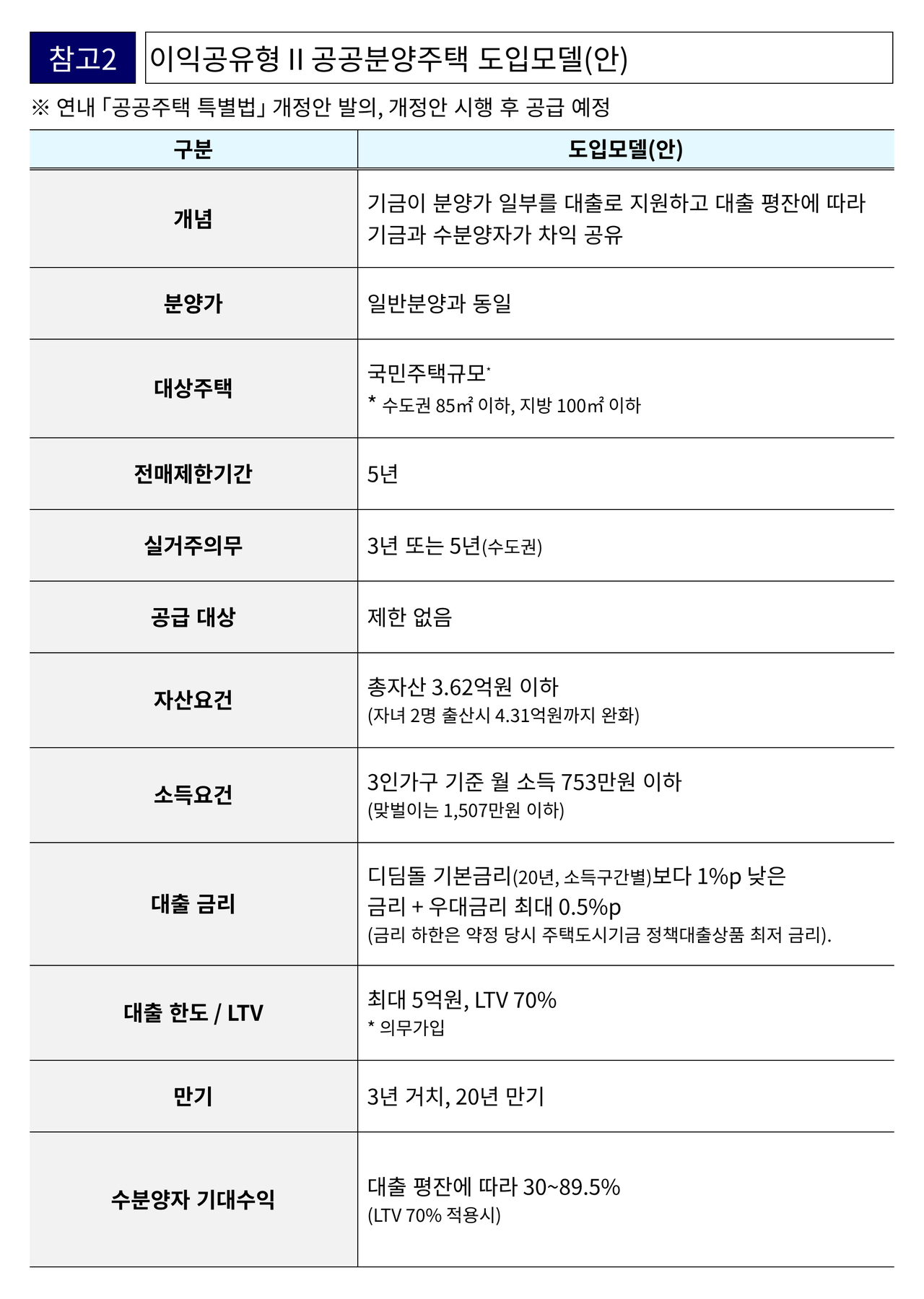
The profit-sharing type II model has not yet been written into law; the ministry plans to introduce an amendment to the Special Act on Public Housing within the year to establish the legal framework. Under the model, buyers are required to take out a low-interest loan from the Housing and Urban Fund covering 70% of the pre-sale price, capped at 500 million won. When the home is later sold or the loan repaid, any capital gain is shared between the fund and the buyer in proportion to the average outstanding loan balance.
The interest rate is set 1 percentage point below the base rate of the Didimdol mortgage loan at the time of disbursement, with an additional preferential rate of up to 0.5 percentage points. The rate floor is the lowest policy loan rate offered by the Housing and Urban Fund at the time of the agreement, currently 1.2 percent.
Under the existing profit-sharing model — the so-called nanum type — units are supplied at 70 percent or less of the surrounding market price, and when buyers sell back to Korea Land and Housing Corporation at the appraised value after a five-year occupancy requirement, 70 percent of the gain or loss goes to the buyer. Given that appraised values are generally around 90 percent of market prices, buyers effectively capture about 63 percent of the market-price appreciation. The profit-sharing type II differs in that the pre-sale price matches that of general pre-sales, the unit can be sold freely on the open market, and the buyer's share of the capital gain is proportional to the average outstanding loan balance. Buyers can also settle their profit-sharing obligation by repaying the loan without selling the unit.
The resale restriction period is five years, and the owner-occupancy requirement in the greater Seoul metropolitan area is five years. The asset and income eligibility requirements are the same as those for the equity-accumulation model.
The ministry plans to gradually expand the affordable public pre-sale housing supply, starting with 284 units offered under the equity-accumulation model out of the 1,057 units in Korea Land and Housing Corporation's Goyang Changneung S-2BL development in December. Korea Land and Housing Corporation's 2027 pre-sale plan, set to be announced before year-end, will also include complexes designated for affordable public pre-sale housing.
Kim I-tak, first vice minister of land, infrastructure and transport, said the affordable public pre-sale housing program is expected to offer a practical path to homeownership for those who have wanted to buy but found pre-sale prices out of reach. "We will continue to actively expand affordable residential options to ensure housing stability for genuine end-users," Kim said.
smh@heraldcorp.com