Public figures often follow distinctive health and beauty routines. This series examines the diets, exercise habits, procedures, and beauty and fashion choices of notable personalities as practical lifestyle information.
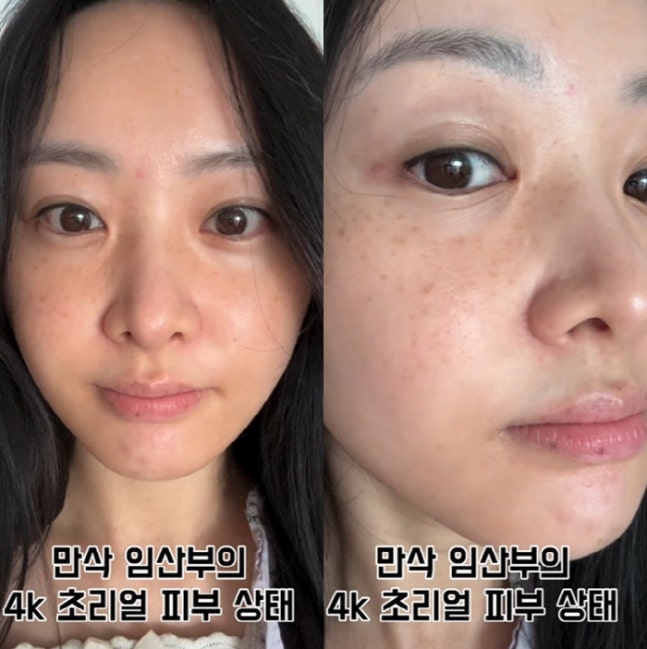
Former announcer and broadcaster Kim Da-young has drawn attention to pregnancy-related skin pigmentation after sharing photos showing darkened freckles and blemishes since becoming pregnant. Hormonal shifts during pregnancy stimulate melanin production, which can cause melasma to appear or existing pigmentation to deepen. While such changes often improve after childbirth, some cases persist for an extended period.
Kim posted a makeup-free video to SNS on Tuesday, saying she had never worried much about skin pigmentation because she enjoys being in the sun, but that her pigmentation had darkened since becoming pregnant.
"Skin without blemishes is of course beautiful, but honestly I kind of like this rustic look," Kim said, while also asking: "My dermatologist says freckles should be treated before they turn into deep melasma — is that really true?"
Skin color changes during pregnancy are common, as Kim — who is due to give birth in December — is experiencing. However, the appropriate management approach varies depending on the type of pigmentation disorder, and some brightening ingredients and treatments require careful consideration of their potential effects on the fetus.
Hormonal changes during pregnancy increase estrogen and progesterone levels, which stimulate melanocyte activity in the skin and accelerate melanin production. UV exposure compounds this effect, making pigmentation more pronounced.
Common skin changes during pregnancy include not only facial melasma but also darkening of the nipples, areolae and the central line of the abdomen, as well as intensification of existing freckles and pigmented spots.
According to the American College of Obstetricians and Gynecologists (ACOG), brown patches on the skin during pregnancy are linked to increased melanin production. Melasma appearing on both cheeks, the nose and the forehead is so closely associated with pregnancy that it is often called the "mask of pregnancy."
A 2024 study published in the international journal Clinical, Cosmetic and Investigational Dermatology reported that the incidence of melasma during pregnancy ranged from approximately 36.4 to 75 percent depending on the study population and region. Researchers said hormonal changes, genetic predisposition and UV exposure act in combination.
Melasma typically appears as brown or grayish-brown patches on the forehead, cheeks, nose and upper lip area, often distributed symmetrically across both sides of the face. While it does not cause inflammation or pain, deepening or spreading pigmentation can become a cosmetic concern.
UV exposure also plays a significant role in pregnancy-related pigmentation. Sunlight stimulates melanin production, and when melanocytes are already more active, existing spots can darken further. People who spend a lot of time outdoors or have been lax about sun protection may see more pronounced pigmentation changes.
Freckles and melasma may look similar on the surface but are distinct pigmentation disorders with different causes and characteristics, as Kim noted.
Freckles are small brown spots influenced primarily by genetic predisposition and UV exposure. They tend to appear on sun-exposed areas such as the nose and cheeks, darkening in summer and fading in winter as UV exposure decreases.
Melasma, by contrast, results from a combination of hormonal changes, UV exposure and genetic factors. It often presents as broad brown patches with irregular borders and is characteristically distributed symmetrically across the face, though it can also appear as small spots.
A study published in the Journal of the European Academy of Dermatology and Venereology also classified freckles as a localized increase in pigmentation that responds to UV exposure.
The darkening of freckles does not itself mean they are progressing into melasma. However, both conditions are affected by UV exposure and can appear together on the same person, making them difficult to distinguish by appearance alone.
The depth at which pigment is distributed in the skin also affects treatment. Melasma is categorized by whether pigment is concentrated mainly in the epidermis, extends into the dermis, or involves both layers. Cases with dermal pigment involvement or long-standing melasma may require more time to treat.
The American Academy of Dermatology (AAD) recommends consulting a dermatologist for an accurate assessment, as melasma can be easily confused with other pigmentation disorders. Dermatologists can examine pigment distribution and characteristics using visual inspection, a Wood's lamp and dermoscopy as needed.
Melasma that develops during pregnancy often fades naturally as hormone levels shift after childbirth. ACOG notes that while melasma and pigmentation changes from pregnancy generally improve postpartum, they can persist for years in some cases.
However, if a pigmented lesion that was not previously present grows rapidly, changes shape or color irregularly, or begins to bleed, it should not be dismissed as ordinary pregnancy-related pigmentation, and a dermatologist should be consulted.
The most fundamental approach to managing melasma and freckles during pregnancy is sun protection — reducing the primary trigger of pigmentation while monitoring skin changes after delivery.
The AAD recommends that people with melasma apply a broad-spectrum sunscreen with SPF 30 or higher, covering both UVA and UVB, every day. Outdoors, wide-brimmed hats and parasols should be used, and sunscreen should be reapplied at appropriate intervals to prevent it from being washed off by sweat or water.
Blocking visible light, not just UV rays, can also help with melasma management. Visible light from sunlight is known to stimulate melanin production in some skin types, worsening melasma.
A clinical trial published in the Journal of Cosmetic Dermatology in 2025 analyzed the melasma-prevention effects of tinted sunscreen.
Researchers compared a tinted sunscreen containing iron oxides with a regular sunscreen in 42 adults with melasma. Participants used the products for about five months, and data from the 41 who completed the study showed that those using the tinted sunscreen experienced a significant reduction in the color difference between melasma-affected skin and surrounding skin.
Iron oxides, an ingredient found in some cosmetics and sunscreens, help block visible light. For those with recurring melasma or high UV sensitivity, choosing a product containing iron oxides may be worth considering.
The ingredients in brightening products also warrant close attention during pregnancy.
Hydroquinone, commonly used to treat melasma, is not recommended during pregnancy due to insufficient safety data. Retinoids, which are vitamin A derivatives, are also ingredients to avoid during pregnancy. Oral isotretinoin is contraindicated during pregnancy because of the risk of fetal abnormalities.
Azelaic acid, by contrast, is considered relatively safe for use during pregnancy. ACOG lists some over-the-counter products containing azelaic acid as skin treatment ingredients that can be used during pregnancy. However, when using it specifically to treat pigmentation disorders, it is advisable to confirm the product and concentration with both a dermatologist and an obstetrician.
Dermatological procedures such as laser treatment also require consideration of the treatment purpose, gestational age and any medications used during the procedure. Because pregnancy-related melasma may improve after delivery, aggressive cosmetic pigmentation treatment is generally recommended only after assessing the skin's condition postpartum.
Minimizing irritation is also important in everyday skin care. Aggressive exfoliation, frequent scrubbing, and brightening products that cause stinging or burning can trigger inflammation and worsen pigmentation. Using a gentle cleanser and moisturizer to maintain the skin barrier, along with consistently applying sunscreen, is beneficial.
Skin that has darkened during pregnancy may fade as hormone levels change after delivery. Because recovery varies depending on the type and depth of pigmentation and the degree of UV exposure, the focus during pregnancy should be on protective skin care. If pigmentation persists after childbirth, selecting an appropriate treatment at that point is advisable.
rainbow@heraldcorp.com