Minister urges shift away from centrally planned, locally executed model
Busan-Ulsan-South Gyeongsang joint project receives 12.5 billion won this year to support cross-regional commuting and employment
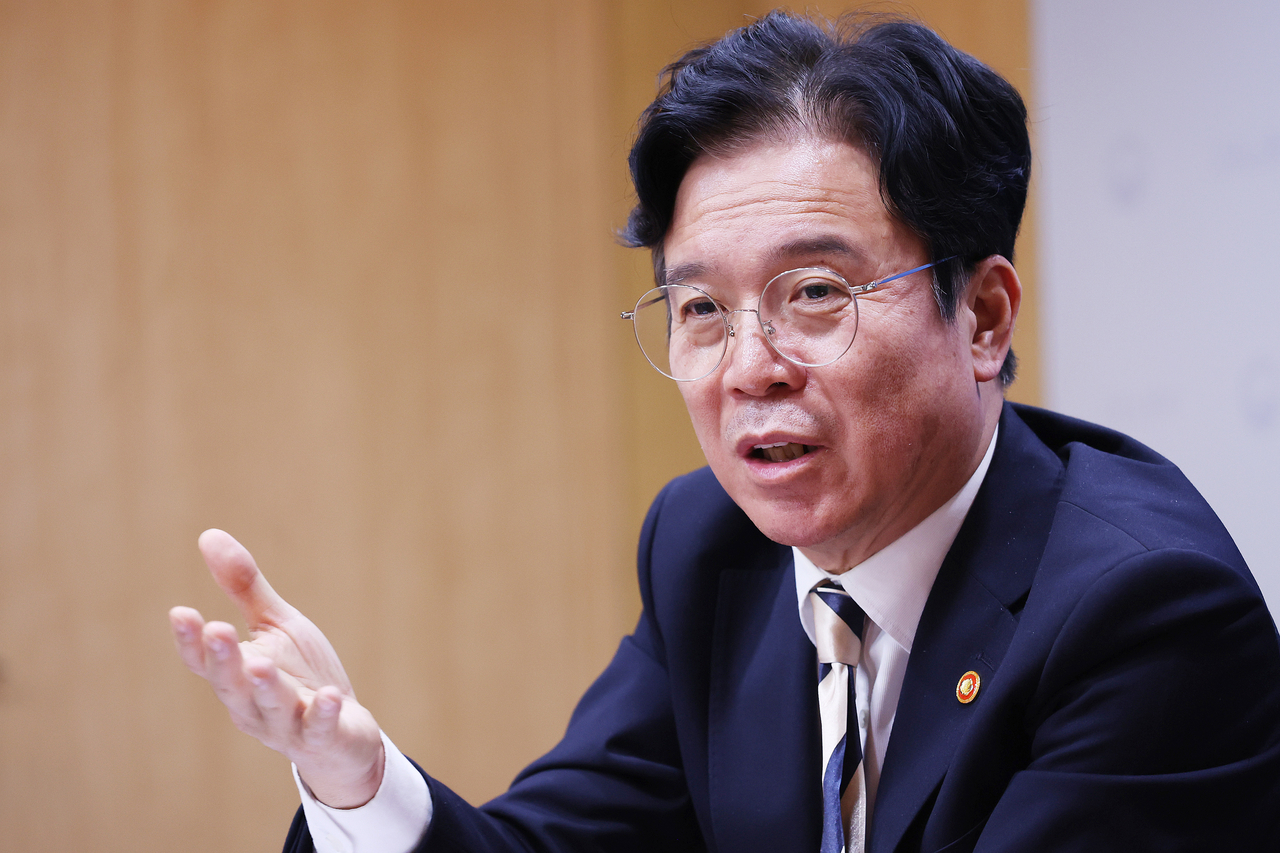
Minister of Employment and Labor Kim Young-hoon said the government must overhaul the way regional job programs are designed and run. The current model — in which the central government plans initiatives and local governments carry them out — should give way to one in which local authorities, better acquainted with their own industries and labor markets, design programs while the central government provides support. Kim cited the Busan-Ulsan-South Gyeongsang "Gwangyeok Eum Project," a joint initiative by the three regions to expand cross-regional commuting and employment services, as a model for the new approach.
Speaking Wednesday on KNN's "Morning Wide," a privately operated broadcaster serving Busan and South Gyeongsang Province, Kim said the paradigm of regional employment policy must change. "Local governments should come up with the ideas, and the central government should only provide support without interfering," he said.
The Ministry of Employment and Labor, the city of Busan, the city of Ulsan and South Gyeongsang Province launched the project in September, with plans to run it through 2029. This year's budget totals 12.5 billion won ($9.32 million), comprising 10 billion won in national funds and 2.5 billion won in local contributions. The goal is to link the three regions into a single employment zone by supporting cross-regional commuting and connecting job-placement services across administrative boundaries. The project also aims to attract young workers from outside the region, help local youth stay in long-term employment, and train workers needed for the AI transformation of the manufacturing sector.
Kim identified mobility for young workers as the key factor in the project's success. Ulsan and South Gyeongsang Province have strong manufacturing bases, while Busan has an edge in the maritime and media industries, he noted, adding that better commuting conditions between the regions would broaden job options for young people. The idea, he said, is that a young person who wants to live in Busan should be able to commute to a company in Changwon without having to relocate.
A job fair held at Busan's Bexco in September drew companies from the region's core industries, including shipbuilding, automobiles and machinery parts. Kim said he plans to develop future events into occasions that offer young job seekers not only hiring opportunities but also a look at the educational, cultural and residential conditions the region has to offer, built on closer cooperation between local universities and businesses.
Kim said his top remaining priority for his term in office is addressing what he called "unresolved grievances" in the workplace — reducing deaths and injuries on the job, ensuring workers are paid for the work they do, and eliminating discrimination against those doing comparable work.
fact0514@heraldcorp.com