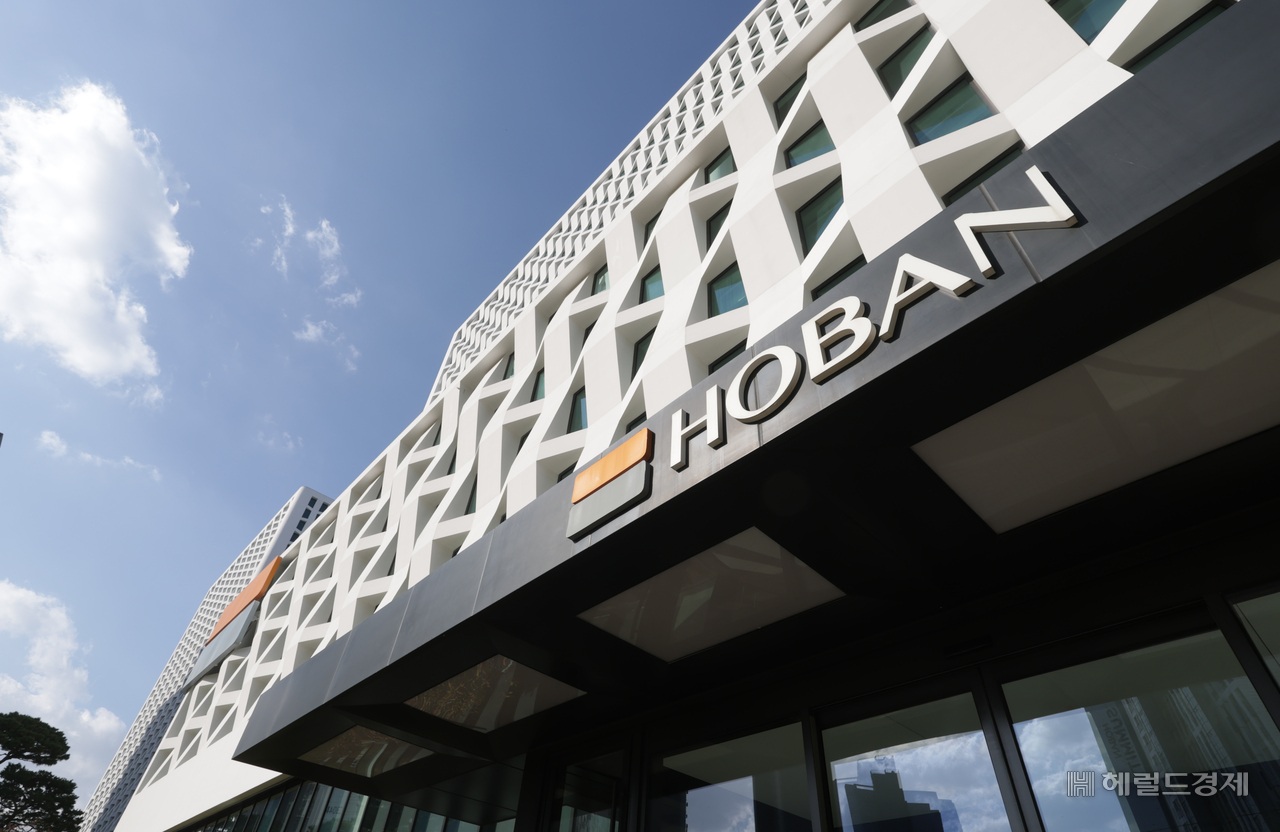
A renewed battle for control of Hanjin KAL has run into two major obstacles: a sharply higher share price and a thin free float. Analysts estimate that only around 10 percent of all shares are actually available for purchase on the open market. Given that Hoban Group would need to acquire a massive additional stake to surpass the combined holdings of Hanjin Group Chairman Cho Won-tae and his allied shareholders, wresting control through open-market buying alone is seen as highly unlikely.
According to DART filings Wednesday, seven shareholders collectively held 76.64 percent of Hanjin KAL as of last July: Cho's camp (20.57 percent), Hoban Group (20.15 percent), Delta Air Lines (14.90 percent), Korea Development Bank (10.58 percent), the national pension fund (5.11 percent), LX Pantos (3.83 percent) and GS Retail (1.50 percent).
That leaves a residual stake of 23.36 percent. Once shares held long-term by institutional investors are factored out, the amount actually available for purchase in the market is estimated at roughly 10 percent of the total. Some institutional investors also have business ties with Hanjin Group, making it difficult for Hoban to secure their shares as well.
A notable example involves private equity funds managed by Daeshin Asset Management and Yujin Asset Management, which acquired the Hanjin KAL stake that Bando Group sold through a block deal in 2022. The two firms are estimated to hold a combined 9.06 percent. Those funds received capital contributions from companies with business relationships with Hanjin Group, including SK Energy, HD Hyundai Oilbank and GS Caltex. When the funds reached maturity last year, investors chose to extend them rather than redeem.
Excluding those holdings, the freely tradable shares shrink to 14.30 percent of the total — and stripping out other institutional positions would reduce the retail float further still. "The tradable volume in the actual market appears to be less than 10 percent of the total," an official at one asset management firm said. "The fact that Hanjin KAL hit the daily upper limit on Tuesday likely had more to do with the thin float than with fresh buying driven by the renewed control dispute."
Cho's camp (20.57 percent) and Delta Air Lines (14.90 percent), classified as a friendly shareholder, together hold 35.47 percent. For Hoban to surpass that combined figure, it would need to add roughly 15.32 percentage points. Assuming the freely tradable float equals 10 percent of all listed shares, that amounts to only about 6.68 million shares — roughly 3.55 million shares short of what Hoban would need even if it bought every available share.
With the float so constrained and the share price having surged, analysts say reversing the balance of power through open-market purchases alone will be extremely difficult. Hanjin KAL shares soared more than 46 percent over Monday and Tuesday. The company's market capitalization of 11.7 trillion won ($8.72 billion) has now overtaken that of its core subsidiary Korean Air, which stands at 10.73 trillion won.
"The excessive share price gains over two days raise the cost of acquiring additional stakes for both Cho's camp and Hoban Group," said Bae Se-ho, an analyst at iM Securities. "Assuming open-market purchases, securing an additional 1 percentage point of shares would require 117 billion won."
For Hoban to gain a majority stake in Hanjin KAL, it would need to buy an additional 29.85 percentage points. Based on Tuesday's closing price, the cost would reach approximately 3.5 trillion won.
Past precedent, however, suggests Hoban could continue accumulating shares on the open market. Private equity firm KCGI secured roughly 9 percent of Hanjin KAL in November 2018 to become the second-largest shareholder, then aggressively bought shares from March through December 2019. In late March 2020, it invested 23.6 billion won to purchase an additional 365,370 shares even as the stock was surging, lifting its stake to 19.36 percent. The freely tradable share ratio at that time was estimated at around 12.04 percent as of April 2020.
Given the limits of open-market buying, some analysts raise the possibility that Hoban may opt for a prolonged campaign rather than moving immediately to acquire more shares. Hoban Group is a corporation sitting on cash worth trillions of won, while Cho is an individual relying on personal funds and margin loans backed by shares. Inheritance taxes arising from any future succession process are also seen as a factor that could erode Cho's stake over time.
"The market's view is that the longer this drags on, the more negotiating leverage Hoban can build simply by holding its current stake," said Kim Su-hyeon, head of research at DS Investment Securities.
Domestic securities firms expect the battle for shares to continue through year-end. "The competition over the largest-shareholder position is forecast to persist until the end of the year, ahead of Hoban Group's disclosure of any stake changes, a re-filing related to the change in largest shareholder, and the scheduled date of Chairman Cho's share purchases," said Yang Seung-yun, an analyst at Eugene Investment Securities. Both sides are expected to seek additional shares ahead of Dec. 31, the record date for voting rights at the annual general shareholders meeting.

moon@heraldcorp.com