
Investing in US stocks is no longer optional — it has become essential. But knowing what to watch and how to invest remains a challenge. Accurate information and timely analysis are both the starting point and the destination for US stock investors. We will navigate that journey together. 'Seohak Gaemi Jusik Hoesa' (a column on US stock investing for Korean retail investors) tackles your questions and concerns.

Money that once poured into cutting-edge semiconductors on Wall Street is now flowing toward hypermarkets selling groceries and everyday essentials.
The anxiety gripping tech stocks traces back to the "Jensen Huang shock." Nvidia CEO Jensen Huang's abrupt resignation sent NASDAQ and semiconductor shares into a sharp decline, unleashing a wave of skepticism about AI valuations and profitability.
Huang's unanimous reinstatement by the board 11 days after his resignation appeared to douse the immediate flames — but market unease has not faded. Overnight in New York, the NASDAQ fell 1.48% and the Philadelphia Semiconductor Index plunged 7.88%. Nvidia's share price dropped 5.86%.
Quietly benefiting from the perfect storm were three US retail giants: Costco, Walmart and Target — a hypermarket trio that has become a refuge for rattled investors.
While the NASDAQ 100 and the Philadelphia Semiconductor Index tumbled roughly 9% and 18%, respectively, over the past month, the three stocks gained more than 10% on average. Costco and Walmart rose 8.81% and 10.36%, respectively, while Target surged 15.25%.
The rotation reflects capital fleeing tech for defensive stocks — but the trio's gains are not simply a matter of safe-haven demand. Solid earnings have also underpinned the rally. Both Walmart and Target this month posted third-quarter results that beat market expectations.
Markets are beginning to favor the steady profits generated by everyday consumer spending over the future gains promised by AI. Here is a closer look at what makes each of the three retailers an attractive investment.
Walmart: the retail heavyweight that holds up even in downturns
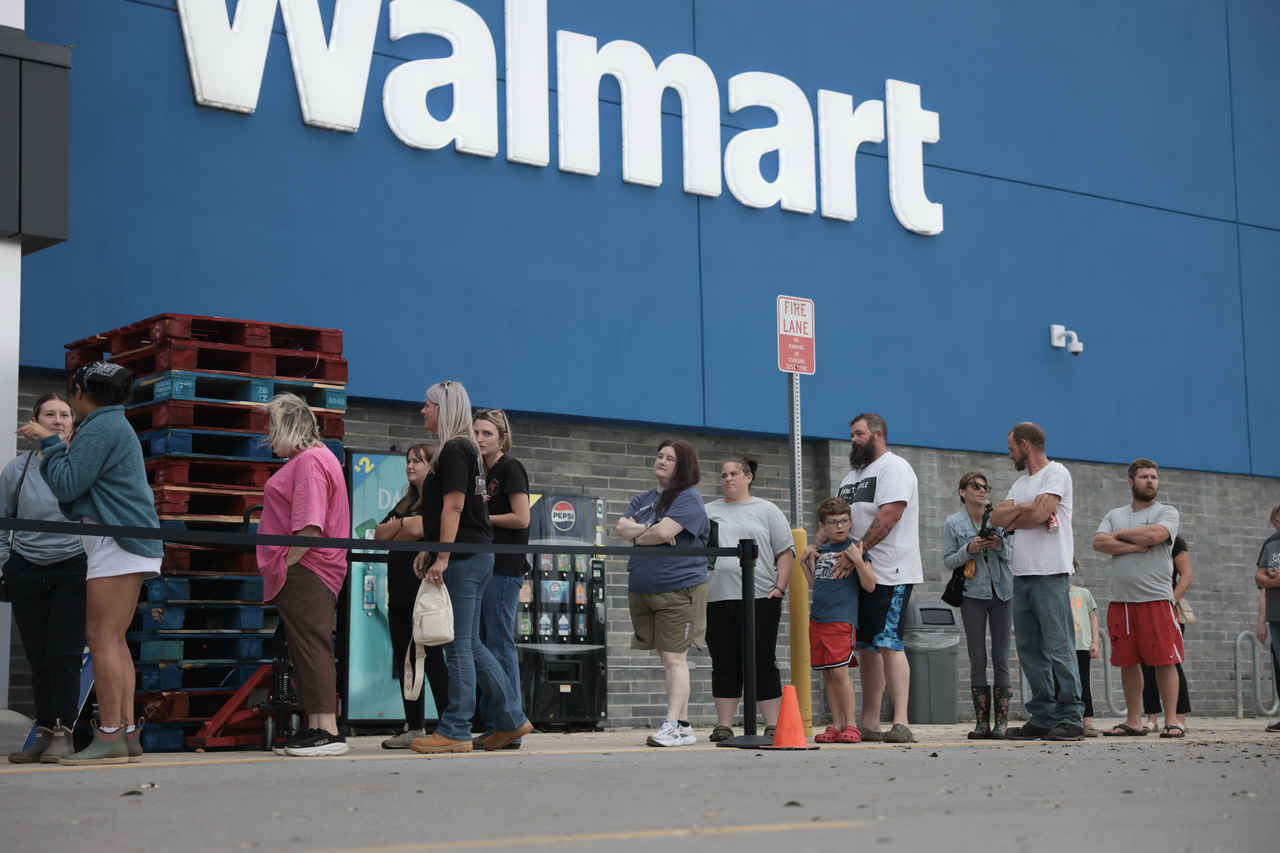
Walmart is widely regarded as the world's largest retailer, selling nearly everything a household needs — from groceries and daily essentials to electronics and clothing. Its market capitalization stood at approximately $1.05 trillion as of Tuesday, making it by far the largest of the three hypermarket stocks.
Walmart's core competitive edge is its "Everyday Low Price" strategy: leveraging massive purchasing power and an efficient logistics network to keep prices down and draw in customers.
The company uses its roughly 4,600 US stores as logistics hubs to offer same-day delivery and in-store pickup for online orders. It has also been expanding into online shopping and its paid membership program, Walmart+, putting it in direct competition with Amazon.
Third-quarter sales for fiscal year 2027 reached $188.8 billion, up 5.2% from a year earlier. Operating profit surged 16% to $7.77 billion. Adjusted earnings per share came in at $0.65, edging past the market consensus of $0.64.
Buoyed by market share gains, the company raised its full-year net sales growth guidance from a range of 4.0–5.0% to 4.9–5.2%.
"Even amid elevated macroeconomic uncertainty around US consumer spending, the company's relatively stable growth trajectory is a positive," said Park Sang-jun, an analyst at Kiwoom Securities.
Target: the 'dividend king' stages a comeback on improved profitability
Target's rebound has been equally striking. Net sales for the third quarter of fiscal year 2026 rose 7.1% year-on-year to $27.1 billion, while operating profit jumped 76.4% to $1.67 billion.
A 5% increase in transaction volume drove comparable-store sales up 5.6%, well above the market estimate of 3.8%. Earnings per share came in at $2.65, roughly 29% ahead of the consensus forecast of $2.07.
Both Walmart and Target have sustained their share price gains since reporting earnings on Nov. 18 and Nov. 19, respectively. The steadier growth profile of retail stocks has stood out all the more as anxiety over AI companies' profitability has intensified.
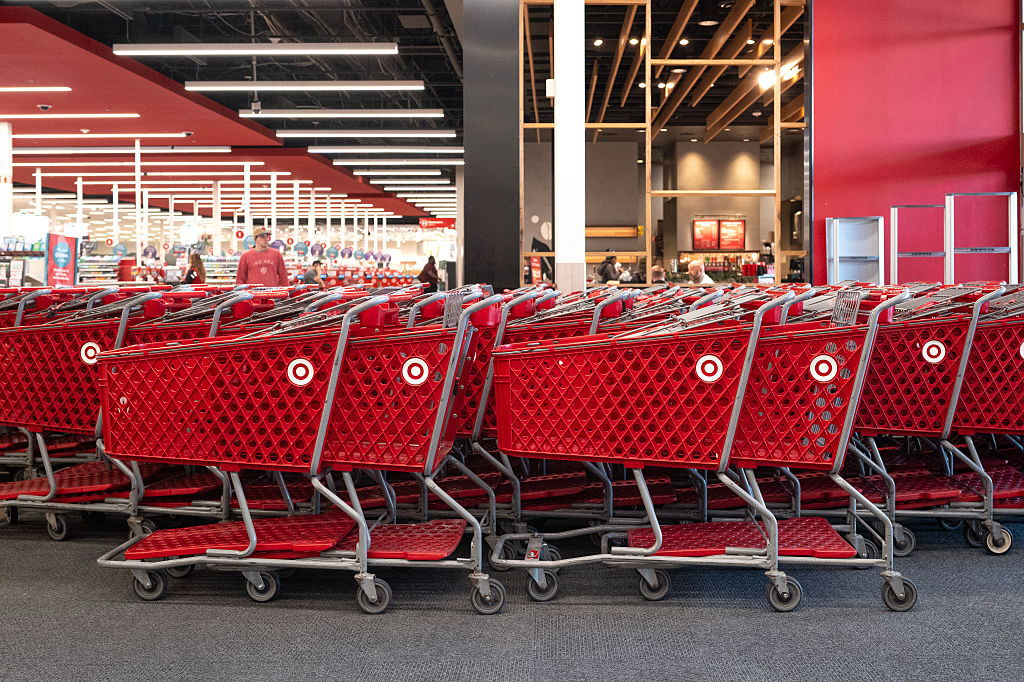
Target operates about 2,000 stores across the United States, offering food, household goods and clothing at competitive prices under one roof. Along with Walmart, it is one of the hypermarkets Americans visit most frequently.
Target's distinguishing strength lies in its private-label brands. Good & Gather in food, Cat & Jack in children's clothing, and Threshold in home and living are all exclusive to Target. Last year, private-label products accounted for 30% of total sales.
Last year was a difficult one for Target. Weak sales in apparel and home goods, combined with declining store traffic, sent its share price down 27% over the course of the year.
This year has been a different story. Target closed Tuesday at $176.06, up 4.68% from the previous session. During the session it climbed as high as $176.63, setting a new 52-week high. The stock has gained 75% so far this year.
The renewed investor interest stems from a meaningful improvement in profitability. Target reduced the inventory markdowns that had weighed on last year's results, streamlined logistics and supply chain operations to cut costs, and grew its higher-margin non-merchandise revenue — including its in-house advertising platform Roundel, the paid membership program Target Circle 360, and co-branded credit cards — by 19.3%.
Target's dividend appeal is another draw. The company has raised its dividend for 58 consecutive years, earning it the title of "dividend king." Its average annual dividend growth rate over the past decade stands at 7.6%, and the trailing 12-month dividend yield is 2.6%.
Costco: powered by 130 million members worldwide
Costco hit an all-time high of $1,123.67 during trading on Nov. 17. The warehouse retailer is a familiar name to Korean consumers as well — its stores in Gwangmyeong, Hanam and Yangjae are packed with shoppers every weekend.
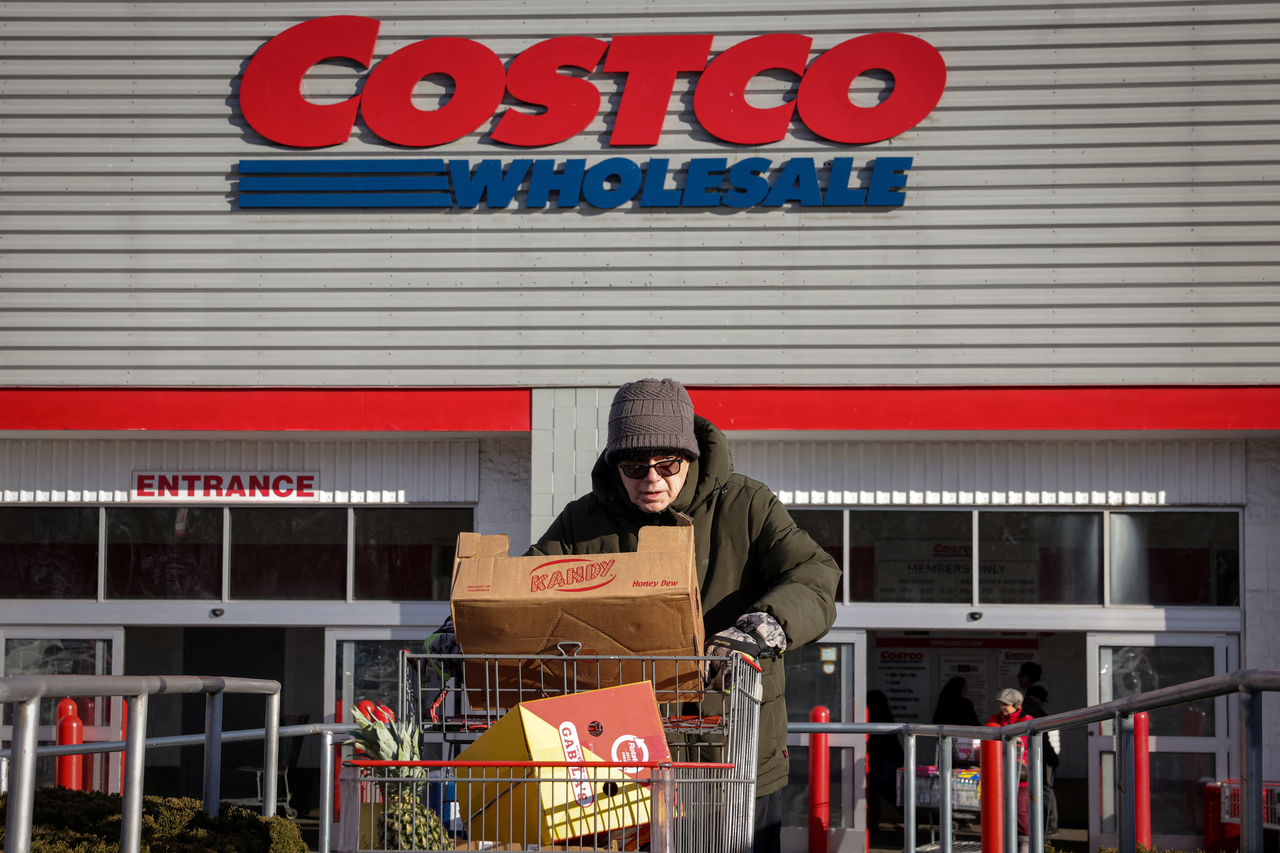
Costco Wholesale was founded in Washington state in 1983 and has grown into a global warehouse retailer with more than 900 stores worldwide and a paid membership base exceeding 130 million.
Its defining business model is the paid membership structure: the company keeps product margins thin to attract customers while generating stable profits from annual membership fees. Membership fee revenue accounts for only about 2% of total sales — yet it represents more than half of operating profit.
Membership fee revenue for the third quarter of fiscal year 2026 reached $1.37 billion. For the full fiscal year 2026, total membership fee revenue came to $5.91 billion.
Market attention is now focused on the fiscal year 2027 first-quarter results due Dec. 10 (local time). Wall Street forecasts sales of $74.42 billion, up 10.6% year-on-year, with earnings per share of $4.92.
The key metrics to watch in the upcoming results are the membership renewal rate and new member growth — a measure of how well the company is retaining existing customers while attracting new ones.
Costco recently announced a special dividend of $30 per share totaling $13.3 billion, along with a $4 billion share buyback program. The company has also raised its regular dividend for 22 consecutive years, with an average annual dividend growth rate of 15%.
Pricier than Big Tech: P/E ratios top 50x
One factor investors should keep in mind is the elevated valuations. Costco and Walmart trade at price-to-earnings ratios of 52.4 times and 50.3 times, respectively — far above major Big Tech names such as Nvidia (16.6 times) and Alphabet (14.5 times). Target's P/E stands at 16.2 times.
Some analysts caution that the strong earnings performance may already be priced in, warranting a more measured approach to new positions.
Jeon Gyu-eun, an analyst at Shinhan Securities, said of Walmart: "We maintain a positive view, but the recent share price gains reflect defensive rotation more than upward earnings revisions, so we recommend buying in tranches on any pullback."
Brett Husslein, an analyst at Morningstar, said of Costco: "We remain optimistic about the company's growth strategy," but added that "the stock is trading at a 50% premium to our fair value estimate, which leads us to view it as overvalued."
moon@heraldcorp.com





