Six scarves for 10,000 won draw massive crowds into the market's alleys
SNS brings in younger shoppers; foreign tourist numbers keep climbing
Vendors pivot to retail, pop up in department stores in bid to survive
Payment hurdles and other barriers remain: 'Convenience must improve'
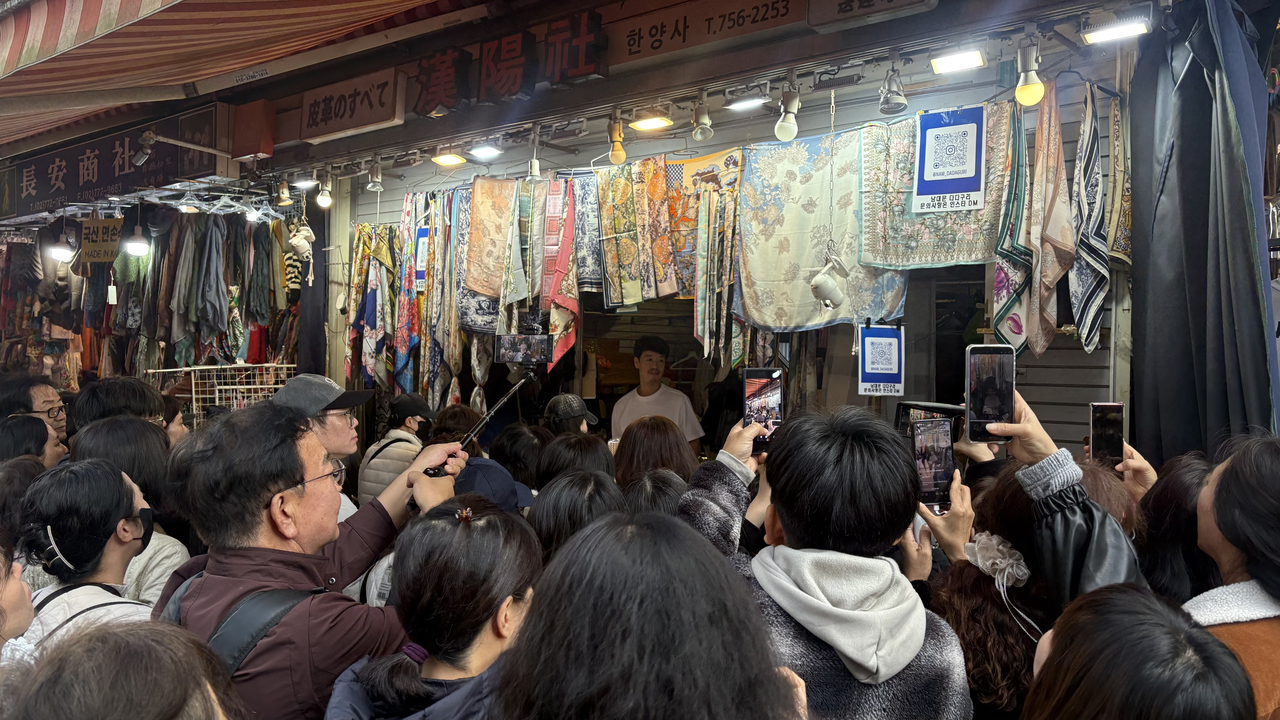
"Don't worry about the back of your head getting hot. Pick whatever you want, ladies. Take your time. It's nothing special. I'm just selling last year's stock."
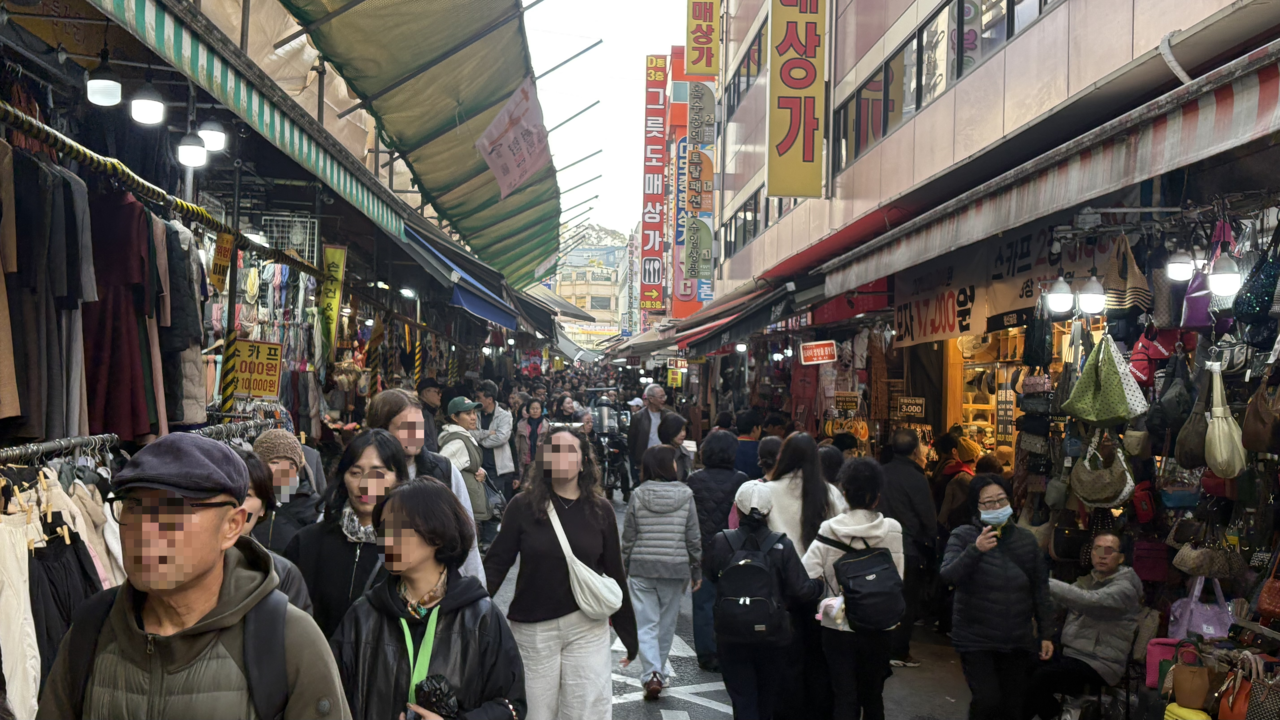
It was around 3 p.m. Tuesday at Dadaguri, a scarf shop inside Namdaemun Market in Jung-gu, Seoul. About 60 people were lined up five rows deep in front of the store. Shoppers pressed shoulder to shoulder, inching forward without complaint. Calls of "Don't push!" rang out repeatedly, yet the crowd shuffled steadily toward the entrance. Despite the brisk autumn chill — temperatures hovering around 10 degrees Celsius — the air in front of the shop was electric.
Dadaguri's popularity traces back to the owner's sharp wit. "Don't spend your money. This will look worse once you get home," the owner quips, drawing laughter even while seeming to talk customers out of buying. On social media, the owner has earned the nickname "scarf ajeossi" — the scarf uncle — and become a viral sensation. The price helps too: six scarves for 10,000 won, a sum low enough to remove any hesitation.
Despite the surging crowds, Dadaguri posts no set business hours. On Tuesday, the shutters went up around 2:50 p.m. and the waiting crowd rushed in all at once. The scarf ajeossi spread both arms wide to direct the queue and hired a part-time worker on the spot to help manage the line.
Most of the people filling the space in front of the store were women in their 50s and 60s with graying hair. Voices calling out "Oppa, you're so handsome!" to the owner — who is in his 40s — rang out from every direction. Shoppers swapped buying tips with one another. The scene was reminiscent of a concert by singer Lim Young-woong or a fan club gathering.
Cameras were just as busy as the shoppers. Selfie sticks shot up into the air as visitors filmed the scarf ajeossi or livestreamed the scene in real time. A 58-year-old surnamed Lee said she had come after watching a video on YouTube. "This is the first time I've ever waited more than 30 minutes in a market to buy something," Lee said. "I had no idea there would be this many people, but now that I'm here, there's so much to look at and the scarves are so cheap — I love it," Lee added.
SNS fuels the buzz — and brings younger shoppers in
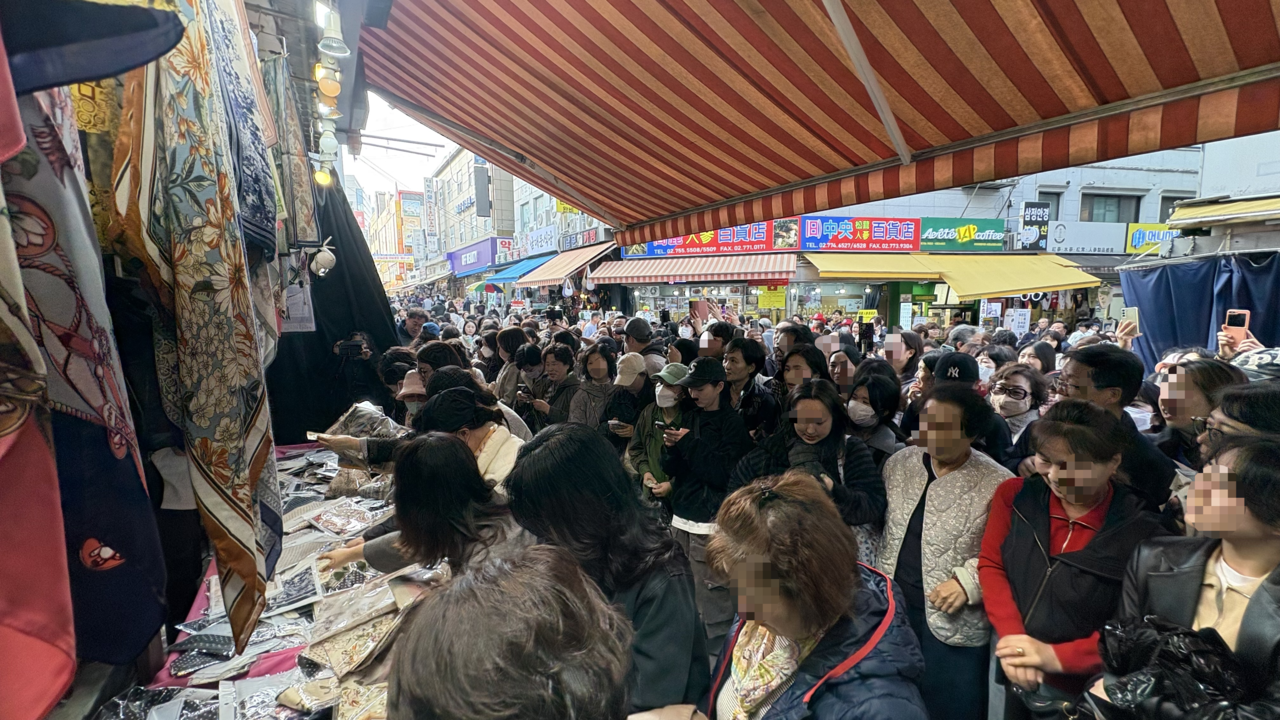
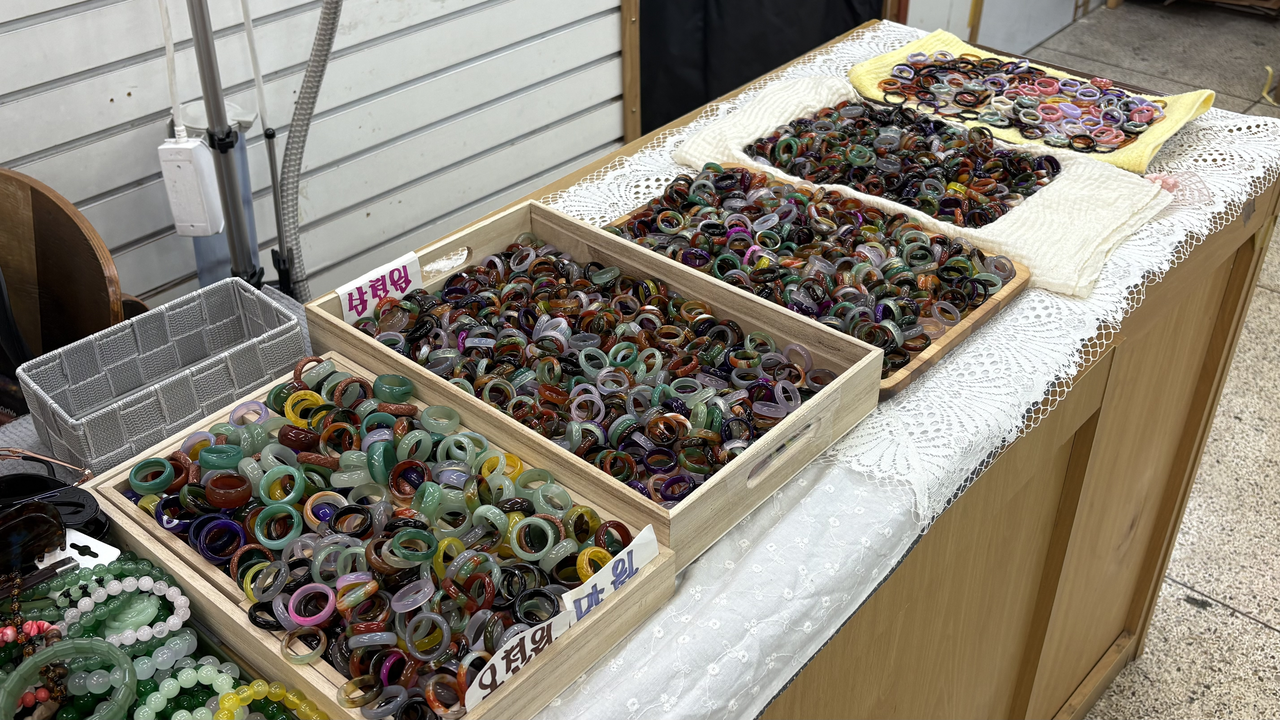
Namdaemun Market, thrust into the spotlight by the scarf ajeossi, has recently emerged as a hub for new trends. The wellness boom has put bath products in the limelight, and demand for jade rings has risen alongside the "jade core" trend — a fashion movement centered on jade accessories. Kitchenware, flowers and swimwear have also drawn attention, pulling in younger visitors who once avoided traditional markets.
Even on a weekday afternoon, the market's alleyways were packed. Visitors zigzagged through narrow passages to avoid one another, hands full of hotteok in paper cups, flowers wrapped in newspaper and plastic bags. Kim Ji-min, 29, who came from Namyangju, said she had persuaded her mother to make the trip so she could try japchae hotteok. "I get to eat the street food I always see on YouTube and browse all kinds of things — it's a lot of fun," Kim said.
Lines in front of the hotteok stall stretched about 30 minutes long. The hairtail fish alley was equally busy. A vendor who has worked the alley for 17 years said the market's newfound buzz has brought in many younger customers. "Sales that had dropped sharply after COVID-19 have recovered a lot," the vendor said.
The numbers back it up. According to Google Trends, searches for "Namdaemun Market" surged 300 percent year-on-year between Aug. 7 and Tuesday. On Instagram, posts tagged with "Namdaemun Market" have surpassed 145,000. Celebrities including Hwasa and Park Myung-su have featured the market in their content, adding to the buzz.
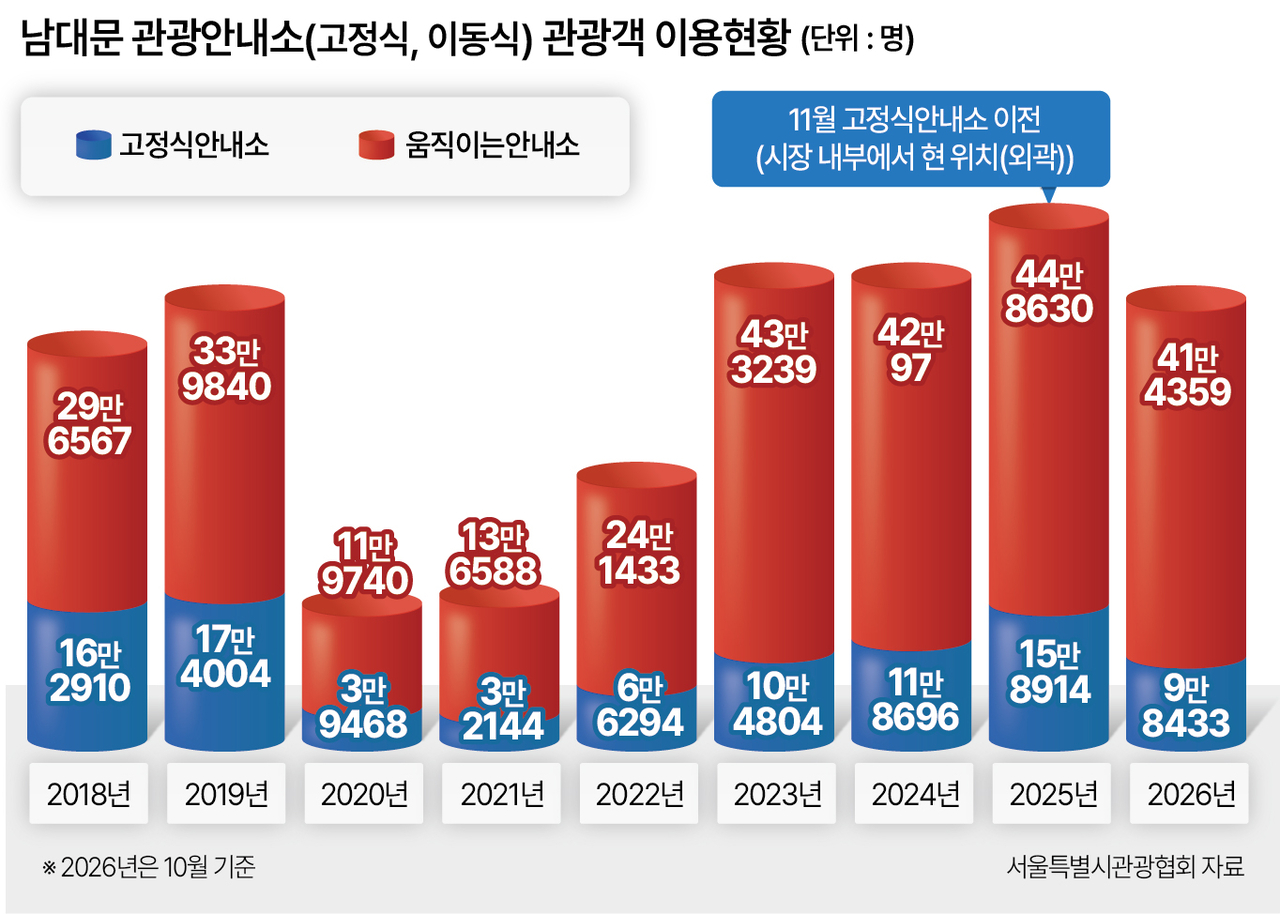
Foot traffic at the tourist information centers inside the market has also climbed. According to the Seoul Tourism Association, the number of visitors using fixed and mobile information booths rose from 31,644 in January to 86,840 in October — roughly 2.7 times more. That figure is up 40.6 percent from September's 61,739.
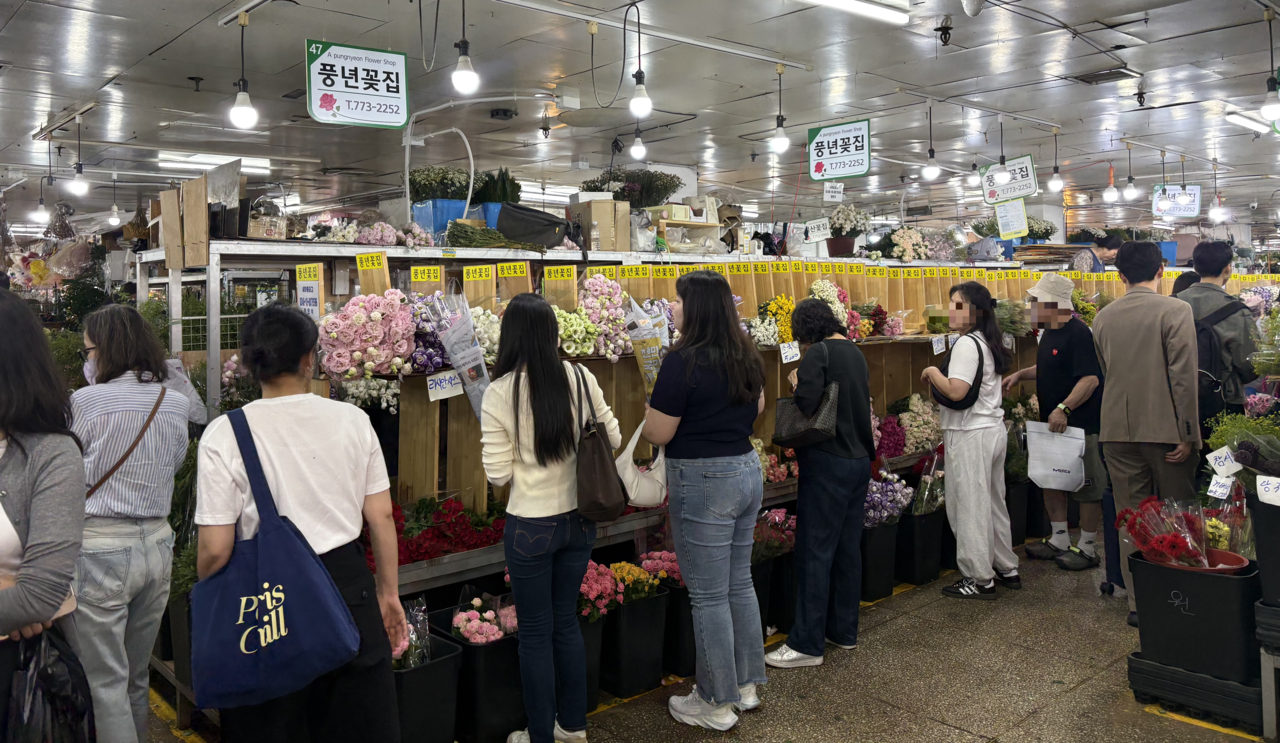
The products that have taken off at Namdaemun share one trait: value for money. A chopstick-and-spoon set goes for 9,000 won, a bowl for 10,000 won. A bundle of 100 roses costs 25,000 won, and a jade ring just 3,000 won. Food is equally affordable — hotteok for 2,500 won, coffee for 2,000 won, misugaru grain drink for 3,000 won. Against a backdrop of steep inflation, the market offers a rare chance to spend without guilt.
Part of the appeal is the experience itself: browsing and picking out items in person. Shoppers hunt down products they spotted on social media, wander the alleys and snack along the way. Namdaemun has become a new playground for younger consumers.
Vendors have also adapted their sales approach, adding to the energy. Stalls that once operated as wholesalers have shifted to retail, selling items individually rather than in bulk sets — a self-help strategy to offset shrinking wholesale demand and attract a new wave of shoppers.
Park Byung-su, 68, who runs Bak Geuteul, a kitchenware stall, switched to individual-item sales about a year and a half ago after years of focusing on commercial-use products and wedding gift sets. "The IMF crisis and COVID-19 cut into our customer base. Then Daiso and online shopping spread, and I realized I couldn't stick to the old way," Park said. "Once I started selling items individually so regular consumers could buy them, sales this year alone jumped 30 to 40 percent."
Trends born at Namdaemun have also migrated to department store pop-up shops. From June 22 to July 5, a pop-up for Hyundai Gigeul and Bak Geuteul — two Namdaemun vendors — ran on the first basement floor of Lotte World Mall in Jamsil. The event drew 20,000 buyers and hit 210 percent of its sales target, with 60 percent of customers in their 20s and 30s.
The flower market has followed a similar path. Vendors who once sold almost exclusively at pre-dawn wholesale hours have expanded into retail to compensate for declining wholesale demand, selling unsold flowers from the early-morning market to general shoppers until 3 p.m. The shift has opened a new sales channel while clearing leftover stock.
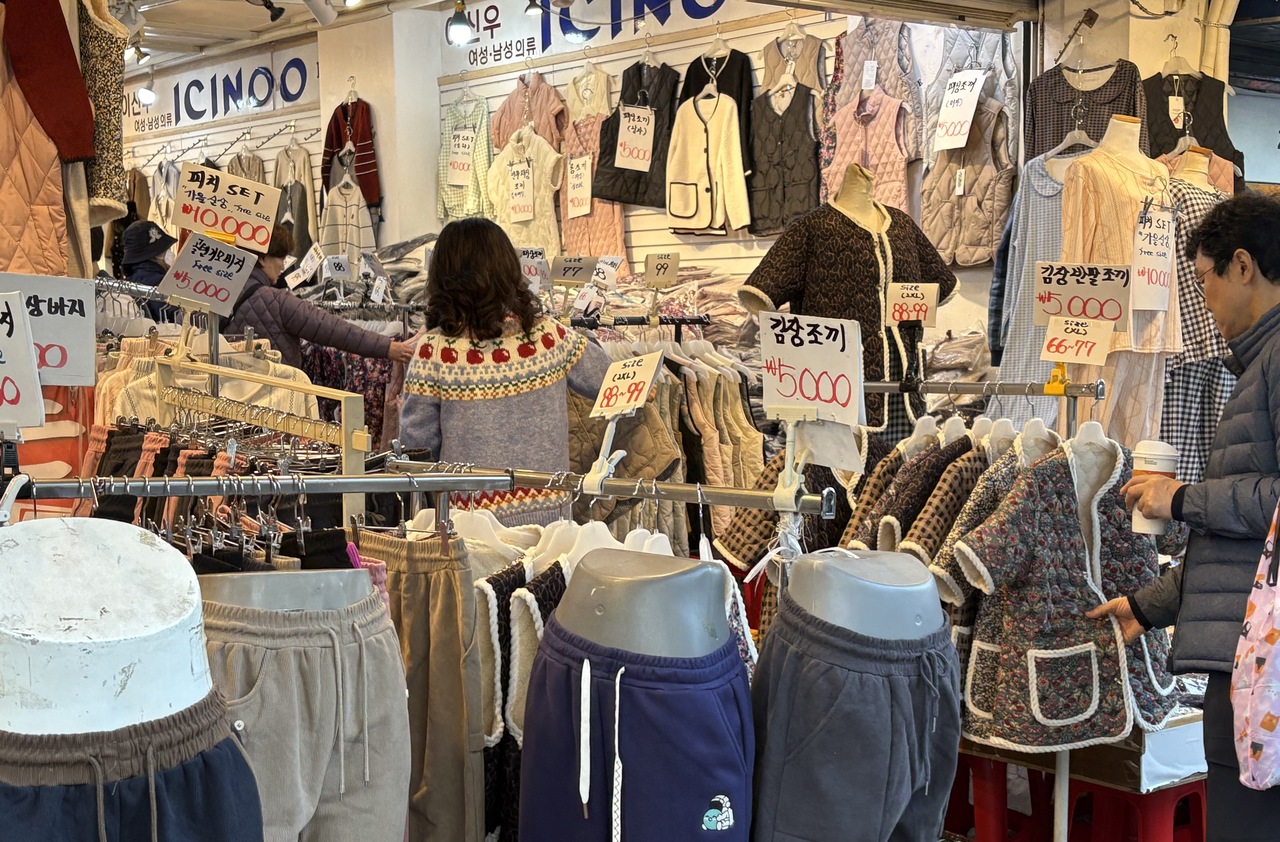
Demand for Namdaemun's traditional strength — affordable clothing — remains steady. Ahead of winter, stores selling fleece-lined trousers, kimchi-making vests and corduroy pants for 5,000 won each are easy to find. The children's clothing section also draws a consistent stream of visitors.
A 39-year-old surnamed Park, who came from Osan with a 6-year-old daughter, said word had spread among fellow parents that Namdaemun's children's clothing market offered great prices. "I bought my child's clothes and shoes for about half what I'd pay elsewhere," Park said. A visitor in their 80s, also surnamed Lee, picked up a winter puffer jacket for 50,000 won. "I can get here in one bus from Nonhyeon-dong," Lee said. "I come by every now and then because the clothes are so cheap."
Beyond young Koreans: foreign tourists join the crowd
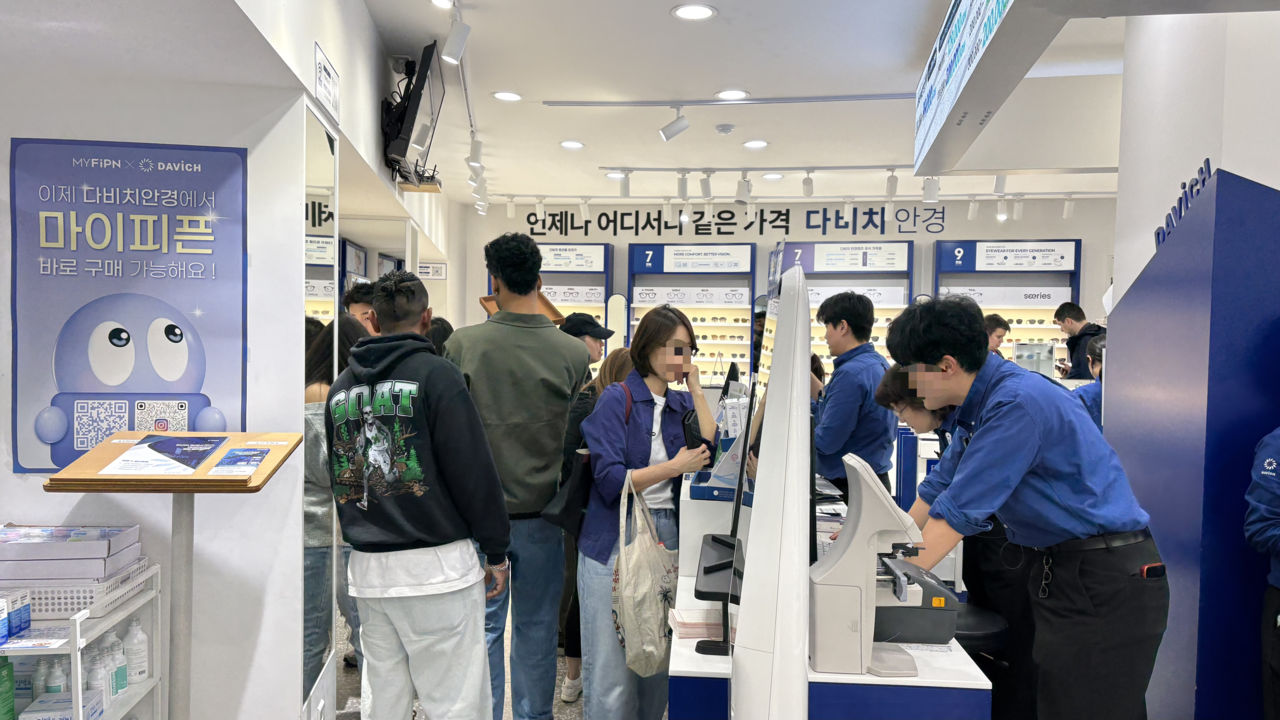
Namdaemun Market has also established itself as a shopping destination for foreign tourists. Visitors seek out everyday goods — bedding, pajamas, socks — at prices lower than they would find elsewhere, as well as eyeglasses. Optical shops, which can fill a prescription in a short time, were among the most popular stops.
Luisa, 25, a Spanish tourist who bought bedding and pajamas at the market, said she had found Namdaemun through TikTok. "In Spain, it's hard to find products made of this quality of material at this price," she said. Ko Hyeon-seok, who runs an optical shop, said foreign customers had increased by 20 to 30 percent recently, with visitors coming from the United States, Singapore and many other countries. On Tuesday, 12 foreign nationals of various nationalities were browsing frames inside the shop.
A pharmacy was equally busy. Wangsol Pharmacy, a long-standing fixture of Namdaemun Market, has seen a steady stream of foreign shoppers looking for cosmetics. The store has stocked cosmetics along the front of its checkout counter. Hanmi Pharm's Procam Red X Cream is priced at 10,000 won and Rijumore's Derma Cream at 35,000 won — 1,000 to 2,000 won cheaper than online market prices.
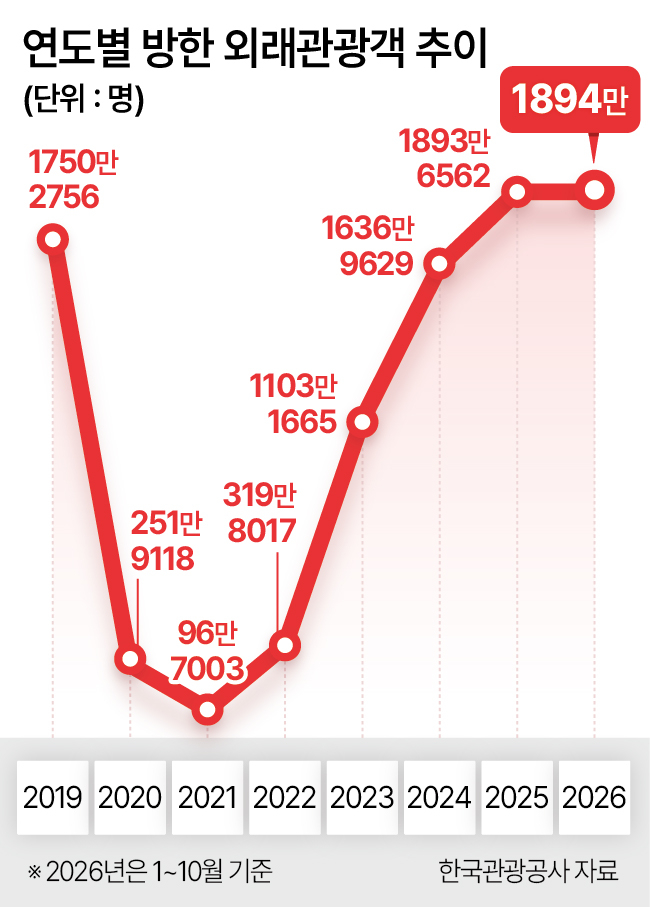
The rise in foreign spending at Namdaemun mirrors a broader surge in inbound tourism. According to the Korea Tourism Organization, about 18.94 million foreign visitors came to South Korea in the first 10 months of this year, already surpassing last year's full-year total and running more than 8 percent above the pre-pandemic 2019 annual figure.
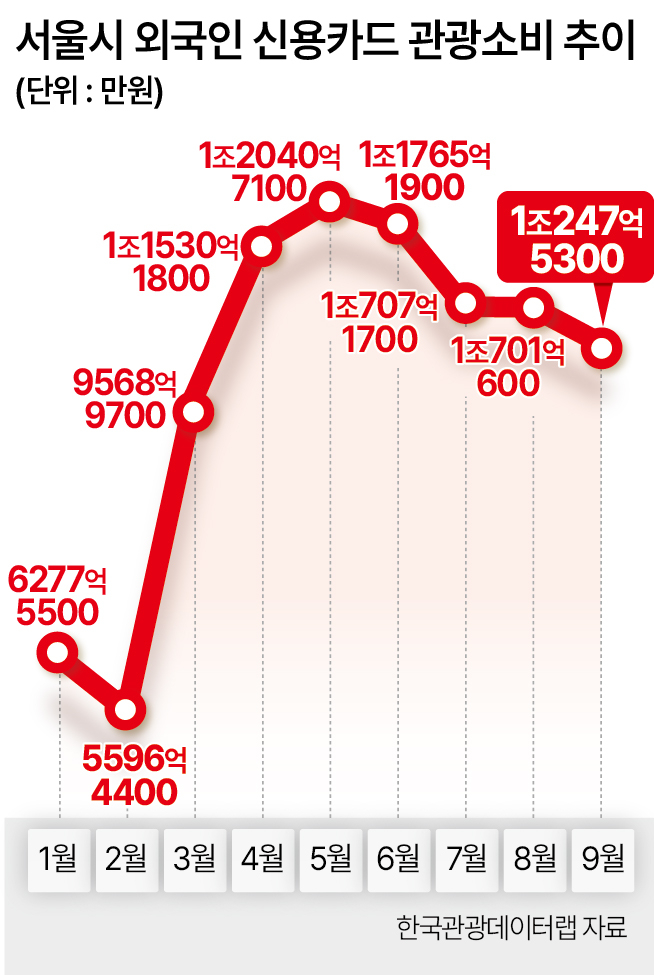
An analysis of Seoul tourism and spending trends for January through September 2026 by the Seoul Metropolitan Government found that foreign tourists' card spending reached 8.84 trillion won ($6.59 billion), up 57.7 percent from 5.61 trillion won in the same period last year. Spending at traditional markets rose 48.8 percent over the same period, from 153.3 billion won to 228.2 billion won. Foreign card spending at Namdaemun Market specifically climbed 65.6 percent.
On Instagram, posts tagged "#Namdaemun" — targeting Japanese travelers — have surpassed 246,000, with many recommending specific items to buy. Videos of the scarf ajeossi carrying that tag have racked up more than 2.8 million views.
Ripple effects reach convenience stores and department stores
The Namdaemun boom shows up in sales figures at nearby businesses. Convenience stores are a prime example. Sales at nine GS25 outlets near the market rose 9.6 percent year-on-year from July through October, with October's growth rate accelerating to 17.2 percent.
Over the same period, Seven-Eleven stores near Namdaemun posted a 22 percent year-on-year sales increase. By product category, souvenir sales led the way with a 757 percent jump. Salads (up 366 percent), seasonal items such as hand warmers and cooling sleeves (318 percent), desserts (278 percent), stationery (198 percent) and steamed buns (171 percent) also recorded sharp gains.
During the week of Oct. 25 to Oct. 31, when the scarf ajeossi's popularity hit full stride, CU also saw sales climb. Rice cake sales at nearby CU outlets surged 94.6 percent compared with the same period the previous month, while dessert and cosmetics sales rose 55.3 percent and 67.0 percent, respectively.
Foreign spending stood out as well. Foreign customer sales at CU outlets near Namdaemun rose 32.6 percent in the Oct. 25–Oct. 31 period compared with the same stretch the prior month. At Seven-Eleven, foreign sales from July through October were up 51 percent year-on-year. Desserts led by product category with a 568 percent increase, followed by sauces (400 percent), bath products (349 percent), ramyun (196 percent), yogurt (156 percent), health and beauty supplements (131 percent), traditional liquor (127 percent), ready-to-eat foods (94 percent) and rice cakes (86 percent).
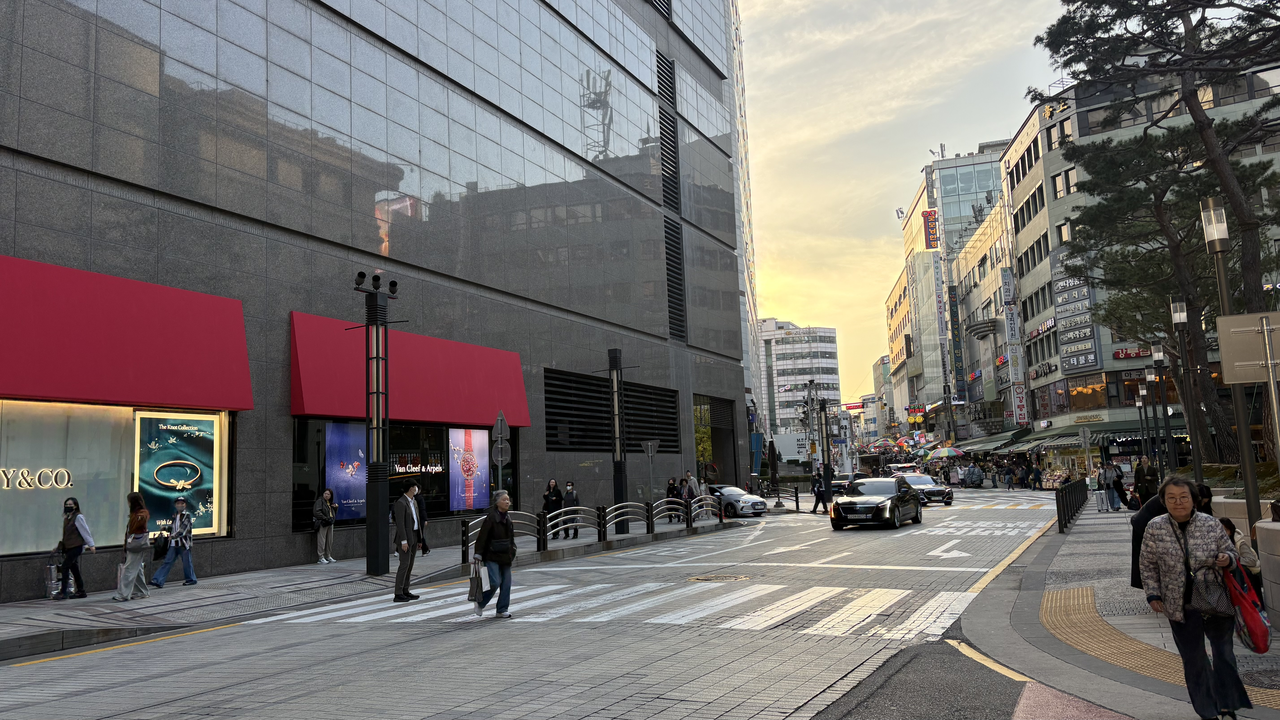
As the Jung-gu area around Namdaemun has evolved into a tourism district, Lotte Department Store and Shinsegae Department Store have also benefited. Shinsegae's main branch posted a 55 percent year-on-year sales increase in the first quarter, with foreign sales up 141 percent. In the second quarter, overall sales grew 77 percent and foreign sales 394 percent. Lotte Department Store's foreign sales rose 103 percent in the first quarter and 120 percent in the second.
Seo Yong-gu, a professor of business administration at Sookmyung Women's University, said other regions should also develop tourism-oriented markets to drive foreign spending. "It is important to offer differentiated content and experiences that bring visitors back," Seo said.
Beyond a passing trend: building a market that lasts
Namdaemun Market may have become a global attraction, but sustaining that momentum will require work. Converting a viral moment into lasting consumer habits depends on improving the shopping environment.
The most glaring obstacle is the cash-payment culture. Some stalls still refuse card payments or steer customers toward cash, inconveniencing both domestic shoppers and foreign tourists. Price gouging — charging foreign visitors more than locals or inflating prices — is another issue that erodes trust in traditional markets.
On Tuesday, a dispute broke out at one hotteok stall when a foreign tourist tried to pay in US dollars, causing confusion over the exchange rate and the won price. Domestic shoppers also voiced frustration with cash-only payment practices.
Card payment infrastructure at traditional markets is expanding. According to KB Kookmin Card, as of December 2025 there were 128,000 registered card-accepting merchants at traditional markets nationwide, about 4,000 more than in 2022. But registration does not guarantee that a merchant will actually accept cards — some owners still push customers to pay in cash.
Lee Eun-hee, a professor of consumer science at Inha University, said drawing more shoppers to the market requires expanding payment options that foreign tourists can use easily and lowering language barriers to improve the overall shopping experience. "To remain famous as a Korean landmark for years to come — not just a one-time visit — solving the real problems that foreign visitors encounter is the most important thing of all," Lee said.
siuu@heraldcorp.com