Editor's note
We tell stories through paintings — examining the issues captured on canvas, the histories soaked into masterworks, and the human anxieties and desires that art holds. We begin with a single canvas and move outward into the world beyond the frame.
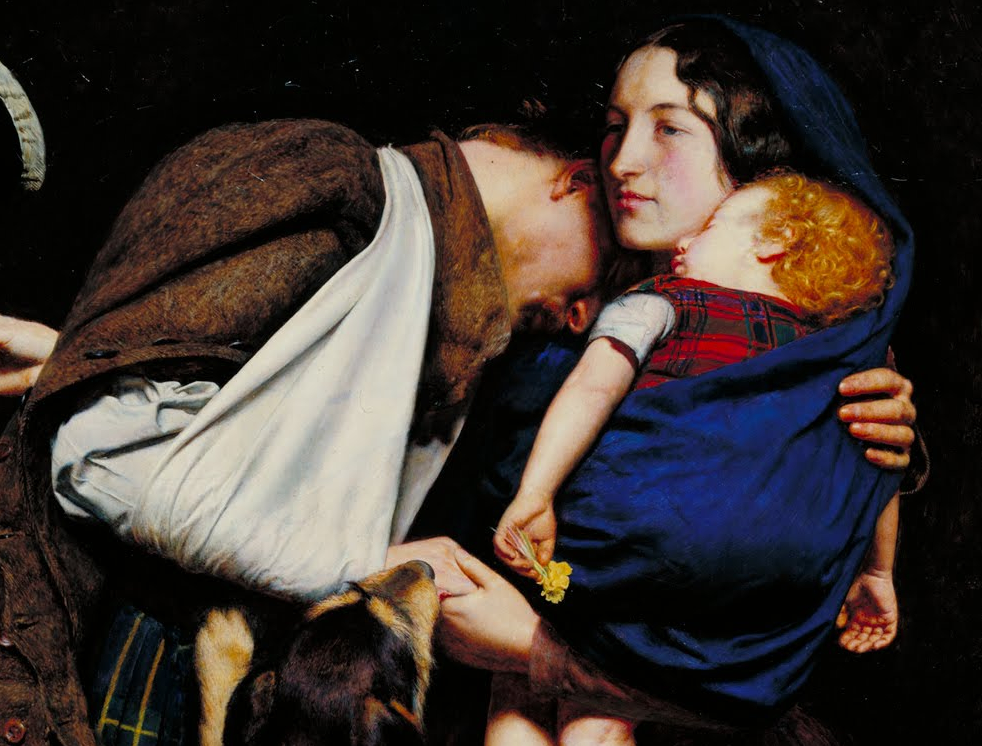
The woman cannot smile.
Even after securing her imprisoned husband's release, she cannot bring herself to smile. He has buried his face in her shoulder — and his expression, too, carries not the relief of freedom but something closer to self-reproach and regret. The two can now live together again. They can return to the life they once had, with their baby and their dog. Yet in this moment, the only one who seems genuinely happy is the dog, who understands nothing of what has passed.
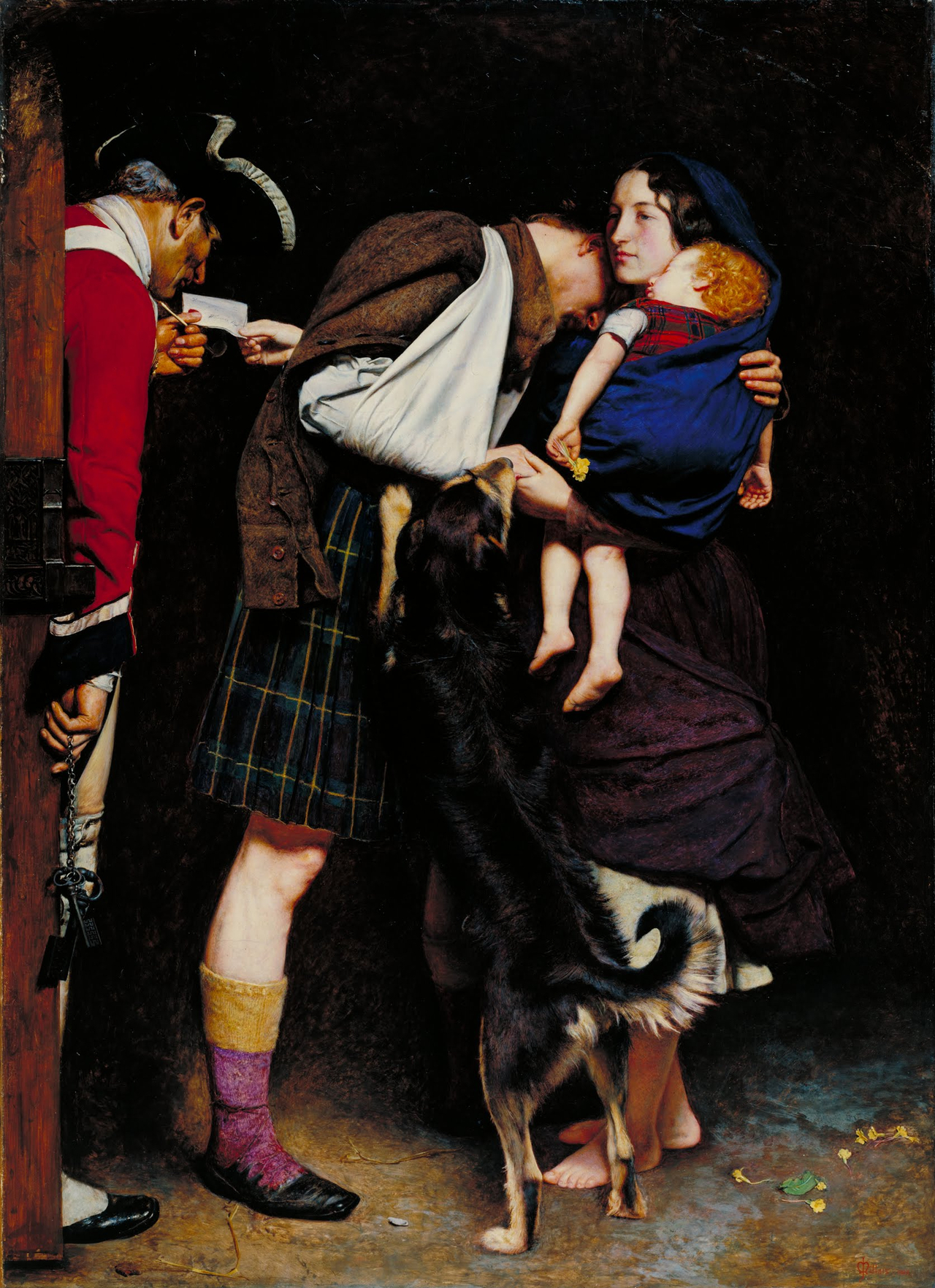
John Everett Millais' "The Order of Release, 1746." What story lies within this painting?
From the late 17th century onward, Britain was gripped by a cycle of bloodshed. At its heart was the clash between the camp of James II of the House of Stuart — a king who had once held the throne but was driven out by revolution — and the new faction that had ousted him and sought to seize power.
Amid this conflict, a political movement known as the Jacobites threw their weight behind James II. The very name "Jacobite" derived from Jacobus, the Latin form of James.
Time passed. When James II died in 1701, the struggle for the throne passed to his surviving son, James Francis Edward Stuart, Prince of Wales, and then to James' eldest son, Charles Edward Stuart. The fight to reclaim the succession continued across generations. The Jacobites held firm to the position that the crown must be "restored" to these heirs — though behind that stance, no doubt, lay their own political calculations and maneuvering.
Then came 1745. Charles finally launched an uprising in Scotland. By November of that year, he had marched south into England at the head of a force of some 6,000 troops. But the momentum did not hold. The following year, Charles and the Jacobite army suffered a decisive defeat against government forces, and their military campaign was, in effect, finished.
Charles managed to escape. Many of the Jacobites who had risen with him did not.
The prisoner in this painting was one of those captured Jacobite soldiers. The charges against him would have been rebellion — a grave offense in any era, in any country.
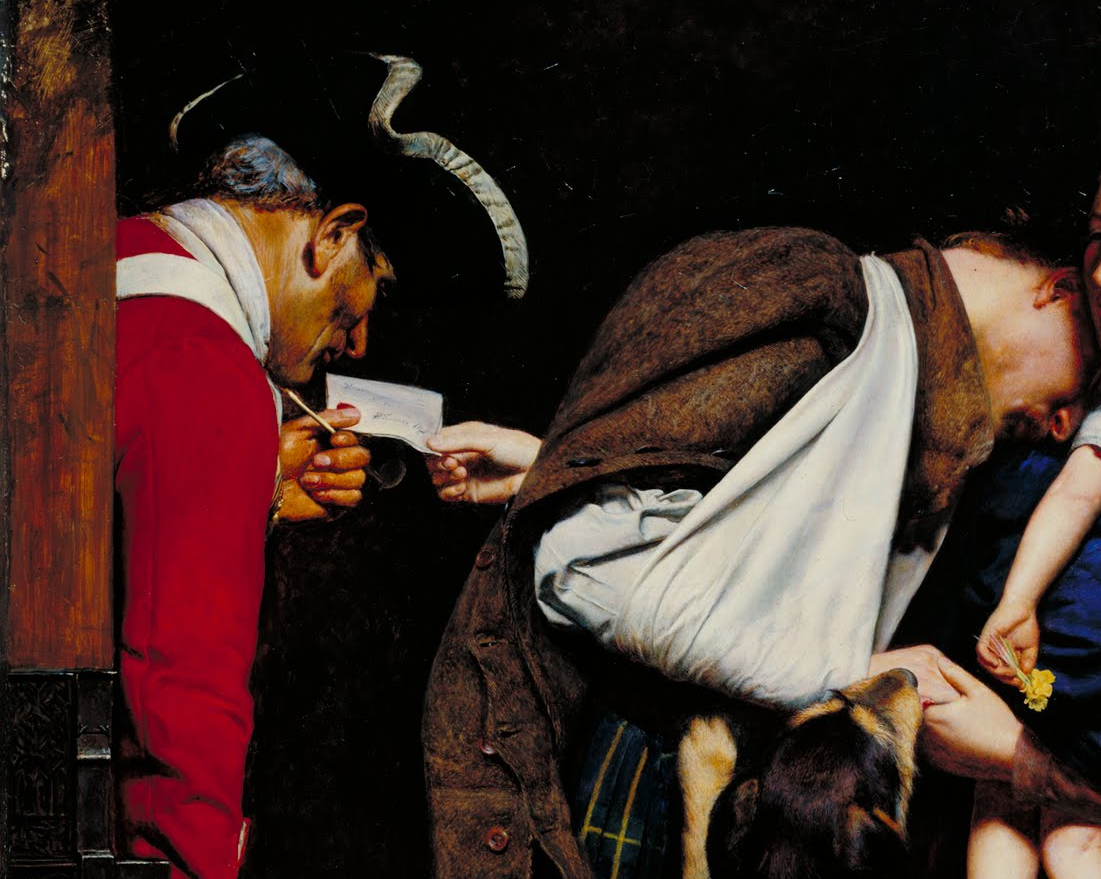
Not long after the husband began serving his sentence.
The woman obtained an order of release for him and presented it directly to the jailer. The guard holds it and reads, as though struggling to believe what he sees.
She is a commoner — her dress makes that plain enough. So how did she come by such a document? Art historian Frances Fowle, who worked in the curatorial department at Tate Britain, offered one theory.
She appears strangely detached in this situation.
This suggests she may have had to sacrifice her chastity in order to save her husband.
Fowle's reading implies that the woman may be saying, in effect: "I gave myself to someone — likely a person of high rank — to set you free." According to Fowle, the painting's original title was "The Ransom," and early sketches reportedly included a purse of money. Several viewers at past exhibitions are said to have put forward arguments similar to Fowle's.
However, there is a point here that must be examined carefully.
The painter left no explanation of his own. For that reason, some argue that speculating in any one direction about what the woman did is itself a form of discriminatory judgment.
( ... ) The subject is straightforward.
A wife, holding her baby, has come with an order of release for her husband, captured during a civil war.
The spent husband can only weep.
The wife, possessed of "iron resolution," does not shed a tear.
( ... ) She looks at the jailer with an expression that says she has received her reward for all the hardships of the past.
That was the assessment of The Illustrated London News at the time.
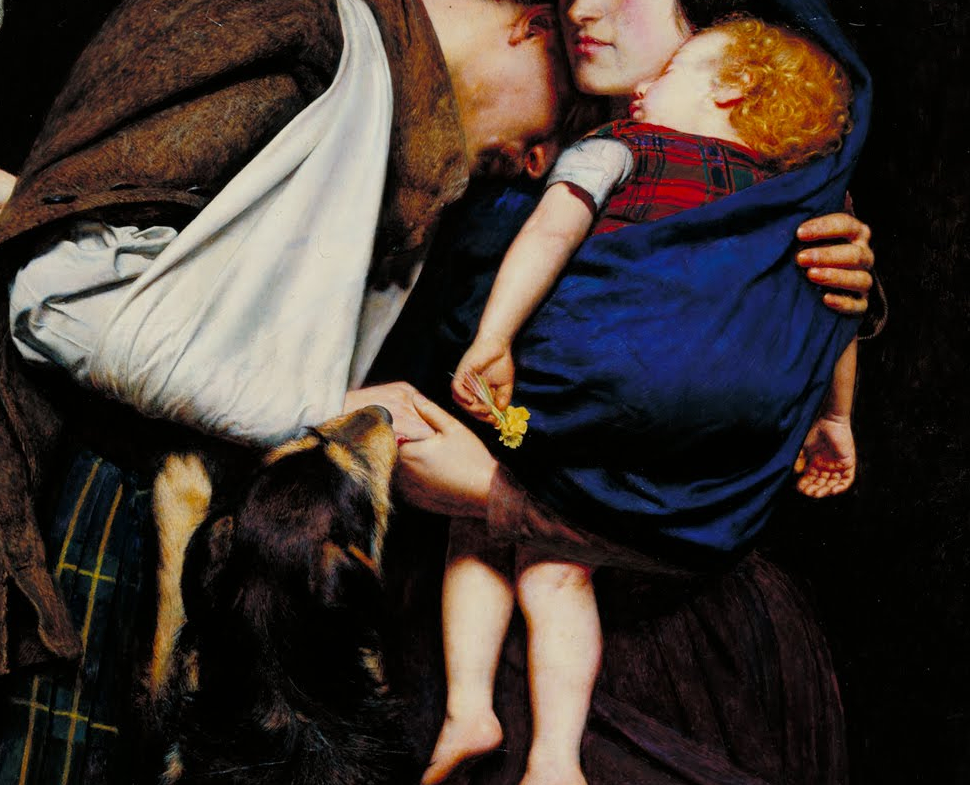
Neither smiling nor weeping, her face set in quiet resolve, she is clearly in the grip of a torrent of emotions.
What is certain is that the woman was strong. She saved her family. Her husband, too, may be turning over in his mind everything she had to endure — which may be why his face shows gratitude and sorrow, guilt and despair all at once. The baby, whose hair matches the husband's in color, sleeps on, clutching a pale yellow primrose. Among its many meanings, the primrose symbolizes youth and the days of one's prime. Its petals are falling, one by one, to the floor. The collie lifts a paw to welcome the couple's reunion, its gaze turned not toward the man but toward the woman.
The painter hired a professional model to play the husband. The wife was played by Effie, who would later become his own wife. As an aside, the baby proved particularly difficult to paint. "Such a headstrong little thing — it refused to do anything I wanted," the painter wrote. It is also said that, in pursuit of accuracy, he went to considerable lengths to obtain an actual order of release to work from.
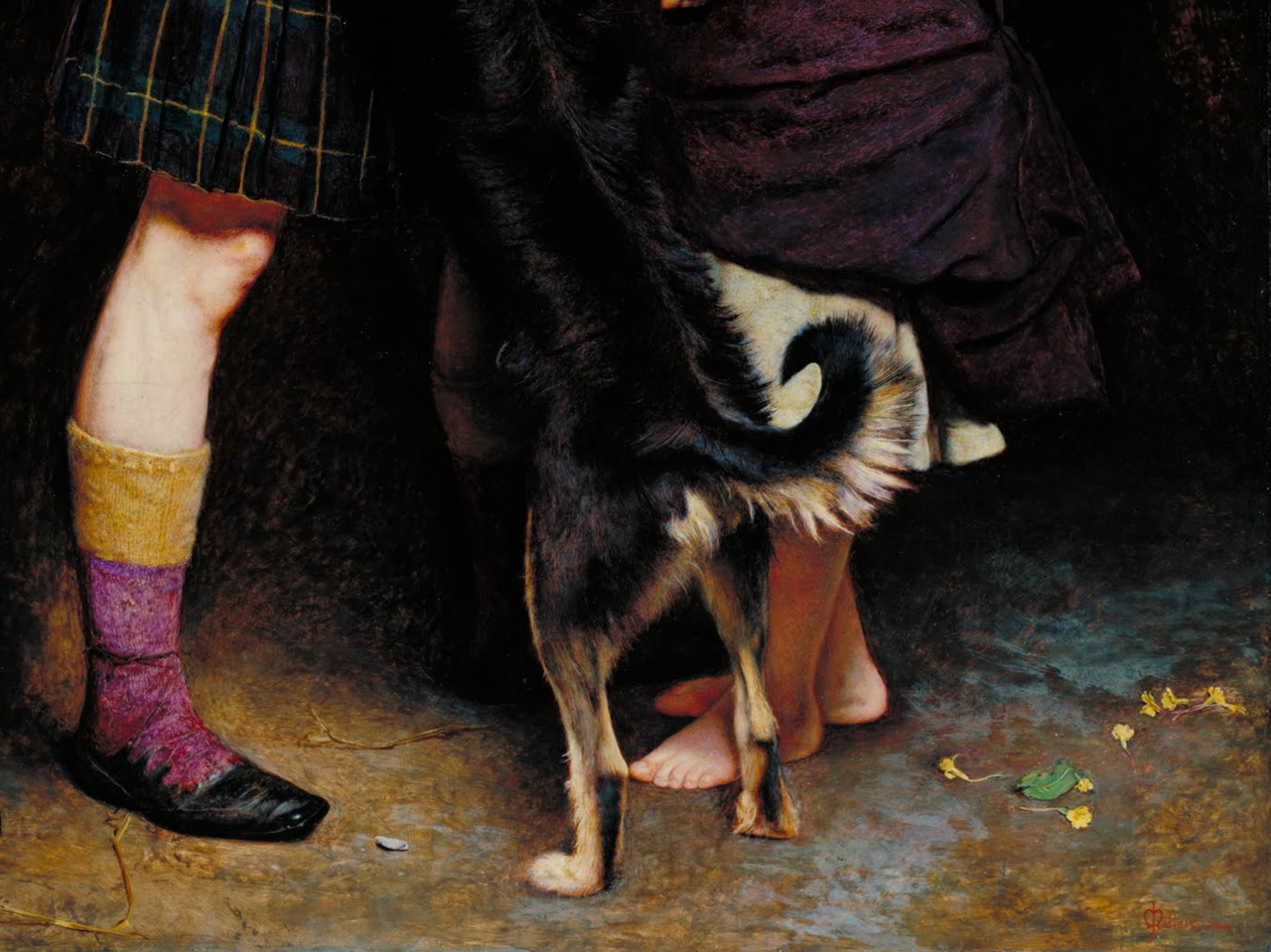
"The Order of Release, 1746" was exhibited at the Royal Academy in 1853.
It drew such large crowds that a police officer had to be stationed in front of the painting. The Illustrated London News reported that the small corner where it hung "attracted a greater number of admirers than all the Academicians put together."
What exactly she endured, we cannot know — and perhaps we never will. All we can do is hope that in the days that followed the order of release in 1746, both of them were able to smile freely at last.
yul@heraldcorp.com