Treasury yields fall on fiscal restraint outlook
Dollar also weakened after 2006 'blue wave'
Semiconductor stocks tumble on AI regulation fears
Analysts see limited won gains below 1,330s on foreign selling
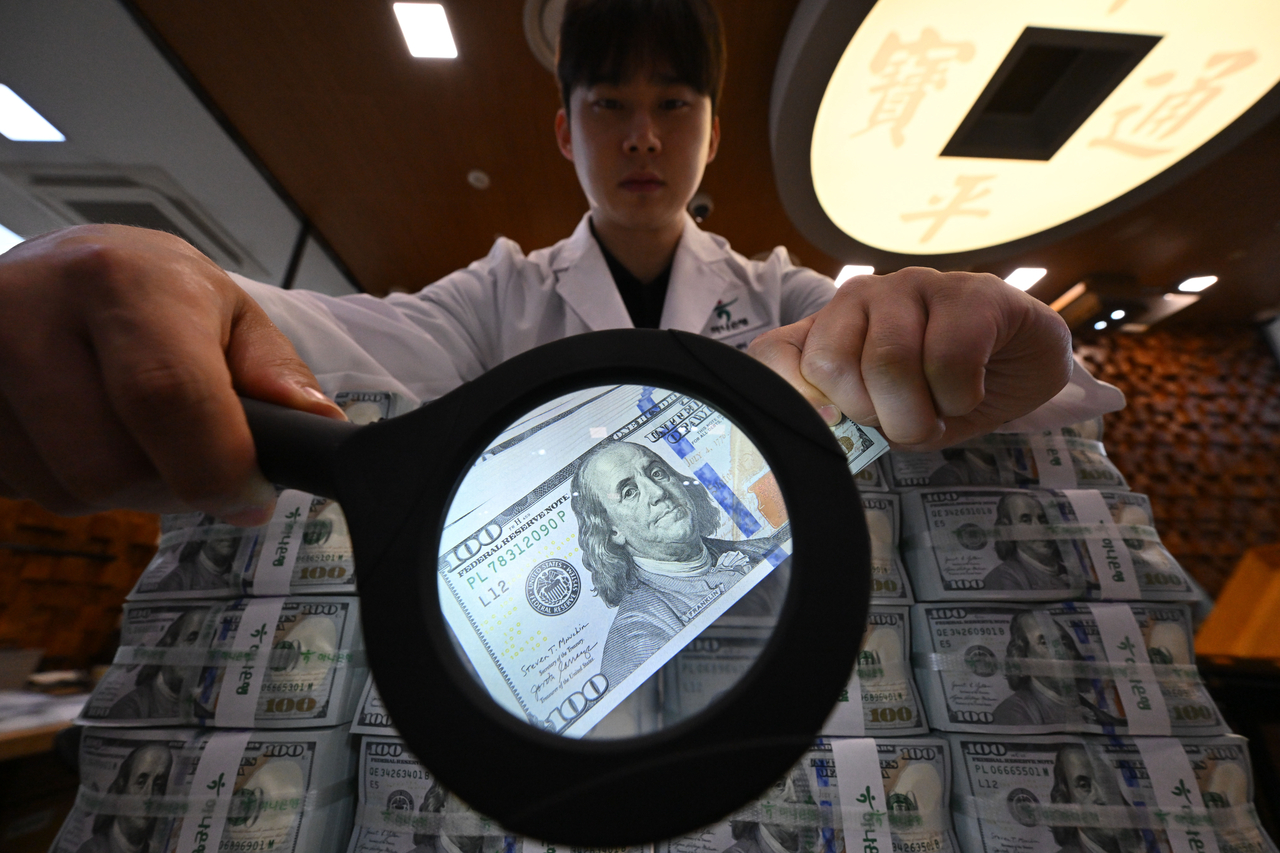
The Democratic Party's sweep of both chambers of Congress in the US midterm elections is intensifying downward pressure on the won-dollar exchange rate. Expectations that the Donald Trump administration's fiscal expansion plans and government bond issuance could face legislative resistance have driven US Treasury yields and the dollar lower in tandem. However, analysts also warn that concerns over tighter US regulation of AI investment could weigh on domestic semiconductor stocks and foreign investor flows, potentially limiting the won's gains.
The won-dollar rate opened at 1,344 won in the Seoul foreign exchange market on Wednesday and fell as far as 1,336.1 won during trading as Democratic victories mounted in the midterm count, according to Koscom, a financial data platform. Bargain-hunting buying later trimmed the decline, and the rate closed the overnight session at 1,341.0 won, down 4.1 won from the previous session. As of around 9 a.m. Thursday, the rate was hovering around 1,340 won, reflecting the broader dollar weakness.
Kim Yu-mi, an economist at Kiwoom Securities, attributed the dollar's weakness to the Democratic majority. "The prospect that the Trump administration's fiscal expansion and key policy agenda could be constrained by a Democratic-controlled Congress has put downward pressure on the dollar," Kim said. "Fading expectations for fiscal expansion, combined with rising demand for safe-haven assets, pushed US Treasury yields lower, and strength in major currencies also reinforced the dollar's decline," Kim added.
Analysts are also drawing parallels with the 2006 midterm elections, the last time Democrats captured both chambers.
After Democrats retook both houses during the second term of the George W. Bush administration in 2006, US Treasury yields and the dollar both fell. Moon Jeong-hee, an economist at KB Kookmin Bank, noted that "the dollar index declined after the 2006 midterms, and the won-dollar rate dropped from around 940 won to 920 won." Moon added that if Donald Trump's conflict with Congress deepens and a policy shift is expected following this Democratic victory, a repeat of dollar weakness is possible.
Expectations for further US interest rate increases are also softening. Analysts said that if the Democratic-controlled Congress moves to tighten regulation of the AI industry, US economic growth could slow, which in turn could dampen expectations for additional Federal Reserve rate increases.
Financial markets appear more sensitive to the prospect of post-midterm policy shifts than to strong employment data. Private payrolls rose by 86,000 in October, topping the market consensus of 67,000, according to ADP. Even so, US Treasury yields and the dollar both fell. International oil prices tumbled more than 8 percent on hopes for an end to the war in the Middle East.
The sharp drop in oil prices is seen as another factor supporting won strength. Expectations that the midterm results could accelerate an end to the Middle East conflict have spread, pulling crude prices lower. For South Korea, which is heavily dependent on oil imports, falling prices could ease dollar payment demand and reduce trade balance pressure, acting as a further driver of won appreciation.
However, analysts caution that dollar weakness may not translate directly into a sharp and sustained won rally.
Min Gyeong-won and Im Hwan-yeol, economists at Woori Bank, said that if the Democratic Congress moves to tighten regulation of AI data center construction and investment, growth in memory chip demand could also slow, adding that this is likely to weigh on domestic semiconductor stocks and sustain foreign net selling. In fact, while Wall Street rebounded overnight, the Philadelphia Semiconductor Index fell more than 3 percent, hitting its lowest level in six months.
Against this backdrop, analysts expect the won-dollar rate to post only a limited decline, centering on the upper 1,330-won range. They said that as long as foreign net selling of domestic shares supports a floor under the rate, bargain-hunting demand from importers and other dollar buyers would kick in as the rate approaches the mid-1,330s, curbing further declines. Moon of KB Kookmin Bank said the rate "could see volatility depending on the US midterm results, foreign investment flows in the domestic stock market, and movements in the offshore dollar and yen."
forest@heraldcorp.com