We see the world through food. Welcome to Middam, stories worth savoring.
Seoul National University research team finds daily sugar intake from kimchi reached 2.3g per person in 2023, surpassing ice cream
Shift toward sweeter palates and fresh kimchi consumption driving the change
Industry pushes back: gram for gram, kimchi is not higher in sugar than ice cream
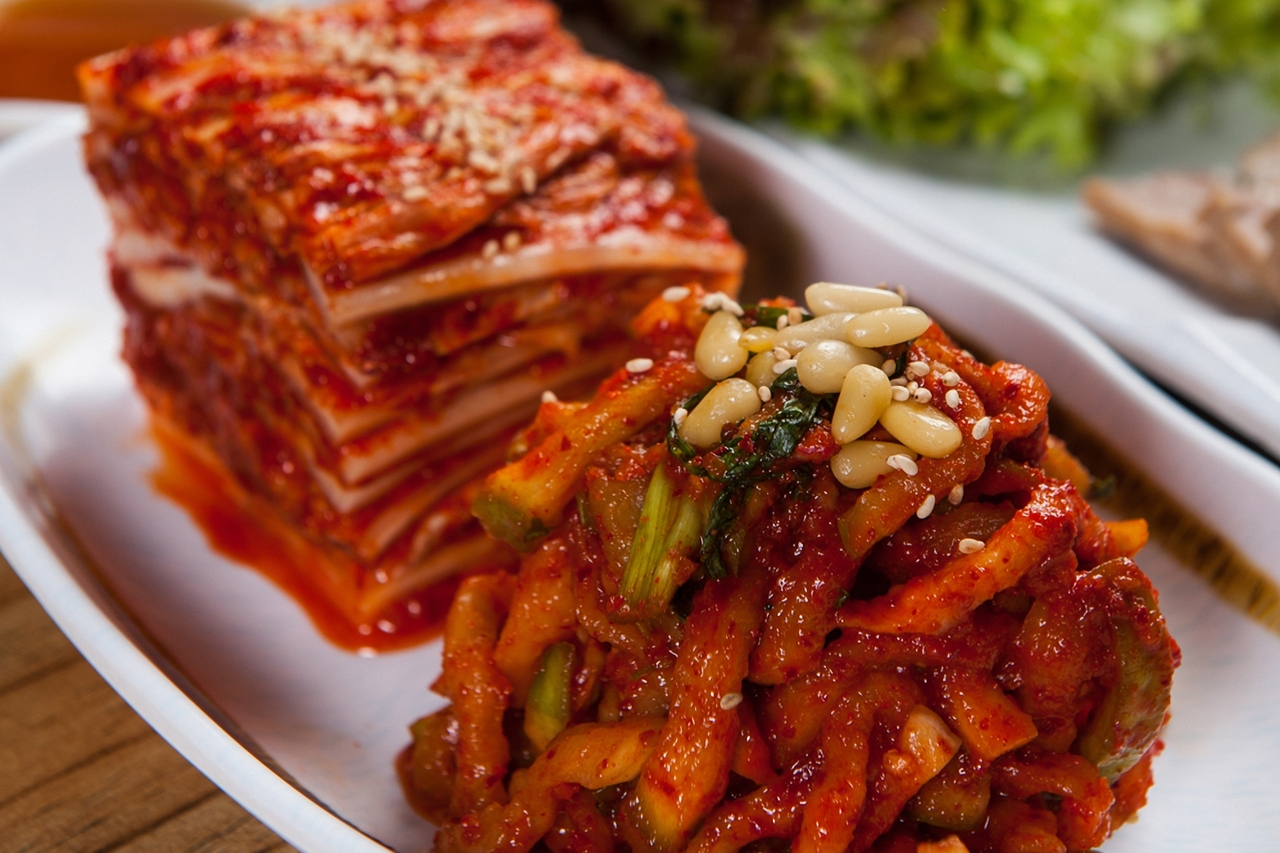
Recent reports that Koreans consume more sugar through kimchi than through ice cream have come as a shock to many.
Long regarded as one of Korea's signature health foods, kimchi had already drawn concern over its sodium content — and now sugar is being added to the list, leaving some feeling almost betrayed.
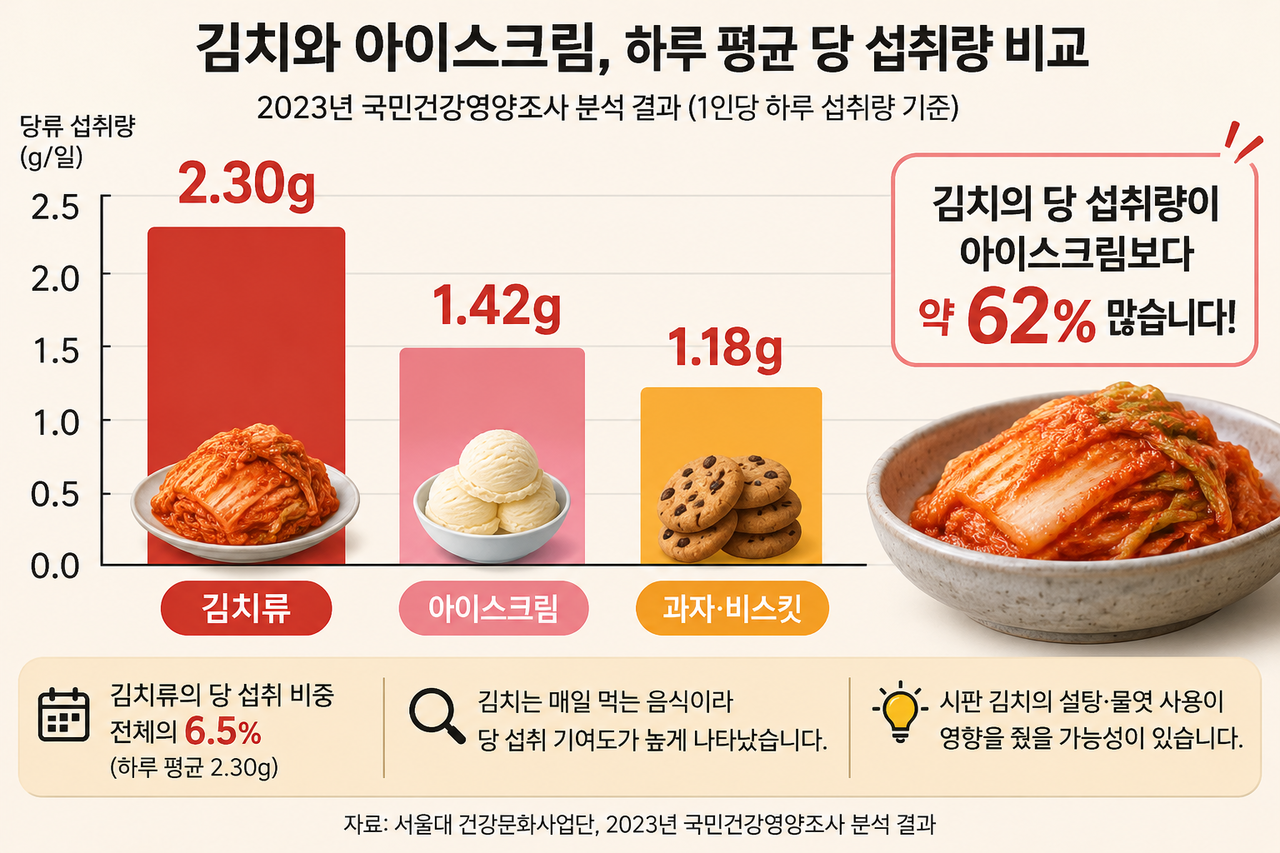
According to research published Oct. 23 by Seoul National University's Health Culture Business Group, the average Korean consumed 2.3 grams of sugar per day through kimchi in 2023 — more than from ice cream (1.42g) or snacks (1.18g). The study drew on data from the Ministry of Food and Drug Safety's National Health and Nutrition Survey.
Kim Cho-il, a special professor in the Department of Food and Nutrition at Seoul National University, attributed the finding to growing consumption of commercially produced kimchi.
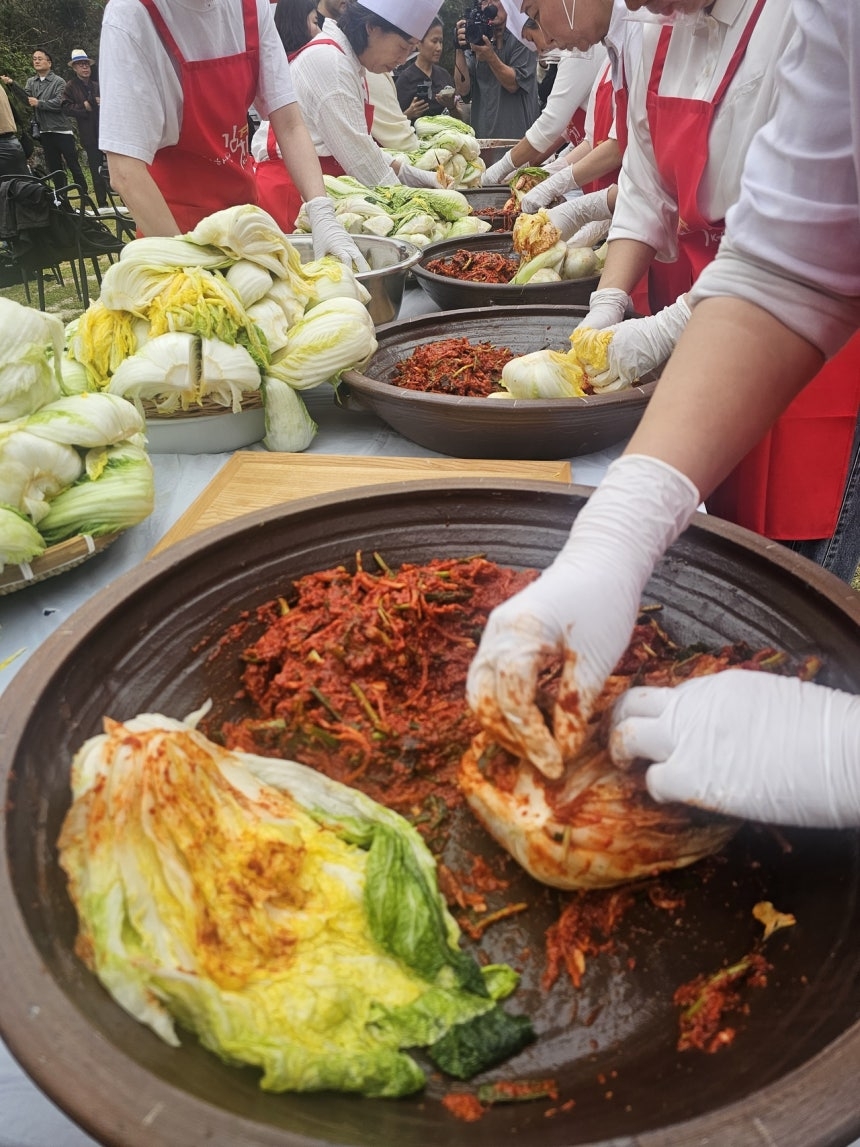
That distinction — commercially produced versus homemade — is key. Kimchi made at home typically uses little or no added sweeteners such as sugar or corn syrup. But as fewer households make their own kimchi and more turn to store-bought varieties, sugar intake from kimchi has risen naturally.
It is also simply true that kimchi has become sweeter over time. Traditionally, kimchi was not a sweet dish — its mild sweetness came entirely from natural ingredients such as cabbage, radish and pear. Glutinous rice paste did not become a common addition until the 1990s, and sugar was rarely used at all. That began to change in the 2000s, when restaurants started adding sugar to their kimchi. More recently, corn syrup has become a common ingredient, valued for the color and flavor it imparts.
Park Chae-rin, a senior researcher at the World Institute of Kimchi, said the shift reflects both changing eating habits and a broader Korean preference for sweeter flavors. "As Koreans have gradually come to prefer sweeter tastes, kimchi has been getting sweeter as well," Park said. "The way people eat kimchi has also shifted toward fresh, unfermented kimchi, which puts more emphasis on an immediately pleasing sweetness the moment it hits the palate."
While the growing sweetness of kimchi is a concern, industry figures argue that drawing a direct comparison between kimchi and ice cream risks creating unwarranted alarm.
An official from the Korea Kimchi Association said that when calculated by equal weight, kimchi does not actually contain more sugar than ice cream. "This study could give the public a mistaken impression of kimchi," the official said, adding that the association plans to submit its position to the Ministry of Food and Drug Safety. "Kimchi clearly has a more beneficial overall impact — that is a fact."
Some observers are skeptical that Korean consumers' now-entrenched sweet tooth can easily be reversed. That has prompted calls for the food industry to reduce sugar in kimchi and other products by switching to sugar substitutes.
Professor Kim said a systemic solution is needed. "In an environment where it is difficult for consumers to know how much sugar is in any given food, we need to put in place a regulatory framework that makes it easier for people to reduce their sugar intake," Kim said.
123@heraldcorp.com