Global launch set for Monday — aerodynamic design via web browser
Porsche GT3 aerodynamic efficiency improved 81%
Class 8 truck drag cut 7.38%, fuel economy gains expected
93% of sales from overseas; expansion into aviation planned
Upload a vehicle's 3D design file and AI will identify the optimal configuration to reduce aerodynamic drag in about an hour. Aerodynamic analysis — long the domain of expensive equipment and specialist engineers — is now accessible to anyone through a web browser.
Aerodynamics technology company Adro said Thursday it will officially launch AOX, its AI-based aerodynamic design platform, in global markets Monday.
AOX is a web-based service designed to let automotive designers and engineers analyze and improve a vehicle's aerodynamic performance without installing separate software or holding specialized knowledge of computational fluid dynamics (CFD).
Aerodynamic drag analysis has traditionally been one of the most time-consuming and costly steps in vehicle development. The standard approach required specialist engineers to run high-end CFD programs only after the vehicle's exterior was largely finalized — and any design revision to reduce drag meant repeating the entire analysis cycle.
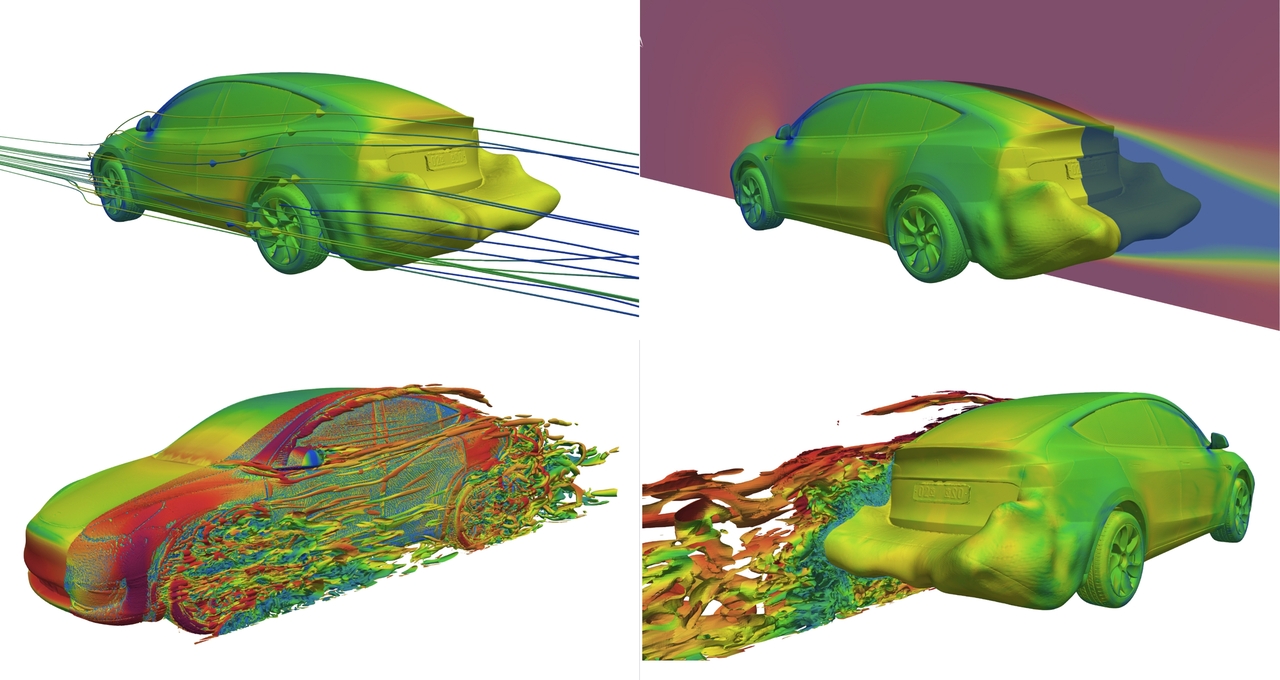
Adro focused on moving that process to the earliest stages of vehicle design. When a 3D file is uploaded to AOX, the AI proposes design conditions to improve aerodynamic performance. The system runs five analysis passes across a mesh of about 5.5 million calculation cells, completing a single optimization cycle in roughly one hour. All processing takes place in the cloud.
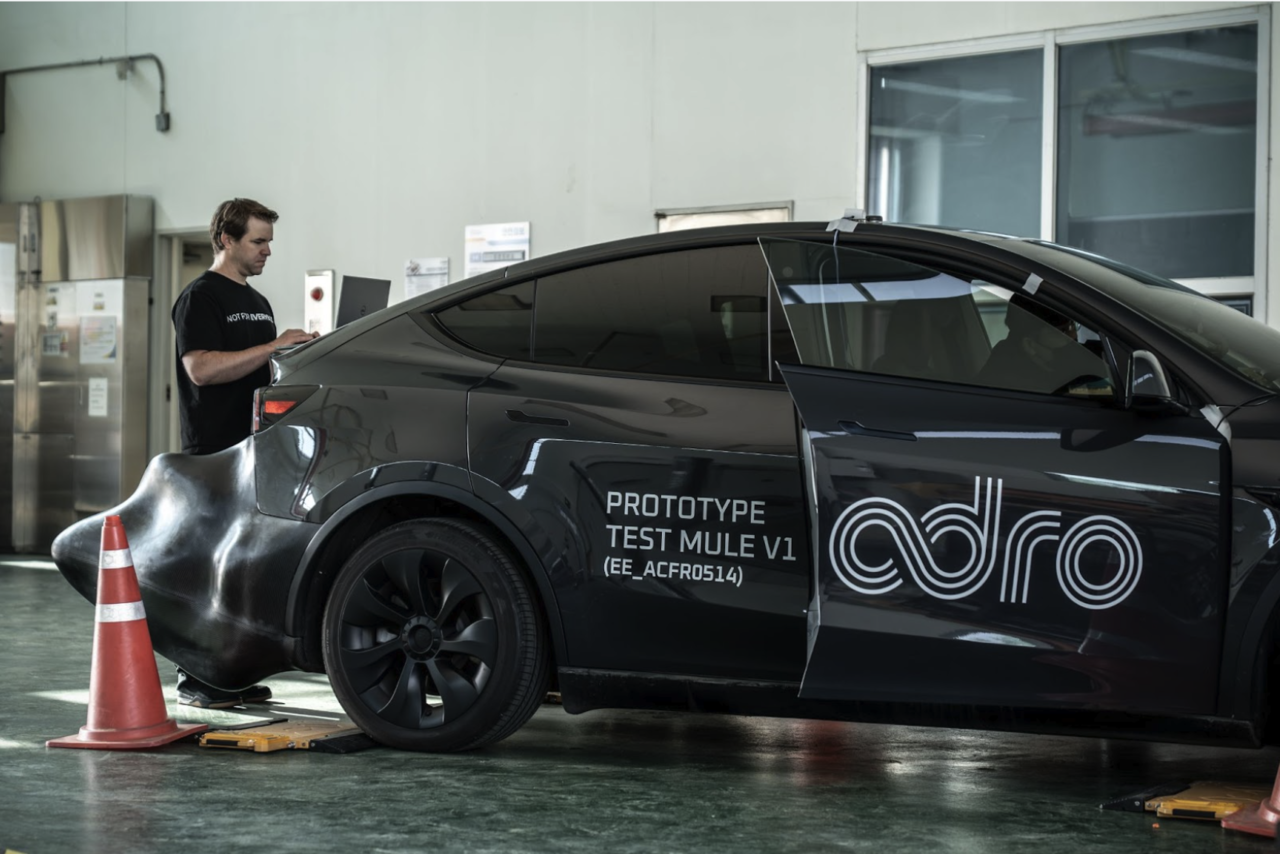
Adro said it validated AOX on real vehicles. The most prominent example is the Porsche 992 GT3: after fitting aerodynamic components designed with AOX and conducting track tests at the Yeongam Circuit in South Jeolla Province, the company said aerodynamic efficiency improved by about 81% compared with the stock specification.
Aerodynamic efficiency here refers to the ratio of downforce — the force pressing the vehicle onto the road surface — to aerodynamic drag, and serves as an indicator of how much unnecessary resistance was eliminated while maintaining high-speed stability.
Development time also shrank. Adro said iterative design work on the front aerodynamic components of the Porsche GT3 that previously took several weeks was completed in a single day. The company also conducted real-vehicle tests on a Tesla Model Y to verify the accuracy of its AI predictions.
The technology extends beyond passenger cars to heavy commercial vehicles. Applied to a Class 8 long-haul truck — the heaviest category in the United States — AOX reduced aerodynamic drag by 7.38%, which Adro estimates could translate into a fuel economy improvement of about 3.4%.
Improving energy efficiency in commercial vehicles is one of the automotive industry's central challenges. The EU is pursuing a target of cutting carbon dioxide emissions from heavy commercial vehicles by 45% by 2030. In March, it introduced some flexibility in how manufacturers calculate emissions compliance while keeping the long-term reduction target in place.
Adro drew on data accumulated through its existing automotive parts business to develop AOX. Since its founding in 2020, the company has supplied more than 230 types of aerodynamic components to 12 automotive brands worldwide, building up a dataset of real-world driving and circuit test results in the process.
The company said it used that data to train its AI models, focusing on narrowing the gap between computer simulation results and actual vehicle performance on the road.
AOX made its public debut at CES 2026, the world's largest consumer electronics and IT trade show, in January. Adro had originally planned a June launch but ran a global open beta for about two months starting in August before proceeding to full commercialization.
The beta test drew designers and engineers from the United States and other overseas markets, as well as Formula student racing teams from European universities. In an earlier closed-door test, 80% of participants had no CFD background, and 80% said they would use the service again. The average service recommendation score was 7.6 out of 10.
The commercial service will operate on a subscription model with monthly usage allocations. Customers who exceed their base allowance can purchase additional usage, and a separate pricing tier is available for corporate clients.
Adro plans to use the launch as a springboard to expand from its core automotive parts manufacturing business into software. Last year's consolidated sales came to about 16.5 billion won ($12.3 million), and the company has set a sales target of 21.5 billion won for this year.
The company is heavily reliant on overseas markets. Last year, 93% of total sales came from abroad, and by the first half of this year Adro had exported products to 35 countries including the United States, Australia and Japan. In October last year, it also raised 10 billion won in a Series B funding round.
Going forward, Adro plans to build its customer base with a focus on the US market and expand into sectors beyond automotive where aerodynamic technology can be applied, including aviation.
"Aerodynamic design has until now been something only the specialist teams at large manufacturers could do," Adro Chief Executive Yun Seung-hyeon said. "AOX stands on data we gathered by building parts ourselves and driving them on circuits. Now anyone can apply those results to their designs through a browser, without special equipment or expertise."
kwater@heraldcorp.com