
S. Korea leads global sales this year, but trailed China last year
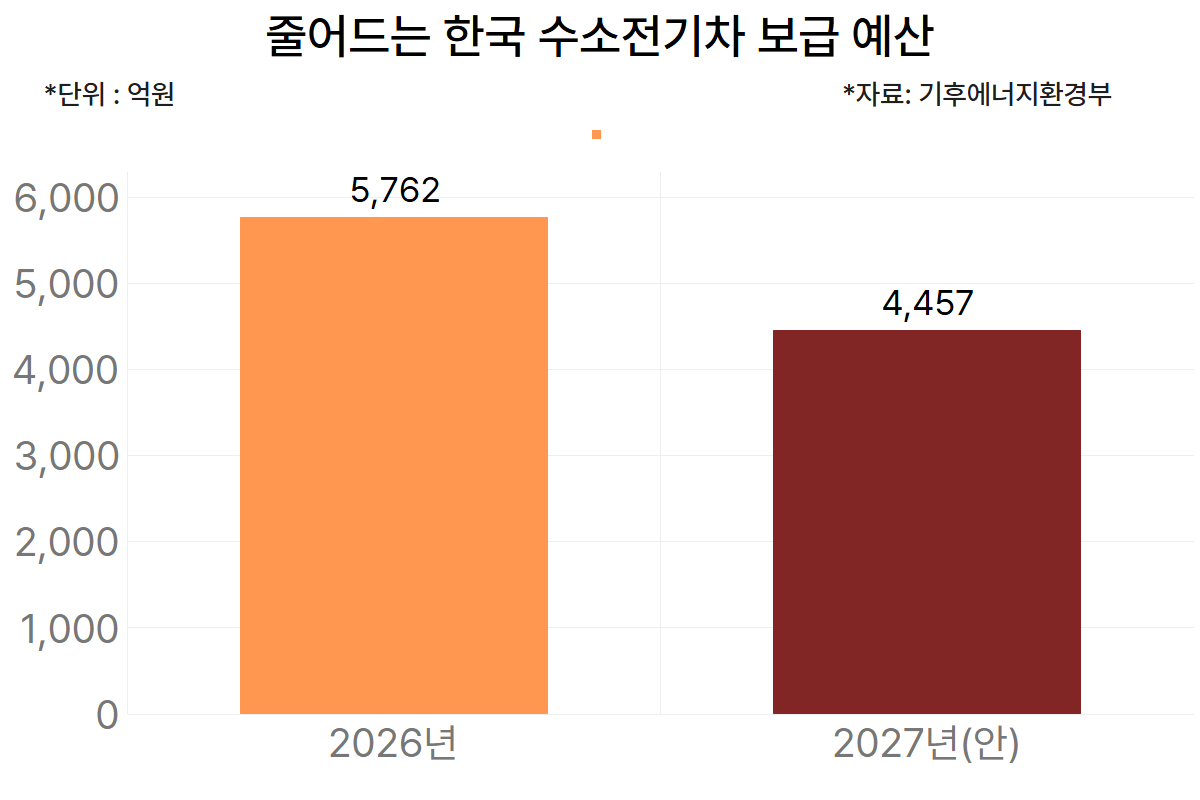
Seoul to cut hydrogen vehicle subsidy budget 23% next year
China launches 'Hydrogen Rise 2.0' with up to 1.6 trillion won in support
Beijing targets 100,000 hydrogen vehicles by 2030
Local budget-matching hurdles stall rollout; calls grow for more central funding
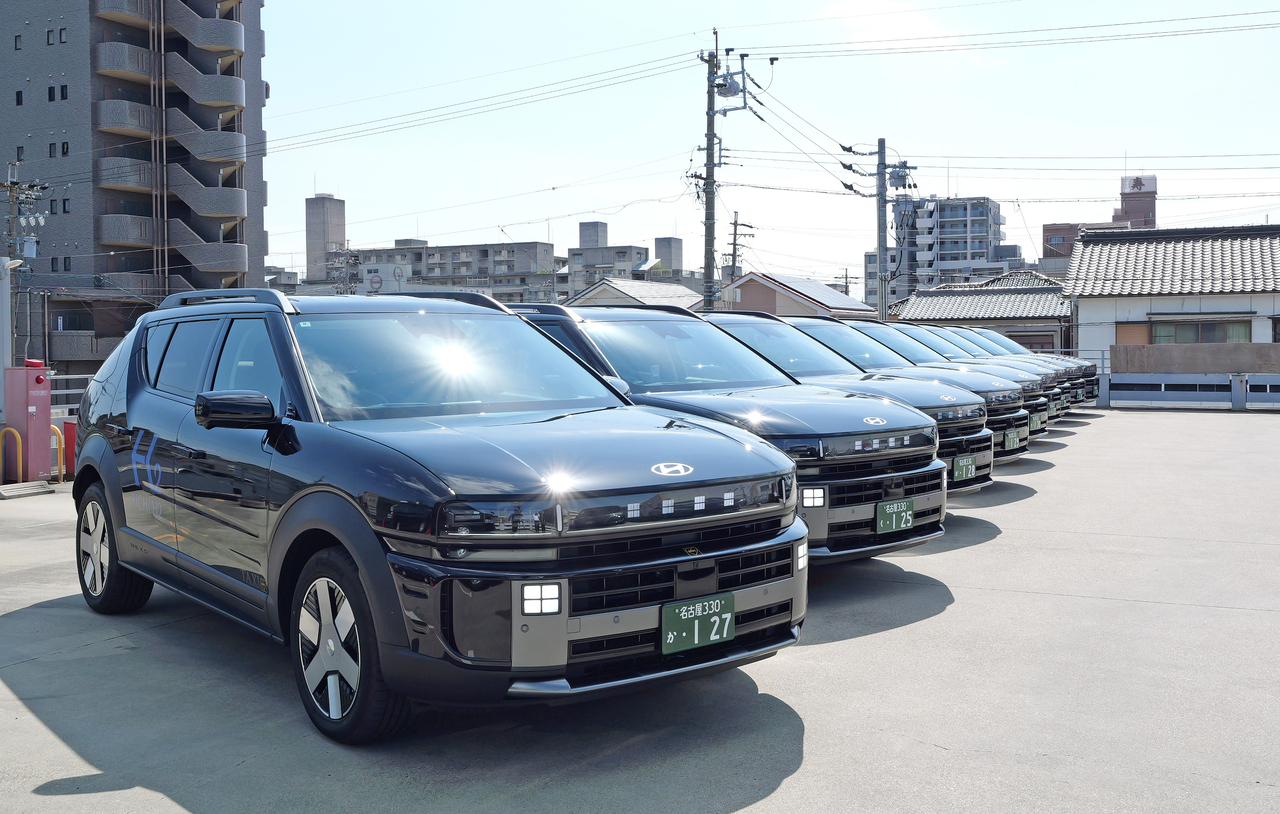
South Korea became the first country in the world to put 50,000 hydrogen-powered vehicles on the road — but it now risks ceding the next milestone of 100,000 to China. While Beijing is pouring government support into expanding its hydrogen vehicle market, Seoul is moving in the opposite direction and cutting the relevant budget.
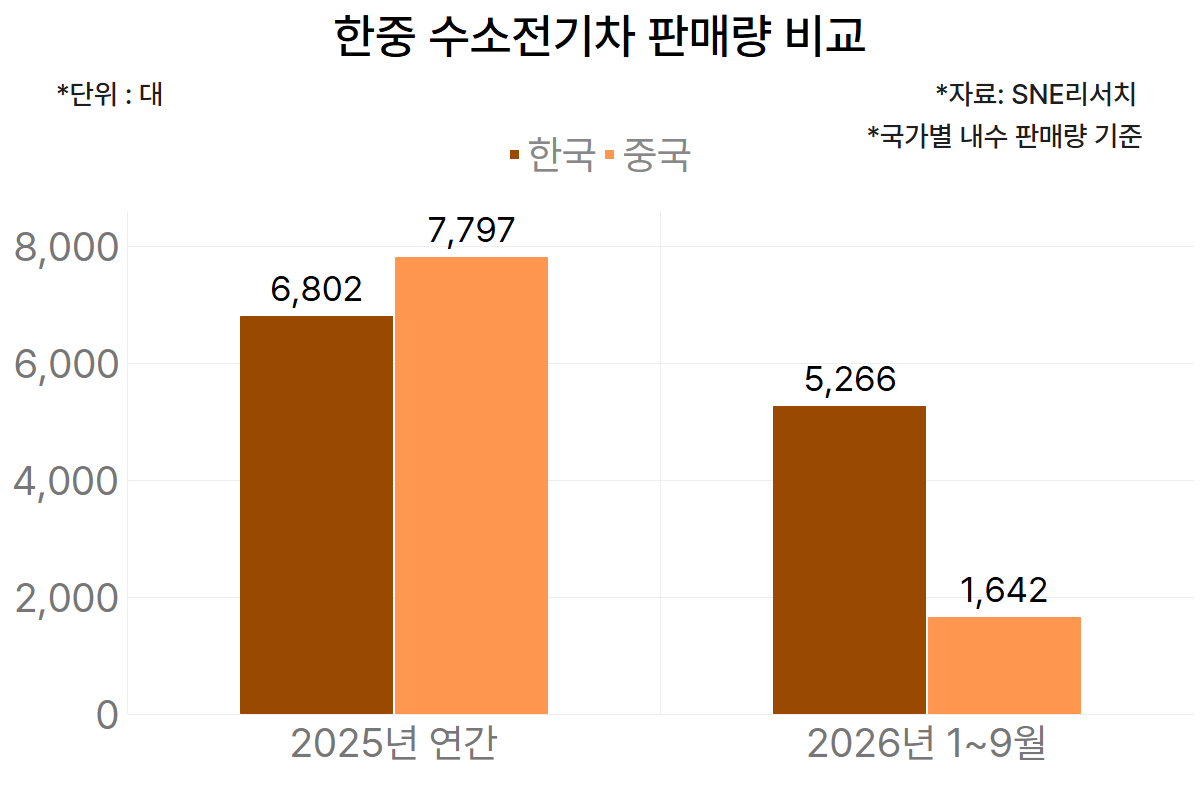
South Korea sold 5,266 hydrogen electric vehicles in the first nine months of this year, up 6.6 percent from the same period last year, according to market research firm SNE Research. That gave the country a 69.4 percent share of the global market, ranking first. Over the same period, China's domestic sales fell 50.5 percent to 1,642 units. However, China outsold South Korea on a full-year basis last year, moving 7,797 vehicles compared with South Korea's 6,802.
At the company level, Hyundai Motor sold 5,304 hydrogen electric vehicles worldwide in the first nine months of this year, holding a 69.9 percent global market share to remain the world's No. 1 automaker in the segment.
South Korea also leads in cumulative sales. Hyundai Motor's domestic cumulative hydrogen vehicle sales reached 50,262 units as of the end of September. China's cumulative hydrogen vehicle sales through the end of last year stood at about 40,000 units.
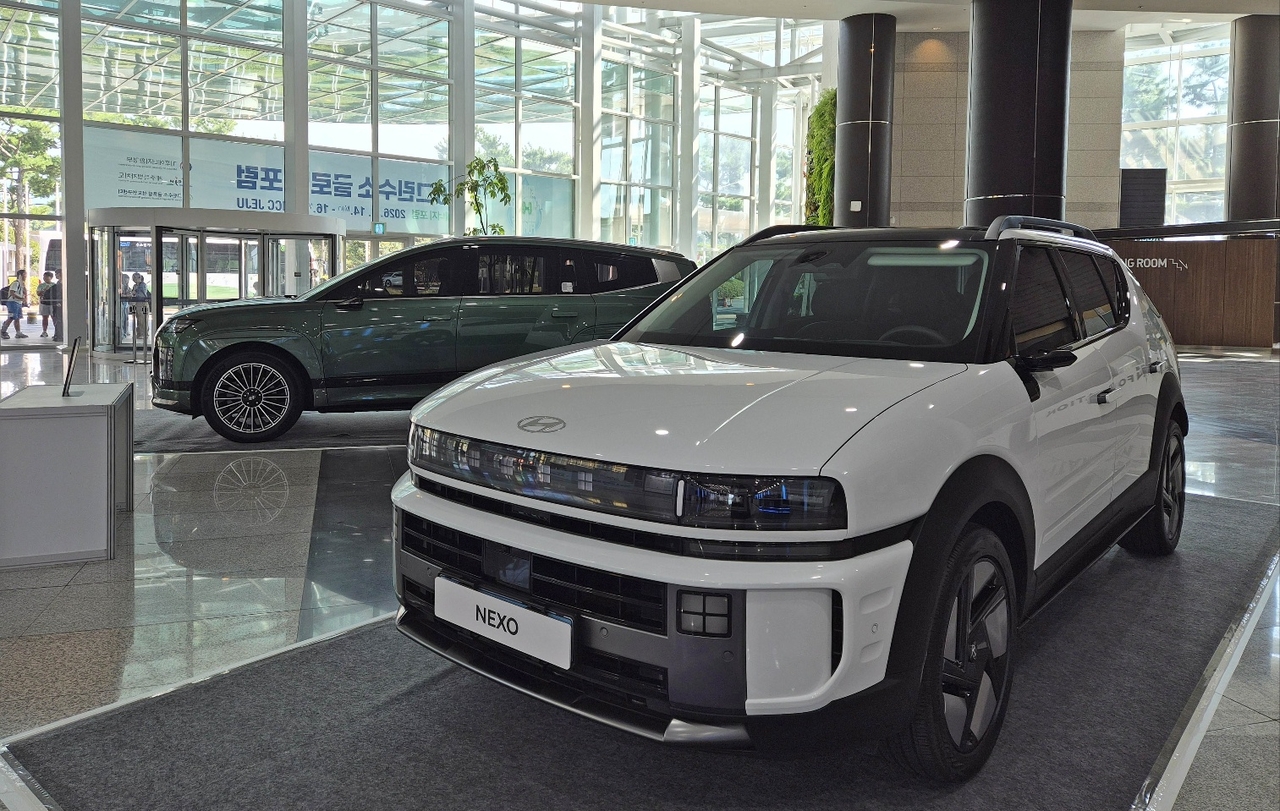
Hyundai Motor began fuel-cell research in 1998 and in 2013 unveiled the Tucson ix, the world's first mass-produced hydrogen electric vehicle, pioneering the global hydrogen car market. The company subsequently expanded into the passenger segment with the Nexo and broadened its commercial vehicle lineup with the Xcient hydrogen electric truck and hydrogen electric buses.
The global hydrogen vehicle market is effectively driven by South Korea and China. The International Energy Agency's "Global Hydrogen Review 2026" found that the worldwide hydrogen vehicle fleet reached about 130,000 units last year, a 20 percent increase from the prior year, led by China's hydrogen trucks and South Korea's passenger hydrogen cars. The IEA cited policy support from the two countries as a key growth driver and projected the global hydrogen vehicle fleet to roughly triple by 2030.
Yet industry concerns are growing over whether South Korea can sustain its leading position. Government deployment policy and charging infrastructure are critical to market expansion at this early stage of the hydrogen vehicle industry, but domestic support is shrinking rather than growing.
The Ministry of Climate, Environment and Energy's proposed budget for next year's hydrogen electric vehicle deployment program stands at 445.7 billion won ($331 million), a 22.6 percent cut from this year.
Korea cuts budget while China launches 'Hydrogen Rise 2.0'
China, by contrast, is reigniting its hydrogen vehicle push through a new round of support policies. SNE Research attributed this year's sharp drop in Chinese hydrogen vehicle sales to a surge in purchases ahead of the end of the first pilot program, followed by a gap before the next round of support policies took effect.
Last month, the Chinese government designated five regional clusters for its second hydrogen demonstration city program: the Beijing-Tianjin-Hebei corridor, the Greater Bay Area (Guangdong, Hong Kong and Macao), the Northeast region and Yangtze River Delta, the Xinjiang-Chengdu-Chongqing economic zone, and the Yellow River Jizhiwan-Central Plains region.
Earlier, China's Ministry of Industry and Information Technology, Ministry of Finance and National Development and Reform Commission jointly announced in March a target to bring the country's hydrogen electric vehicle fleet to 100,000 units by 2030.
To that end, the Chinese government will provide incentive grants of up to 1.6 billion yuan ($240 million) per regional cluster based on four-year performance, for a total of 8 billion yuan — equivalent to 1.6 trillion won. The program goes beyond vehicle deployment, linking hydrogen-related technology and equipment development, green hydrogen production, storage and transport, refueling station construction, and broader industrial hydrogen utilization.
China is also pursuing fuel price reductions to improve the economics of hydrogen vehicle operation. The target is to bring the retail price of hydrogen below 25 yuan per kilogram by 2030, with a further reduction to around 15 yuan per kilogram in regions where price competitiveness allows.
Under its first fuel cell vehicle pilot program, which ran from 2021 through last year, China distributed about 7.68 billion yuan in incentive grants across five city clusters. More than 25,000 hydrogen vehicles operated in those areas during the program, and more than 250 hydrogen refueling stations were built.
As the second program gets fully under way, deployment is expected to accelerate, particularly in regions where hydrogen highways and wide-area logistics networks are being developed.
Local budget-matching holds Korea back; calls grow to raise central funding share
Industry voices are calling for South Korea not only to secure a stable deployment budget but also to overhaul the subsidy disbursement system itself if the country is to maintain its lead in the hydrogen vehicle market.
The government says it drew up next year's budget proposal based on past execution rates and vehicle deployment trends. The industry, however, points to a structural problem: even when central government funds are allocated, local governments often fail to secure their matching share, meaning the money never translates into actual vehicle purchases.
The problem is particularly acute for hydrogen electric buses, where the central government subsidy per vehicle exceeds 200 million won, leaving local governments with a proportionally large matching burden. This year's central budget for hydrogen electric buses was set at 1,800 units, but unspent central funds are estimated by the industry at about 117 billion won.
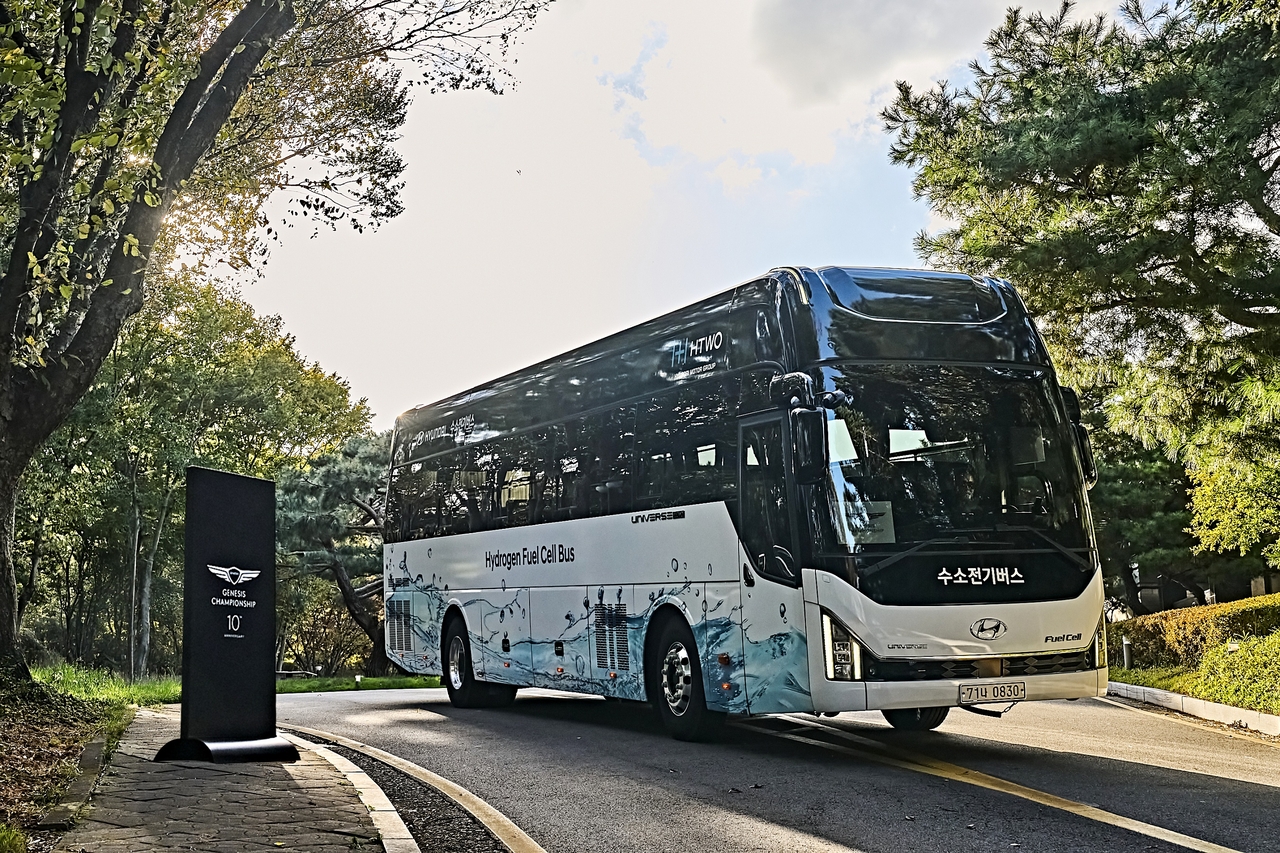
Industry observers say the subsidy framework needs to be applied more flexibly based on each region's fiscal capacity — for instance, by raising the central government's funding share for local governments with low fiscal self-sufficiency.
Kim Jong-min, a lawmaker on the National Assembly's Trade, Industry, Small and Medium Enterprises and Startups Committee, raised the issue at this year's national audit of the Ministry of Trade, Industry and Resources. "Local finances are strained across the country, and the burden of matching-fund programs is a real problem," Kim said. "There is a need to substantially increase the central budget and raise the matching ratio as well."
Some in the industry also argue that for intercity buses crossing multiple metropolitan areas and large freight vehicles operating on national logistics networks, the central government should cover the full subsidy rather than placing the financial burden on individual local governments.
"China is aggressively pushing hydrogen electric vehicle deployment and hydrogen ecosystem expansion, led by the government and centered on commercial vehicles, which makes this a golden time that will determine the competitiveness of Korea's hydrogen industry," an industry official said. "We need to fix the current structure that relies on local government budget matching, and focus on securing stable funding so that the central government can consistently pursue mid- to long-term deployment targets."
kwater@heraldcorp.com





