Arab parties, including Joint List, back Eisenkot
Anti-Netanyahu bloc secures Knesset majority
Netanyahu loses ultra-Orthodox support
Israeli Prime Minister Benjamin Netanyahu is increasingly at risk of losing power as the anti-Netanyahu bloc rallies behind Gadi Eisenkot, leader of the Yashar party.
Arab parties that won a combined 19 seats in Israel's general election said they would support Eisenkot from outside a coalition government.
The Joint List, Israel's largest Arab party alliance with 11 seats, announced Thursday (local time) that it would formally notify President Isaac Herzog of its recommendation that Eisenkot be tasked with forming the next government. A Joint List delegation told Herzog that, despite policy differences, the alliance would support a future cabinet from the outside in order to replace the current Netanyahu-led government.
Joint List lawmaker Ahmad Tibi said the alliance would act as a "blocking bloc" — a coalition aimed at preventing a right-wing government from taking power — and provide outside support for an Eisenkot minority government. "We don't want a situation where the cabinet collapses shortly after we help form it," Tibi said, signaling that the arrangement would not be short-lived even without direct participation in the coalition.
Earlier, the Islamist Arab party Ra'am also announced its support for Eisenkot as the next prime minister. Ra'am won eight seats in the election.
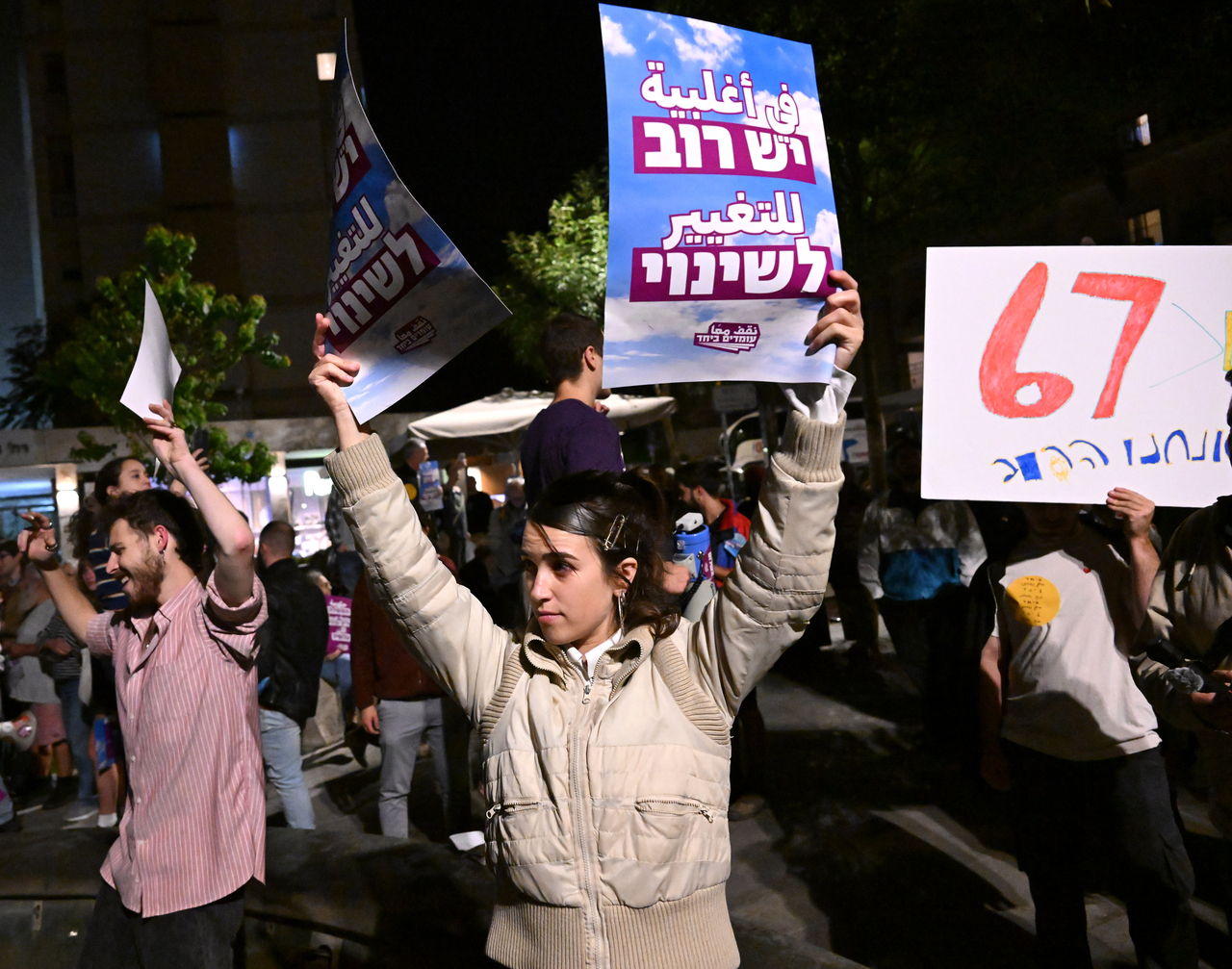
The anti-Netanyahu bloc holds 48 seats on its own — five fewer than the pro-Netanyahu camp — but with the 19 Arab party seats, it has secured the backing of 67 members of the 120-seat Knesset, a majority. That gives Eisenkot the parliamentary support needed to be named the first candidate to attempt to form a coalition under Israel's political system. If Eisenkot successfully assembles a coalition within the allotted time, Eisenkot will become the next prime minister.
Netanyahu, by contrast, has been abandoned by the ultra-Orthodox Jewish parties that had been part of his coalition, leaving him on the verge of losing office. United Torah Judaism, an ultra-Orthodox party, said Thursday at a government-formation consultation convened by Herzog that it would not recommend any candidate for prime minister. The party's withdrawal of support appears to stem from Netanyahu's failure to prevent the end of military service exemptions for students at yeshivas, Jewish religious seminaries.
Shas, another ultra-Orthodox party, has yet to announce a specific decision on coalition talks. Rabbi Moshe Maya, a senior member of Shas's supreme decision-making body, the Council of Torah Sages, urged Eisenkot to form a rotating government — a coalition with alternating terms — that would include both Netanyahu and Haredi parties.
kate01@heraldcorp.com