- Robot independently determines exploration routes and return timing
- Technology expected to find use in warehouses, disaster sites
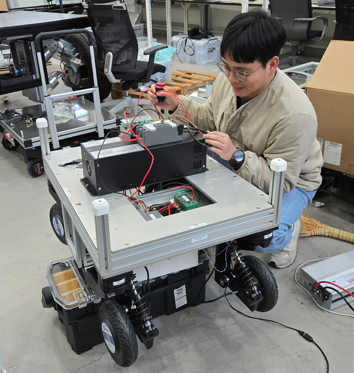
A robot that can find its own way through an unfamiliar building — and decide on its own when to head back to base — has taken first place at a major international competition. The autonomous exploration robot technology was developed by South Korean researchers.
The Electronics and Telecommunications Research Institute (ETRI) announced Friday that it won the single-robot category at an international indoor autonomous exploration competition held alongside IROS 2026, a leading global robotics conference, in Pittsburgh in September.
The competition evaluated how efficiently a robot could explore an unfamiliar indoor space within a set time limit and relay the information it gathered back to a base station.
The final assessment used 10 indoor environment maps that had not been disclosed to participants, with four different starting positions applied in each map.
The key performance metric was "base-station coverage" — not simply how much ground the robot covered, but the proportion of spatial information it successfully transmitted back to the base station.
The ETRI team recorded a base-station coverage rate of 40.26 percent in the final evaluation, topping the single-robot category. Among the 10 finalists, the team posted the highest scores not only in the overall standings but also in both the small-map and large-map groups.
The winning edge came from an autonomous exploration algorithm that lets the robot decide for itself where to explore and when to return to base.
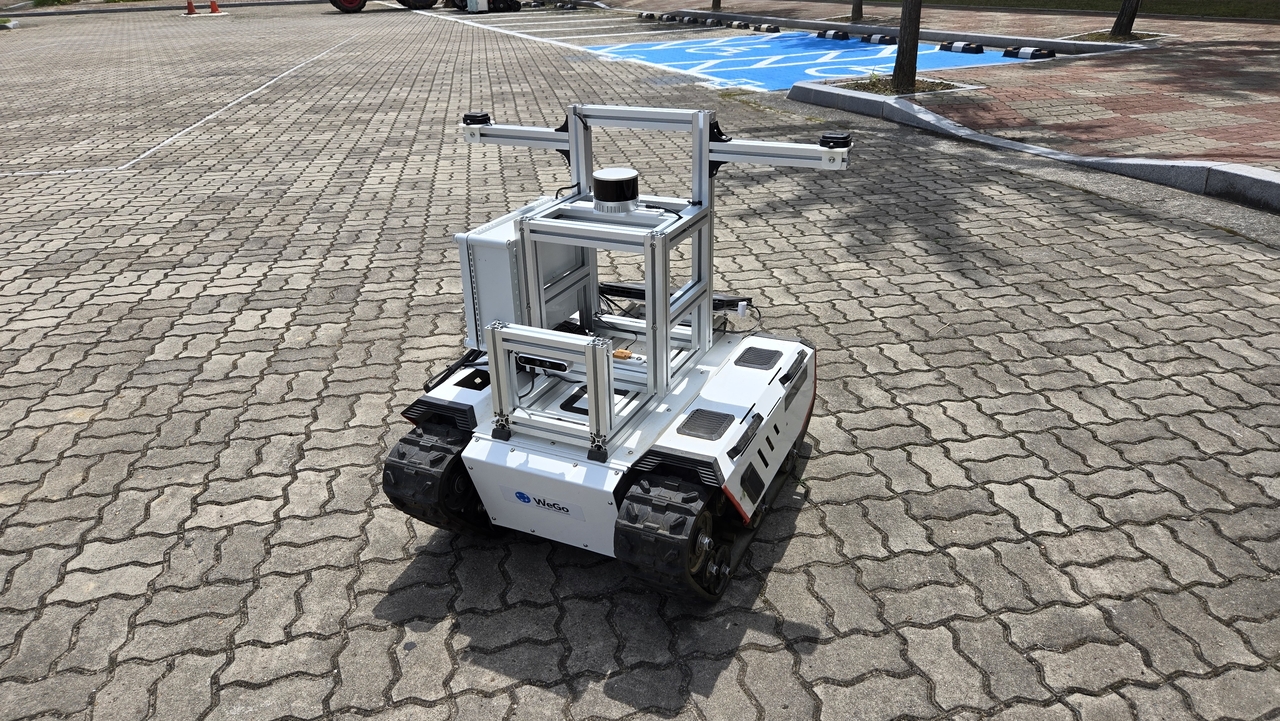
The ETRI team designed the algorithm to calculate travel distance and the amount of new information a given area could yield simultaneously, directing the robot to prioritize the most exploration-efficient locations.
The system also factors in remaining exploration time and the distance needed to return to base, allowing the robot to cover as much ground as possible while still making it back within range.
Another notable feature is that the technology requires no separate training data or pretrained AI model, meaning it can operate in unfamiliar environments without any additional learning.
In internal comparison tests using sample competition environments, the baseline algorithm averaged a base-station coverage rate of 33.4 percent. Applying ETRI's technology raised that figure to 61.8 percent — an improvement of 28.4 percentage points.
The technology is expected to be deployed in settings where obtaining maps in advance is difficult, including warehouses, large industrial facilities, below-ground spaces and disaster sites.
"This victory is international recognition of the excellence of the autonomous exploration and path-planning technology our team has developed," said Byeon Woo-jin, head of ETRI's Daegyeong Regional Research Division. "Technology that allows robots to make independent judgments and explore on their own, even in environments without prior maps, will find applications across a wide range of fields — from logistics and industrial facilities to disaster response."
nbgkoo@heraldcorp.com