Kim Cheol-hong recognized for developing core technology behind photoacoustic-ultrasound imaging systems
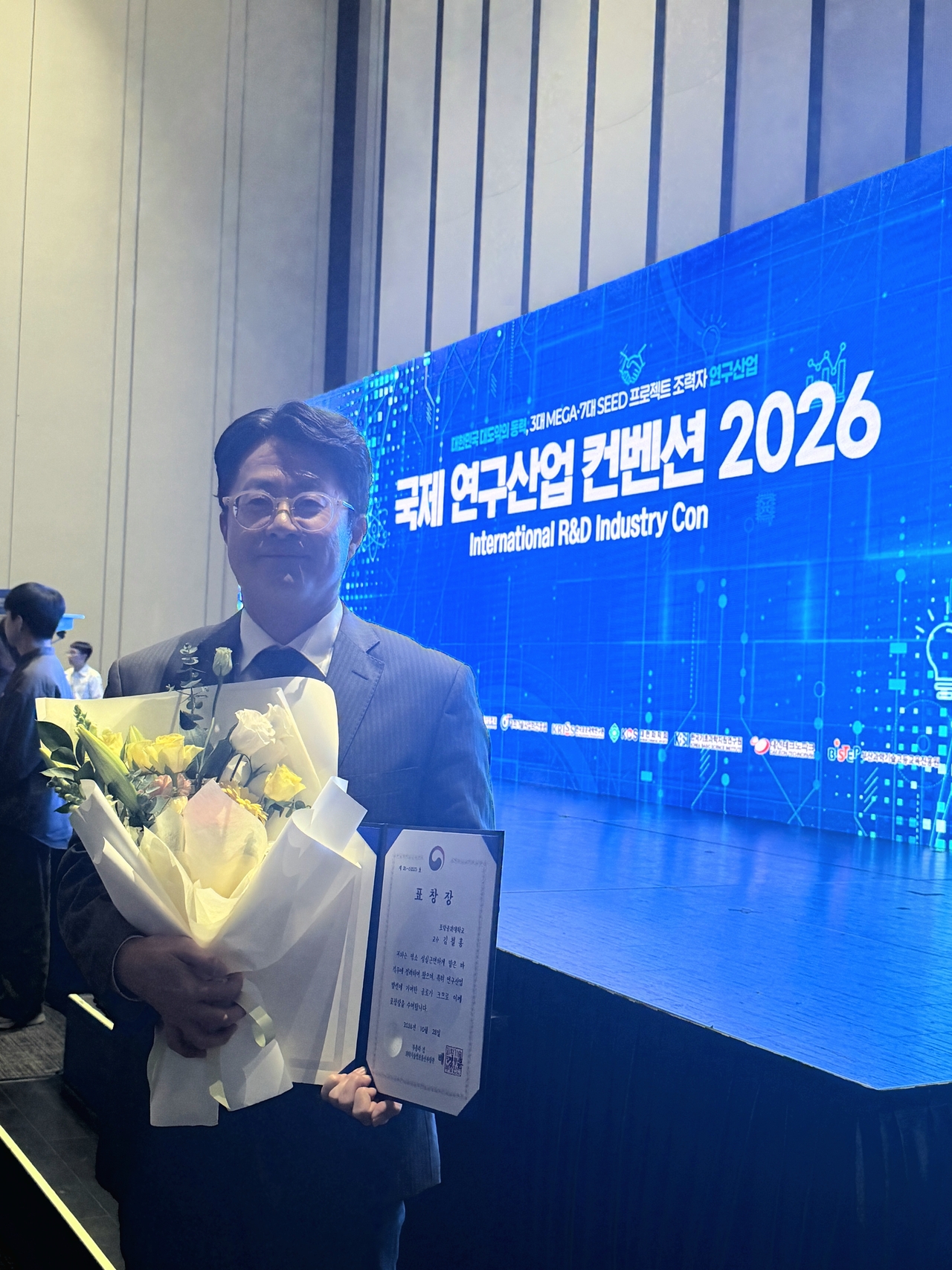
A South Korean researcher who developed next-generation medical imaging technology combining light and ultrasound — and carried it from the laboratory to commercialization — has received a government commendation.
Pohang University of Science and Technology (POSTECH) announced Friday that Kim Cheol-hong, a professor in the departments of electrical engineering, biomedical engineering and mechanical engineering and in the convergence graduate school, received a commendation from the deputy prime minister and Minister of Science and ICT at the International Research Industry Convention 2026, held Wednesday.
The commendation was established to identify and recognize individuals who have contributed to the promotion and development of the research industry.
Kim was honored for developing photoacoustic-ultrasound fusion imaging equipment that combines the strengths of light and ultrasound, and for translating that work into the production of research instruments and the launch of a commercial venture.
Photoacoustic imaging works by directing light at biological tissue; the tissue absorbs the light energy and generates faint ultrasound signals that are captured and rendered as images. When combined with conventional ultrasound imaging, the technology can reveal not only the structural information of tissue but also the optical properties of biological structures such as blood vessels.
Kim has focused on securing core technology for an integrated imaging system that brings together optics, ultrasound, electronics and image processing, and on realizing that system as practical medical imaging research equipment.
To apply the technology developed in his laboratory to industry, Kim founded Opticho, a company specializing in medical imaging. Building on photoacoustic imaging technology, the company has pursued the development and commercialization of preclinical and clinical research instruments, contributing to the technological competitiveness of South Korea's advanced medical imaging equipment sector.
The award is significant because foundational university research has gone beyond equipment development to spawn a startup and bring products to market.
"This award carries great meaning in that it recognizes a full-cycle achievement — one that did not stop at developing research equipment but extended to founding a company and commercializing products," Kim said. "Going forward, I will work to advance photoacoustic-ultrasound fusion medical imaging technology and expand the commercialization of research equipment, contributing to technological innovation in the advanced bio-health sector."
nbgkoo@heraldcorp.com