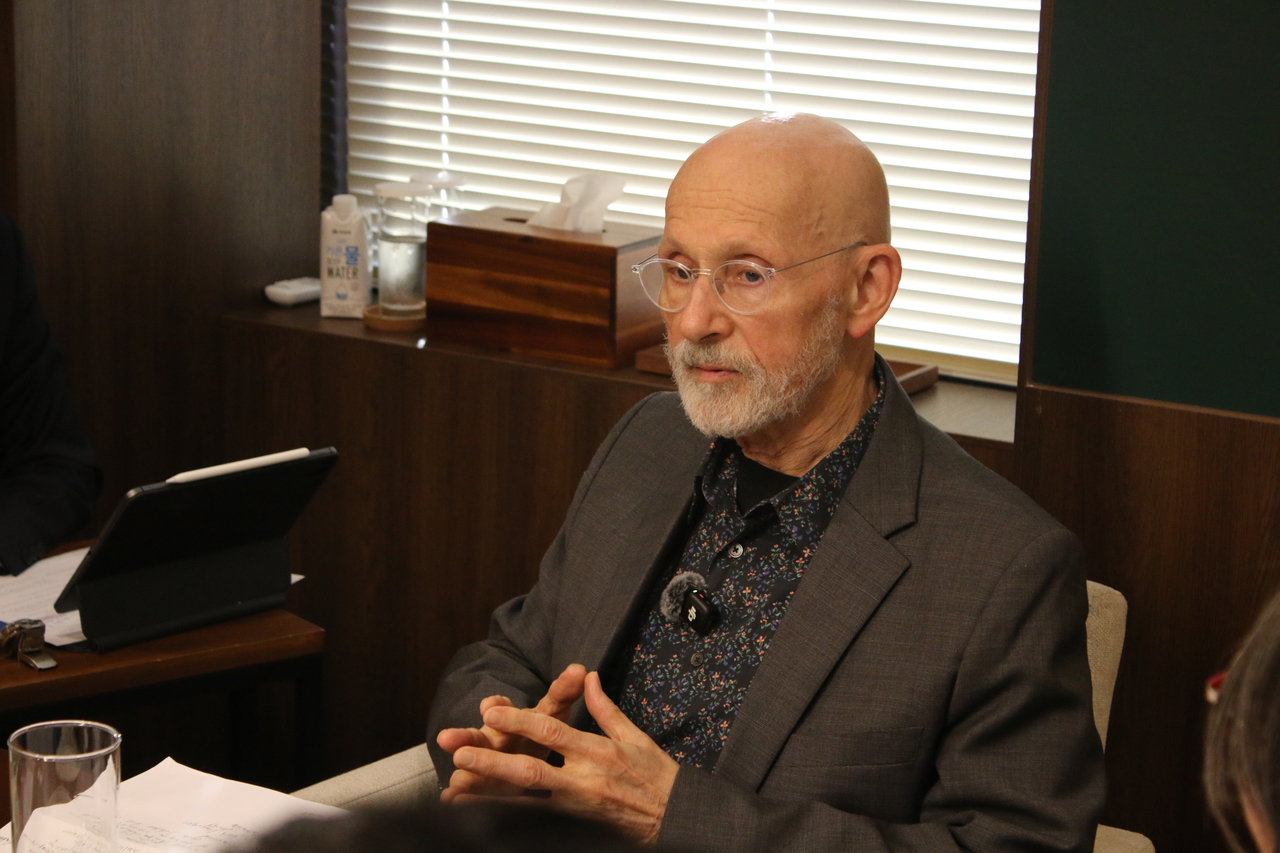
David Savran, author of 'Tell It to the World'
'Korean actors are the best I've seen, outside the US'
The 'cool Korea' brand is powering K-musical success abroad
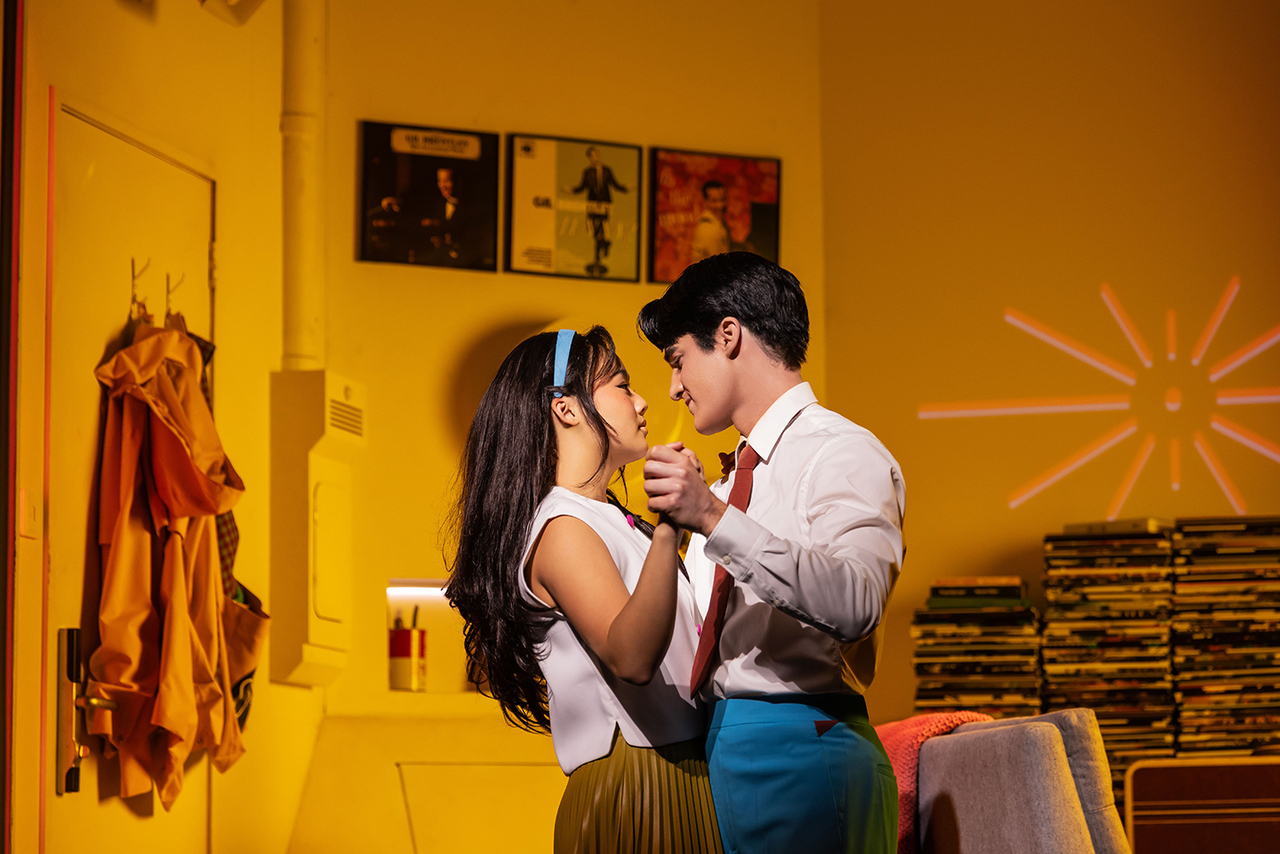
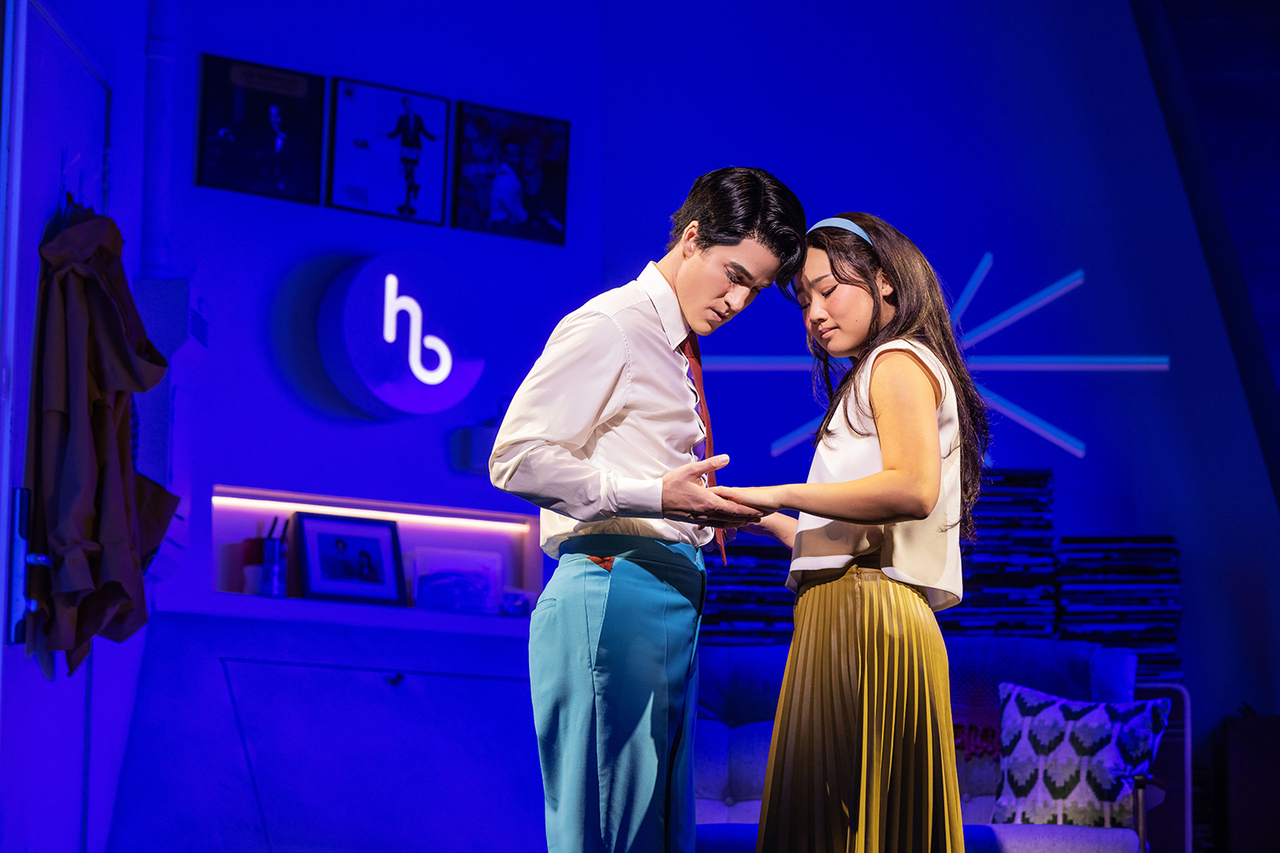
A humanoid robot sheathed in synthetic skin that mimics human flesh. A near-future Seoul where new versions roll out daily. Even in an age when robots are part of everyday life, the cityscape remains deeply analog — a worn apartment building, a wooden door through which a neighbor's call drifts in from outside. The Korean production of "Maybe Happy Ending" set its story in a neighborhood that felt lived-in and human, even with humanoid robots in the room.
When the musical crossed to Broadway, it shed that warmth for a gleaming future. Metallic spaces shimmered in silver, and cutting-edge holographic technology conjured both past and future as the home of helperbot Oliver and Claire — where the two learn to love. The same story, two entirely different stages.
"Outside Korea, the country is perceived as being at the cutting edge of technology — everyone has a Samsung phone," said David Savran, distinguished professor at the Graduate Center of the City University of New York. "Interestingly, the set of 'Maybe Happy Ending' on Broadway was futuristic and technologically sophisticated, whereas in Korea it was closer to an old-fashioned home. Outside Korea, the association between 'the future' and 'Korea' is very powerful."
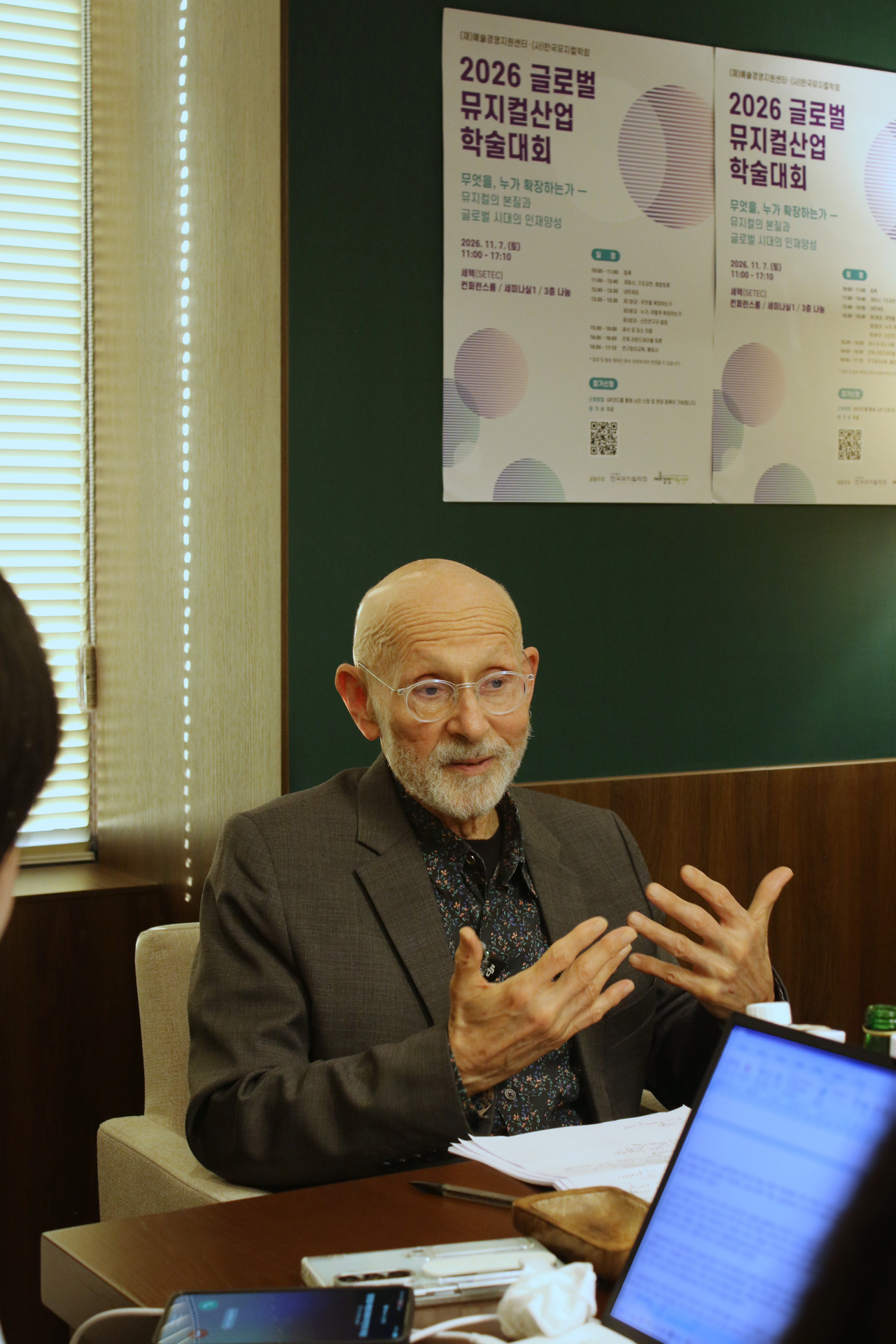
Savran, a leading American theater scholar who has spent decades theorizing American drama, musicals and popular culture, made the remarks in a recent meeting with journalists.
"Americans know K-pop but not pansori," Savran said. "Aside from the Seoul setting, one of the most distinctly Korean things about 'Maybe Happy Ending' is that the story is set in the future" — a near-future that looks almost like the present but runs on fundamentally different technology. He said the musical "depicted that world very successfully."
Savran served on the Pulitzer Prize drama jury in 2011 and 2012. His 2024 book "Tell It to the World" traces how Broadway musicals have spread across the globe, with Korea and Germany as its two central case studies — both having become major commercial hubs for Broadway productions. He will deliver a lecture titled "Korean Musicals on the World Stage" at the 2026 Global Musical Industry Academic Conference at SETEC in Seoul on Saturday. The visit is his third to Korea, following trips in 2013 and 2017.
"I started writing this book in earnest around 2012 and 2013, so it has been an enormous investment — intellectually and emotionally — over a long period of time," Savran said. "Throughout that process I became increasingly absorbed in Korean music, musicals, theater and culture, and I hoped this work would bring me back to Korea."
'The best musical actors I've seen are in Korea'
Savran's interest in Korean musicals was sparked by his Korean doctoral students. His first Korean PhD student wrote a dissertation on the Korean production of "Dreamgirls" — a show rooted in the story of a Black women's group, told through Black music. "I was honestly shocked that it was being performed in Korea," Savran said. "I learned an enormous amount from my students."
The greatest strength of Korean musicals, in Savran's view, is the performers. "Korean actors are the best musical theater actors I have ever seen — with the possible exception of Americans," he said. He was particularly struck by "the remarkable level of talent and professionalism, which is grounded in their training." Every time he watches a Korean musical, he said, he is moved by the actors' command of the stage — their delivery, and their ability as "triple threats" who can act, sing and dance. "That is a great resource," he said.
The foundation of K-musicals, performed by such accomplished actors, is rooted in Broadway. "Koreans are uniquely skilled at taking the conventions of Broadway musicals and adapting them," Savran said. "They have successfully made the American form their own, and in some respects they understand it more deeply than the Germans do."
Savran sees Korea and Germany as having approached musicals from very different starting points. Germany already had a tradition of popular music theater in the operetta, and so received the musical as an American version of that form. Korea, by contrast, had its own genre of changgeuk, yet "from the outset treated musicals as something entirely different — something American," he said.
"When I first visited Korea in 2013, one strong impression was that every musical poster had exactly one English word on it: 'musical.' They could have coined a different term, but they kept it as is. I think the word itself, and the prestige of 'Broadway,' played a significant role in that."
The 'cool Korea' brand
With "Maybe Happy Ending" sweeping the Tony Awards last year, the world stage is taking a fresh look at K-musicals. At a time when K-pop, Korean drama series and Korean cinema have already captivated global audiences, Korea has come to embody an image that younger generations aspire to.
"Korea has been extraordinarily successful at promoting itself," Savran said. "Brand Korea is recognized, loved and admired around the world — and that is an important factor in the success of Korean musicals abroad."
"In 2013 I saw the early signs of it, centered on K-pop, but since then it has exploded — not just K-pop, but Korean films, drama series and food. In Berlin, where I spend most of my time, there were almost no Korean restaurants three years ago; now there are many. No other Asian country is like this. People I've met from China and Japan say 'Korea is so cool' and are learning Korean."
"Maybe Happy Ending" was written by Korean playwright Park Chun-hoo and American composer Will Aronson. It received support in Korea, went through workshops in the United States, had its world premiere in Korea and then moved to Broadway. Unlike most K-musicals — where production companies hold the rights — the creators retained ownership of this work and took it to the world stage themselves.
"When creating a transnational musical, direct person-to-person connections are very important," Savran said, calling "Maybe Happy Ending" "a much smarter and more innovative work" for that reason.
'Tell more Korean stories'
The Korean musicals that left the deepest impression on Savran are "Yeongung" (Hero) and "Seopyeonje." "Yeongung" was the first Korean musical he saw live. "I knew nothing of that history, yet I was deeply moved — it was a very skillfully made work," he said, noting that it drew heavily on the conventions of Broadway and West End musicals. "Seopyeonje," meanwhile, was the production that ultimately led him to write the book.
"Seeing 'Seopyeonje' in 2017 was one of the most intense experiences I have ever had in a theater. I knew a little about pansori, but nothing about how a singer trains — and this work shook me deeply. I consider it one of the greatest musicals ever made."
In the book, Savran reads "Seopyeonje" and other Korean musicals through the concept of han. "At first I was uncomfortable using that word," he admitted. He was aware of the view that links han to the experience of Japanese colonial rule, and of the critique of "self-Orientalism" — the idea of exoticizing oneself for outside audiences. Even so, he kept returning to han because of what the stage made him feel. "So many Korean musicals, and 'Seopyeonje' in particular, gave me a very distinctive kind of sorrow. That sorrow is not unique to Korea, but it made sense to me."
Deeply moved by musicals rooted in Korean subject matter, Savran said the more he studied the form, the more he was struck by how many Korean musicals are adapted from Western European classics. "They are skillfully made works, but I would love to hear more Korean stories," he said.
"There are wonderful Korean films piling up, and there are myths and folk tales. Korea is hot enough in the United States — central enough to what is fashionable — that there is more than enough interest to sell stories that are even more distinctly Korean."
shee@heraldcorp.com