Food tells the story of the world. Welcome to Midam, where every bite has a tale.
US whey protein prices surge more than twofold on soaring demand
US dairy industry to invest 15 trillion won in expanded facilities
Price relief uncertain as global demand continues to outpace supply
As health consciousness grows worldwide, demand for American whey protein has surged — but supply constraints have sent prices soaring. The US dairy industry plans to commit 15 trillion won ($11.2 billion) to a large-scale expansion of dairy processing facilities, including those that produce whey protein.
The US Dairy Export Council held a media event Friday at the Westin Seoul Parnas to discuss the state of the American dairy industry and opportunities for cooperation with South Korean counterparts.
Attendees included US Dairy Export Council CEO Krista Harden, US dairy farmer representative Becky Neiman, the council's Korea office head Son Ran, and other US dairy industry officials.
The council said the 15 trillion won fund — drawn from investments by private companies and cooperatives — would be directed toward expanding all dairy-related facilities and infrastructure, covering whey protein as well as milk, cheese and butter.
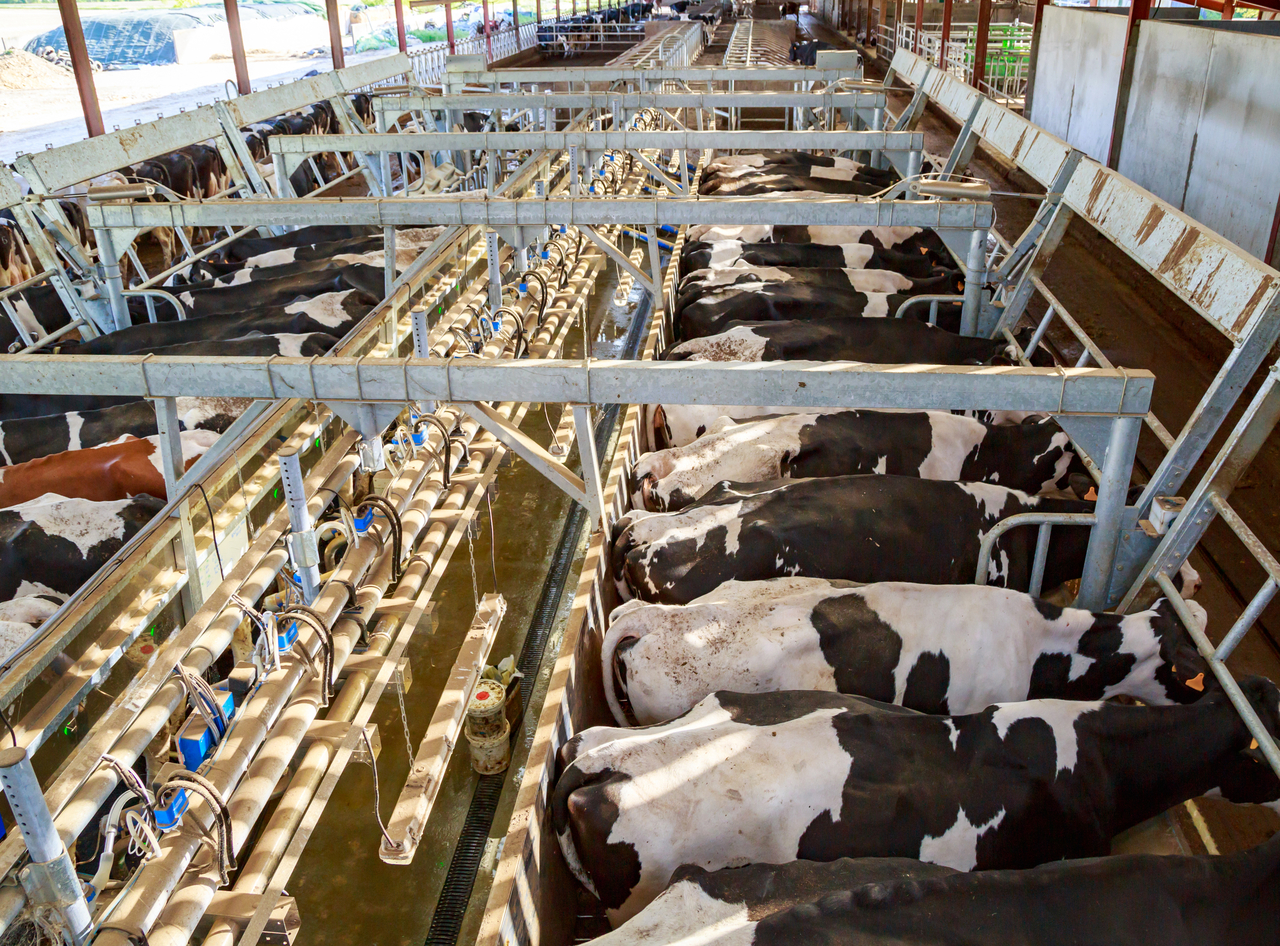
"We plan to invest approximately $11 billion across 50 processing facilities to expand dairy supply in the United States," Neiman said. "This is a proactive bet on the growing global demand for American dairy products."
Jenny McDowell, head of DairyMax, a US dairy promotion organization, said South Korea is a global leader in the wellness sector. "Whey protein consumption has grown significantly here, and we expect that growth to continue," she said.
The United States leads the world in whey protein isolation technology. Drawing on its large-scale dairy industry, the country produces and supplies multiple grades of whey protein ingredients, including whey protein concentrate (WPC) and whey protein isolate (WPI). Its processing technology and product specifications are also considered competitive advantages. Removing non-protein components such as lactose and fat from whey raises the protein content of the final product.
The most widely used grade, WPC 80, contains 80 to 82 percent protein on a dry-weight basis, with lactose and fat content each ranging from 4 to 8 percent. The US Dairy Export Council notes that WPC 80 is produced through physical processes such as filtration and separation, and that it serves not only as a protein source but also provides functional properties useful in food processing, including emulsification, moisture absorption and gel formation.
Demand for American whey protein in South Korea has grown sharply, but supply has been unable to keep pace since 2022. With supply effectively capped while demand keeps climbing, prices have jumped significantly.
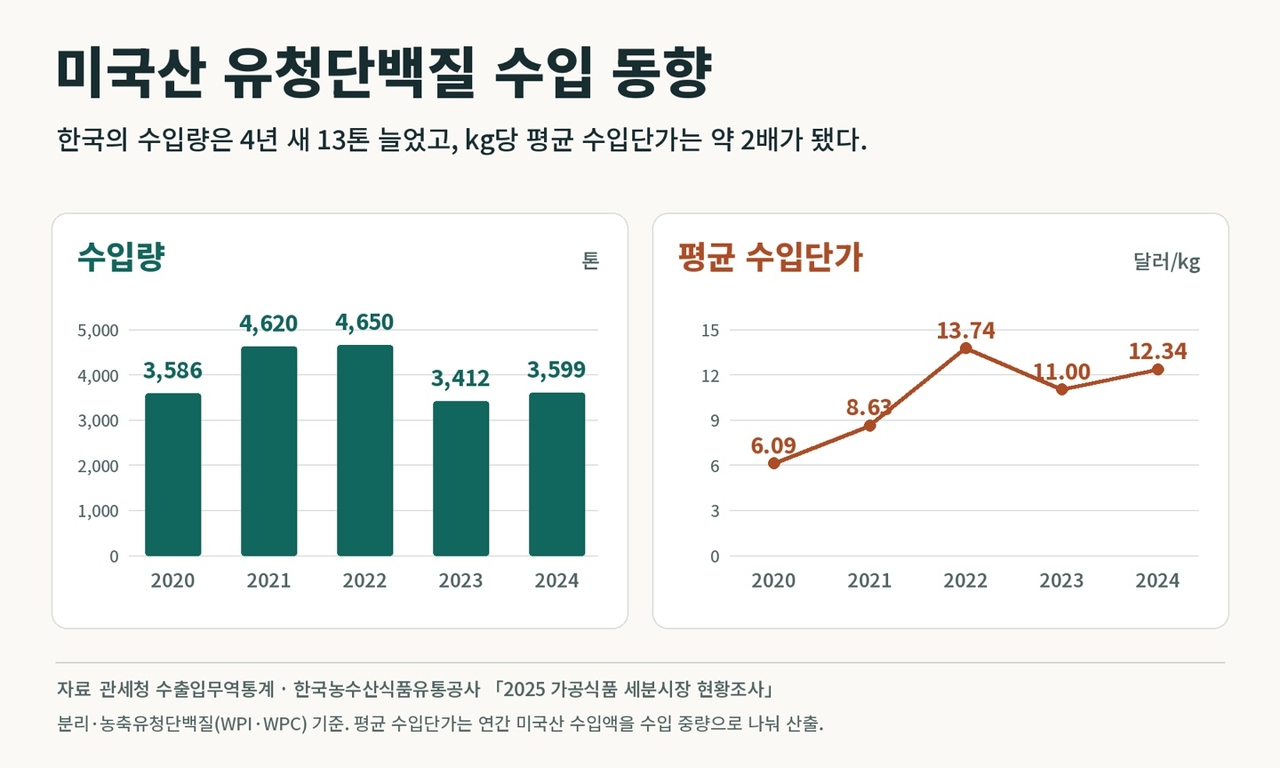
According to the Ministry of Agriculture, Food and Rural Affairs' 2025 Processed Food Sub-market Survey, which analyzed Korea Customs Service trade statistics, South Korean imports of American whey protein rose from 3,586 metric tons in 2020 to 4,650 metric tons in 2022, before easing slightly to 3,588 metric tons in 2024. The import price per kilogram climbed from about $6.09 in 2020 to $12.34 in 2024, more than doubling over four years.
The price surge has continued this year. The Korean import price for WPC 80 rose from $16.47 per kilogram in April to $26.67 in October, a roughly 62 percent increase in six months.
Some analysts say the large-scale US investment could help bring whey protein prices down. Others caution that a price correction is far from certain, given that demand for American whey protein is surging not just in South Korea but around the world.
"Demand for whey protein keeps growing," McDowell said. "Supply will increase as facilities expand, but if demand grows faster than supply, it is difficult to talk about price reductions at this point."
123@heraldcorp.com