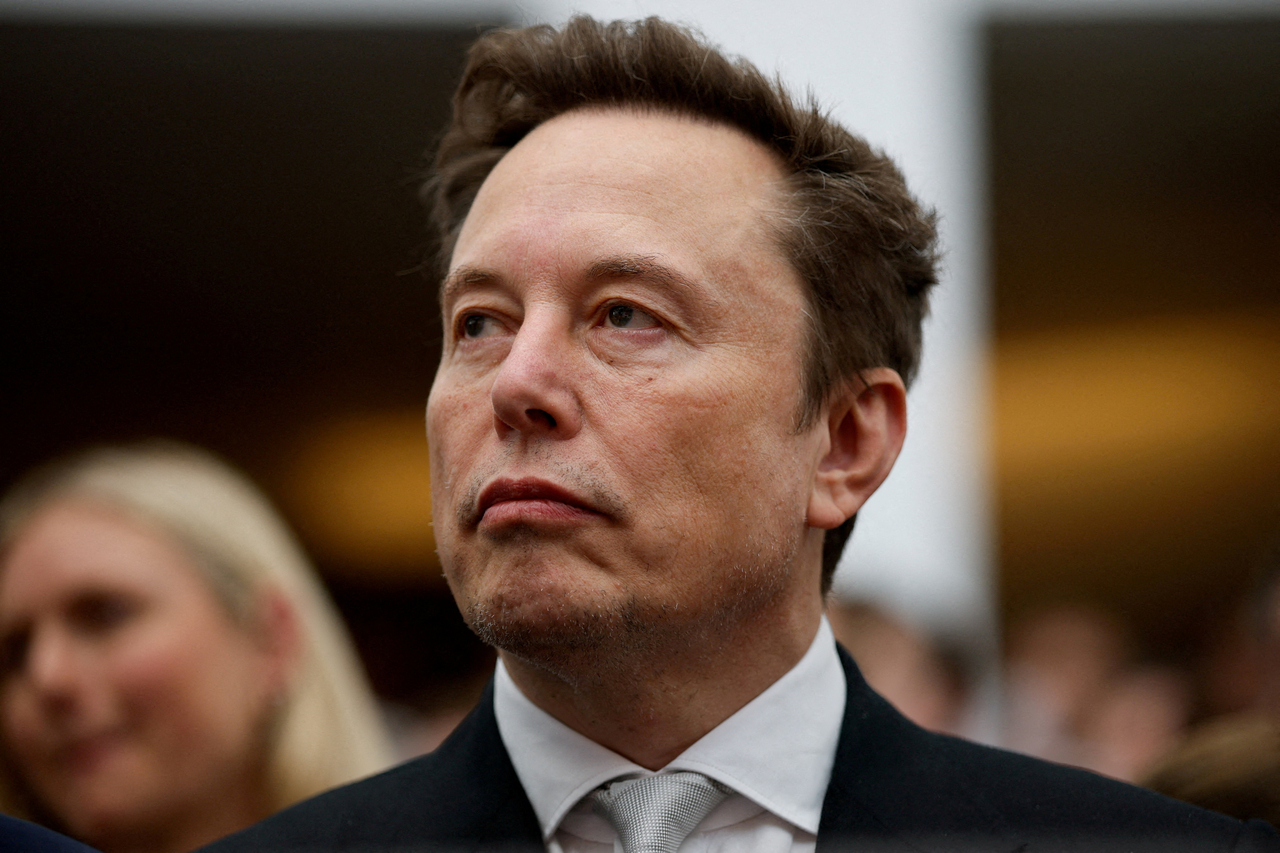
The combined market capitalization of Tesla and SpaceX fell by more than 500 trillion won ($373 billion) in two days, as the Democratic Party's victory in the US midterm elections raised uncertainty over the two companies' AI businesses and merger plans.
On Thursday (local time), Tesla closed down 10.77 percent at $343.69 on the New York Stock Exchange, while SpaceX fell 9.05 percent to $123.62.
The two companies had already declined 3.34 percent and 3.81 percent, respectively, on Wednesday, extending losses into a second consecutive session. Over the two-day period, their combined market capitalization shrank by approximately $456.7 billion (about 619 trillion won).
The sharp selloff was driven largely by fears that the Democratic Party's control of both chambers of Congress would lead to stricter regulation of data centers. Musk's active support for Republican candidates also weighed on sentiment. He emerged as the single largest donor in the midterm elections, contributing more than $470 million to Republican candidates and affiliated organizations.
In Texas, where both Tesla and SpaceX are headquartered, Democrats won the Senate, gubernatorial and attorney general races. Deutsche Bank said in a Wednesday report that while the future policy direction was difficult to predict, "SpaceX could face headwinds in this political environment."
Concerns also grew that SpaceX's expansion of its AI business could be hampered, as data center regulation has emerged as a major political issue in Texas.
SpaceX has been building its AI computing capacity rental business into a new growth engine; the segment accounted for more than half of total sales in the third quarter. The company is planning to build a facility called Terafab in Grimes County, Texas, which would include a large-scale data center and a semiconductor factory.
Uncertainty also deepened over a potential merger between Tesla and SpaceX, with concerns that the Democratic Party could subject any such deal to far more rigorous regulatory scrutiny.
Musk had described a merger between the two companies as "a good idea" during SpaceX's earnings conference call on Oct. 20, and said each company had formed a special committee to discuss the combination.
Analysts view a reverse triangular merger — in which SpaceX absorbs Tesla through a share exchange — as the most likely scenario. Im Eun-young, a researcher at Samsung Securities, explained that under such a structure, "SpaceX would establish a wholly owned subsidiary, which would then be absorbed into Tesla and dissolved, leaving Tesla to survive as a 100 percent subsidiary of SpaceX." In that case, all shares held by existing Tesla shareholders would be converted into newly issued SpaceX shares.
Dan Ives, a partner at Yorkville Ives & Co., said he believed the merger would go through, but that "the new 'blue' political landscape in Washington and Texas has made the regulatory path to completing the merger next year far more difficult."
Seth Goldstein, an analyst at Morningstar, said the likelihood of legislation unfavorable to Tesla actually passing was low, given that President Donald Trump could veto bills through 2028. He added, however, that "Democratic bill proposals and political rhetoric over the next two years could weigh on the share price."
According to the Korea Securities Depository's securities information portal, as of Wednesday, South Korean investors held $22.1 billion worth of Tesla shares — the largest holding among all US stocks. Their SpaceX holdings reached $3.1 billion.
moon@heraldcorp.com