The district has run tailored education for registered rental business operators for three consecutive years to help them navigate shifting real estate policy
Sessions cover public obligations, common violations and tax benefits, with a focus on practical, on-the-job information
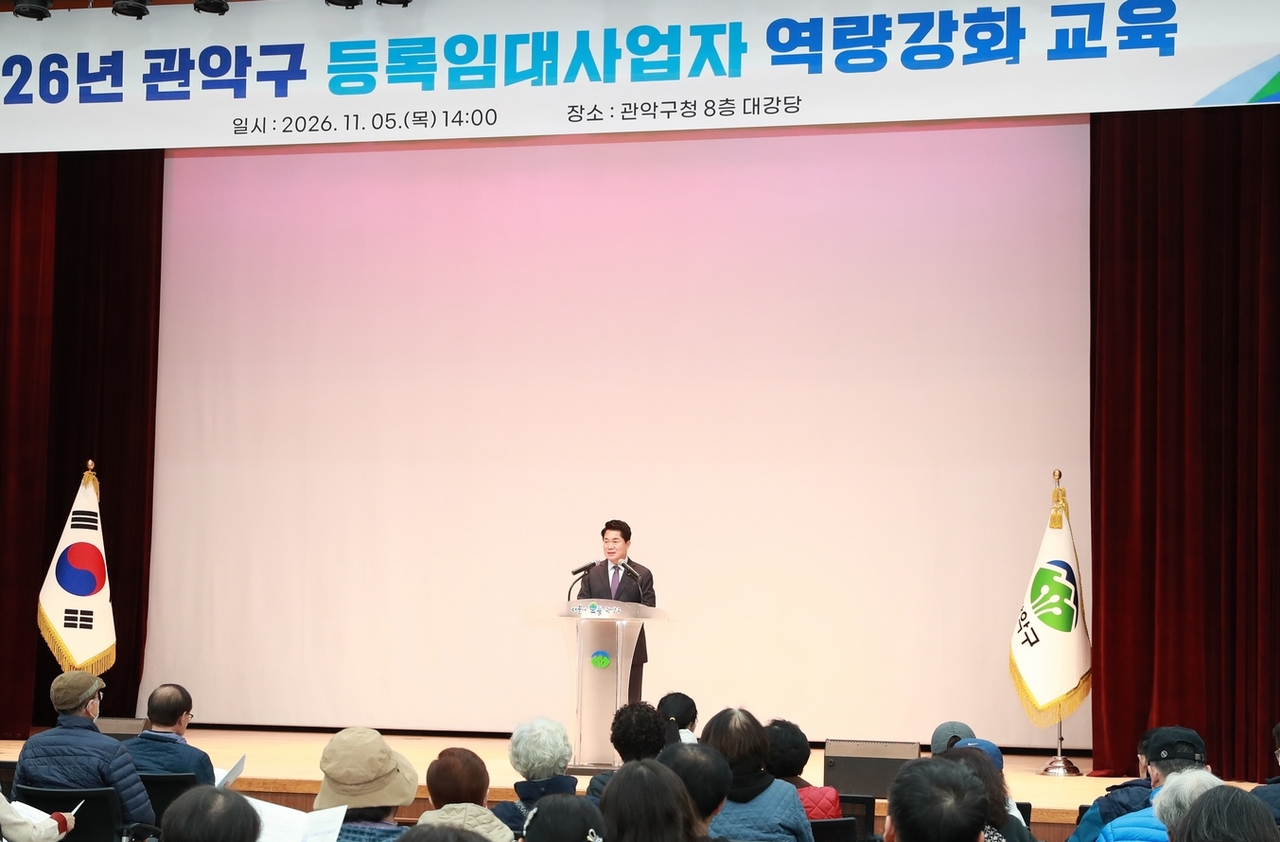
Gwanak-gu held its "2026 Registered Rental Business Operator Capacity-Building Education" session Thursday at the grand auditorium on the eighth floor of Gwanak-gu Office, aiming to strengthen the expertise of registered rental operators and support the stable management of private rental housing.
Registered rental business operators are individuals or corporations that have registered with a local government for the purpose of leasing private housing under the Special Act on Private Rental Housing. While they are eligible for certain tax benefits, they must also comply with a range of public obligations — including caps on rent increases and mandatory reporting of lease contracts — to protect tenants' residential stability.
The session was designed to help registered operators review obligations they might easily overlook amid frequent legislative revisions and shifting real estate policy, prevent penalties from non-compliance, and ensure they take full advantage of available tax benefits.
The district has offered tailored education every year since launching its first in-person session in 2024, and this year's program drew about 200 registered rental operators. The session was divided into two parts, focusing on public obligations and recent tax reforms.
In the first part, a Gwanak-gu civil servant used a self-produced "Registered Rental Business Operator Guidebook" to explain the private rental housing registration system and key recent legislative changes.
The session covered registered operators' public obligations, lease contract reporting procedures and required documents, common cases of obligation violations and the standards for imposing fines, and agencies to contact with inquiries related to registered rental operations — all centered on information operators must know in practice.
The second part featured Yang Jeong-hun, a tax accountant and deputy head of Chungjeong Tax Corporation's Gangnam headquarters, who explained major tax reforms and points of caution arising from changes in real estate and tax policy. The presentation focused on property holding taxes — including property tax and the comprehensive real estate holding tax — and drew a strong response from attendees by sharing tax reduction benefits and practical information for running a rental business.
Meanwhile, the district plans to mail out the "Key Public Obligations for Housing Rental Business Operators" summary and the "Registered Rental Business Operator Guidebook" used in the session to registered operators who were unable to attend.
In addition, the district plans to use a range of promotional channels — including the Gwanak-gu website, electronic signboards and SNS — to actively inform registered operators of legislative changes and key obligations so they do not miss critical information.
"The role of registered rental business operators is crucial in creating a stable residential environment where tenants can live with peace of mind," District Mayor Park Jun-hee said. "I hope this session provides practical help in accurately understanding public obligations and running a rental business. We will continue working to foster a sound rental business environment and support tenants' residential stability."
seouldream01@heraldcorp.com