District applies 'three no's' principle to cut 83.5 billion won from 29 projects; 82.3 billion won redirected to welfare, future industries and youth
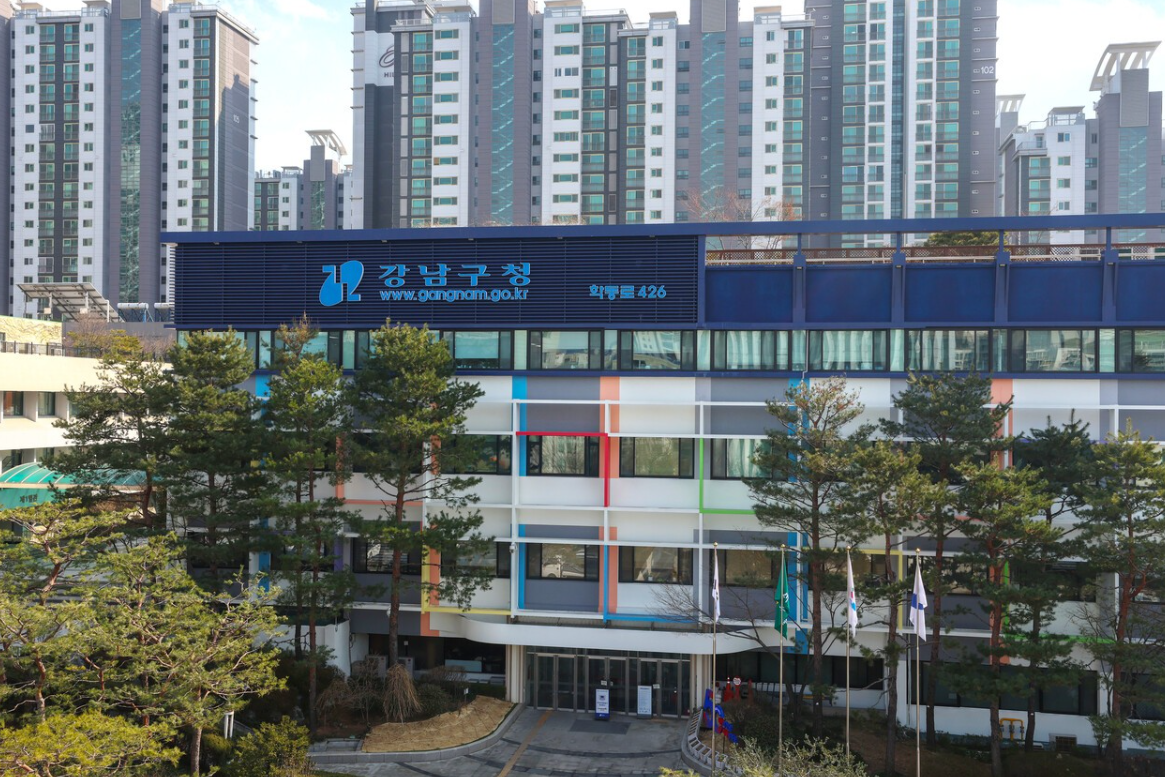
Gangnam-gu has drafted a 1.49 trillion won ($1.11 billion) budget for the first full fiscal year under its new administration, cutting 83.5 billion won from existing programs and redirecting the savings toward resident welfare, future industries and urban infrastructure.
The district submitted the 2027 budget proposal of 1.49 trillion won to the Gangnam-gu Council on Thursday, the district office announced Monday.
The figure represents a 13.1 billion won, or 0.9 percent, increase from this year's base budget of 1.48 trillion won. The general account stands at 1.45 trillion won and the special account at 41.35 billion won.
The defining feature of the proposal is a spending restructuring exercise built around what the district calls its "three no's" principle — a commitment to withhold funding from projects deemed non-essential, lacking a clear purpose or producing unclear results.
The district conducted a comprehensive review of existing programs, weighing each against criteria including necessity, resident utilization rates, satisfaction scores, execution records and potential overlap with similar initiatives. After two rounds of senior policy meetings, it eliminated or scaled back 29 projects, merged overlapping events and programs, and trimmed routine expenditures such as promotional materials and uniforms, as well as local subsidies and outsourced service costs.
The exercise yielded savings of about 83.5 billion won, of which 82.3 billion won was reinvested in resident welfare and projects aimed at Gangnam's future.
By sector, 25.1 billion won was allocated to jobs, youth, education and culture; 24.3 billion won to tailored welfare services; 20.1 billion won to reconstruction, future industries and infrastructure; and 12.8 billion won to environment and safety.
Welfare accounts for the largest share of the total budget at 676.5 billion won, earmarked for improving quality of life across the district. Plans include expanding programs at senior welfare centers and senior community hubs, building a new indoor screen park-golf course, installing night lighting at the Tancheon park-golf course, and strengthening AI- and IoT-based health management and integrated care systems. Support for marriage, childbirth and child-rearing will also be broadened, with new or expanded benefits covering wedding grants, newborn support payments, home childcare bonuses and organic produce subsidies for pregnant residents.
On urban development and future growth, 61 billion won has been set aside for reconstruction support and a rapid-response task force, urban spatial planning, the Apgujeong-ro K-Culture Street project, and the creation of a history and culture corridor linking Seonjeongneung and Bongeunsa. Future-industry initiatives include establishing an ICT business support center in Gaepo, launching a Gangnam Next Unicorn fund, running robot pilot projects and holding K-Tech Valley investment attraction briefings.
The youth sector receives 29 billion won, with new interview preparation grants and job-retention incentives, along with expanded support for real estate brokerage fees and moving costs.
Culture and tourism draws 72.5 billion won, covering resident-participation festivals and the construction of libraries in Suseo-dong and Gaepo-dong. Education — including AI literacy and general reading programs — receives 46.1 billion won.
The environment and safety sector is allocated about 142.1 billion won, funding underground utility work along Cheongdam's restaurant street, road repairs, eco-friendly heating installations, expanded crime-prevention CCTV, mobility-impaired protection zone management and an AI-based flood prevention platform.
The 2027 budget proposal will go before the 339th Gangnam-gu Council second regular session, running from Nov. 16 to Dec. 17, for deliberation and final approval.
"We boldly cut spending that had become routine and reinvested those resources to transform residents' lives and Gangnam's future," Gangnam-gu District Mayor Kim Hyun-ki said. "We will work closely with the district council to ensure that limited public funds are used to raise residents' quality of life and support Gangnam's sustainable growth."
seouldream01@heraldcorp.com