Ideological spectrum stretches from conservative red-state winners to democratic socialists; hundreds of calls flood offices opposing Jeffries as speaker; most members back Jeffries-Schumer leadership
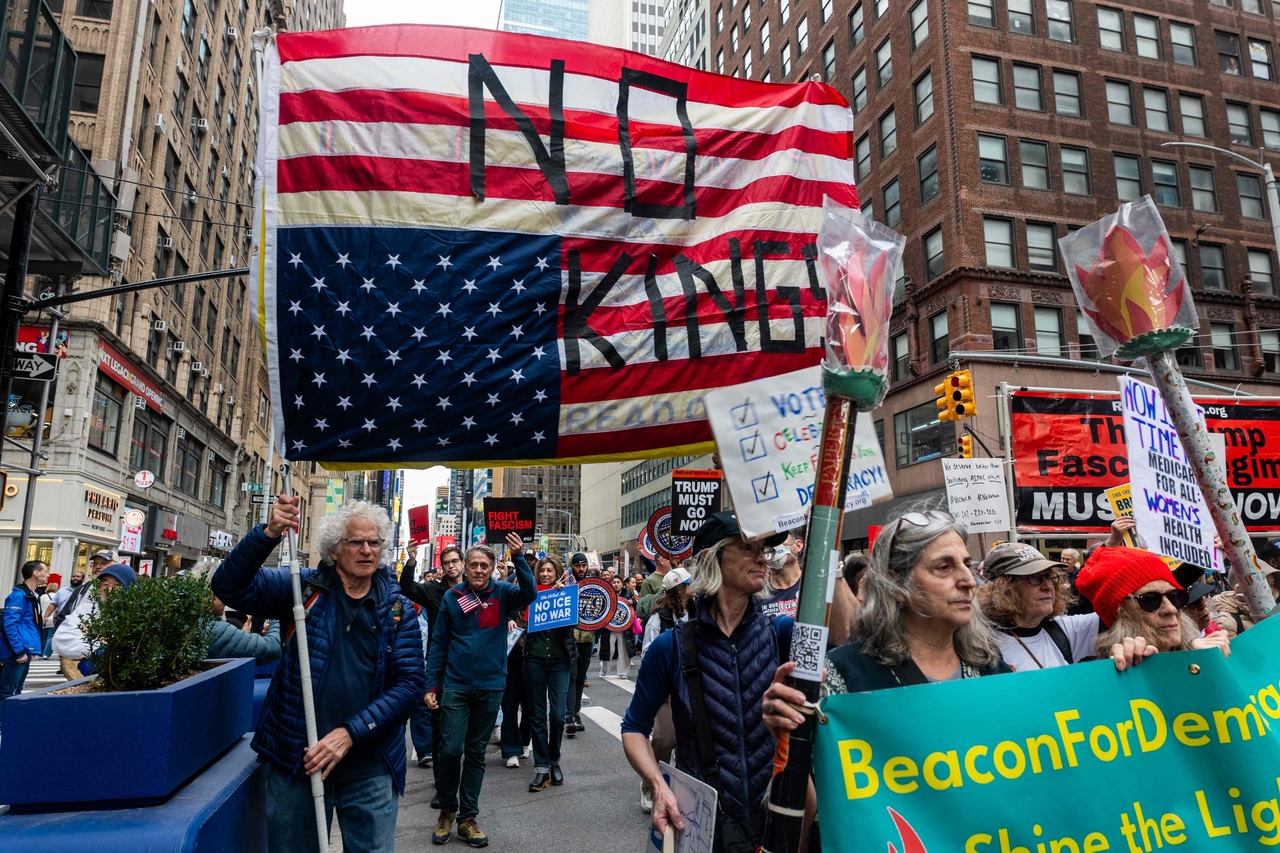
Following a sweeping midterm victory, the Democratic Party is entering a full-blown internal struggle over direction, with two broad camps — one pushing to expand the party's centrist appeal and another demanding the pursuit of a progressive agenda — squaring off in an intensifying factional battle.
The two sides do not even agree on what the election results mean. One interpretation holds that the party's commanding margin came from absorbing moderate conservatives and independents; the other argues that voters were driven by a hunger for progressive ideals in opposition to the Donald Trump administration's policies.
The centrist camp draws its strength from Texas, Kansas and Iowa — states where, in some cases, a Democratic candidate had not won a Senate race in roughly a century. The progressive camp is anchored by newly elected members affiliated with the Democratic Socialists of America from Michigan, Maine and Minnesota.
The DSA-aligned winners have championed a wealth tax, universal Medicaid, the abolition of Immigration and Customs Enforcement and a ban on weapons exports to Israel. By contrast, candidates who flipped Republican strongholds with the support of moderate and conservative voters have kept their distance from those positions, focusing instead on stabilizing prices and ending the war with Iran.
Reporting by The New York Times and the Wall Street Journal on Sunday suggests that broader-than-expected Democratic gains have weakened the leverage the DSA faction had counted on to operate as a party within a party.
The DSA had been expected to secure around 10 House seats and use that bloc as a swing vote to shape key party decisions. But with Democrats now potentially approaching 260 House seats, the faction's relative weight has shrunk.
The late-race performances of James Talarico of Texas, Adam Hamilton of Kansas and Josh Turek of Iowa also left a strong impression — comparable to the rise of DSA figures such as Abdul El-Sayed of Michigan earlier this year.
Talarico ran on what he called a "politics of love" that rejects partisanship. Hamilton described himself as "a progressive conservative, a conservative progressive." Turek backed a ban on transgender youth competing in youth sports — a position associated with the conservative camp.
DSA-aligned winners in both chambers, however, are pushing back, arguing that the party needs a new wave. They say the party cannot afford to repeat the failures of two presidential elections lost to Donald Trump under the stewardship of the establishment.
El-Sayed told The New York Times that his victory came from daring to upend the political system. Sen. Bernie Sanders of Vermont, the godfather of the progressive wing, said the party must not hesitate to pursue a progressive agenda. "We can no longer continue with the same old status quo policies," he said.
The Wall Street Journal noted that the Democratic caucus set to control both chambers starting early next year will span the widest political spectrum in recent memory — from freshman members with DSA ties to dozens of lawmakers elected from districts where support for Donald Trump runs very strong.
Both camps are moving aggressively to build their numbers. The centrist New Democrat Coalition is aiming to form the largest House Democratic caucus with around 140 seats. The Congressional Progressive Caucus said it plans to grow its membership to 25 next year.
The incoming Congress will include a significant number of freshmen swept in on the Democratic blue wave. The online outlet Axios has dubbed them "wave babies." Both the centrist and DSA camps are expected to court them as they compete to expand their ranks.
The factional contest is playing out not only as a debate over party direction but also as an early competition over who should carry the Democratic banner in the 2028 presidential election. Both parties have effectively shifted into presidential campaign mode in the immediate aftermath of the midterms.
Rahm Emanuel, the former Chicago mayor and a centrist presidential prospect, told The New York Times that "there are a lot of non-MAGA Republicans and independent voters who want to give Democrats a second chance," adding that he does not believe "socialism is the way to win their hearts and minds."
Rep. Ro Khanna of California, seen as a progressive presidential contender, said the establishment's repeated claims about who is and is not electable — made by the same forces that lost to Donald Trump twice — "have become completely meaningless."
US media outlets have stressed that as the party navigates its internal divisions while seeking to challenge the Trump administration and reclaim the White House, leadership capable of uniting its members has never been more critical. Senate Democratic leadership elections are scheduled for early next month, while House leadership votes are expected next week.
Senate Minority Leader Chuck Schumer, who prizes party unity and cohesion, is widely expected to return as Senate majority leader. House Minority Leader Hakeem Jeffries, who shares a similar disposition and is known for his measured approach, is poised to become the first Black speaker of the House in history.
Hundreds of calls have reportedly flooded the offices of some House members urging them not to support Jeffries for speaker. Most are believed to come from hard-line DSA-leaning activists, who are said to favor Rep. Jamie Raskin of Maryland.
Nevertheless, most House members appear to treat Jeffries' election as speaker as a foregone conclusion. Jeffries told The New York Times, "Failure is not an option," projecting confidence.
Schumer has faced some criticism that he lacks the leadership stature to represent a Senate majority of 54 to 56 seats, but CNN reported that he remains the most likely candidate for majority leader, as no challenger has yet come forward.
yckim6452@heraldcorp.com