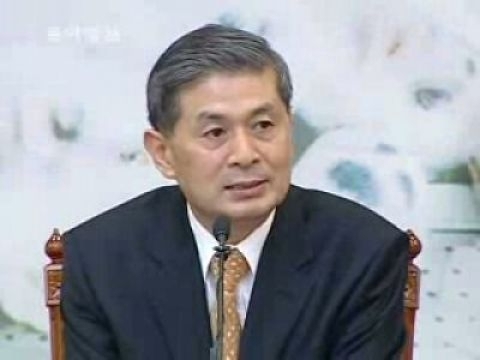
Hwang Woo-suk, the former Seoul National University professor whose fabricated stem cell research papers triggered a major scientific scandal more than two decades ago, has lost his South Korean citizenship after acquiring UAE nationality.
According to the official government gazette published Monday, Hwang, born in 1953 in Buyeo, South Chungcheong Province, obtained UAE citizenship in April, automatically forfeiting his South Korean nationality.
The individual listed in the gazette matches Hwang's birth year and birthplace, and Hwang currently serves as CEO of UAE Biotech, a research institute in Abu Dhabi — details that strongly suggest the two are the same person.
Under Article 15 of the Nationality Act, a South Korean citizen who voluntarily acquires foreign citizenship immediately loses Korean nationality. The move is therefore understood to mean Hwang chose of his own accord to relinquish his Korean citizenship in favor of UAE nationality.
The government in July revoked the National Top Scientist Award it had conferred on Hwang in 2004.
The revocation came 22 years after the original award because legal proceedings had only recently concluded. The prize is a presidential award given to scientists who have contributed to the advancement of science and technology in South Korea; Hwang received it along with a cash prize of 300 million won ($221,000) for his purported research on human embryonic stem cells.
After the fraud came to light, Seoul National University dismissed Hwang in 2006, and the Ministry of Science and Technology stripped him of his designation as the country's No. 1 top scientist the same year. Several other honors, including the Order of Science and Technology Merit, were also revoked at the time.
However, the National Top Scientist Award had no revocation provision and remained in place until 2020, when authorities finally moved to cancel it. Hwang challenged that decision in an administrative lawsuit, and courts at all three levels ruled in his favor, finding procedural flaws — including the failure to give him an opportunity to submit his views before the cancellation. The government then restarted the process and formally revoked the award in July.
paq@heraldcorp.com