KAIST Distinguished Professor Lee Hae-shin develops 'Quick Dry Shampoo' using polyphenol technology

"The time it takes to dry my hair has been cut in half."
The KAIST technology-based "magic shampoo" — which made waves for its hair loss prevention and volume-boosting effects — is back with a new product designed to cut drying time. A pre-launch batch sold out in 24 minutes, signaling another shortage.
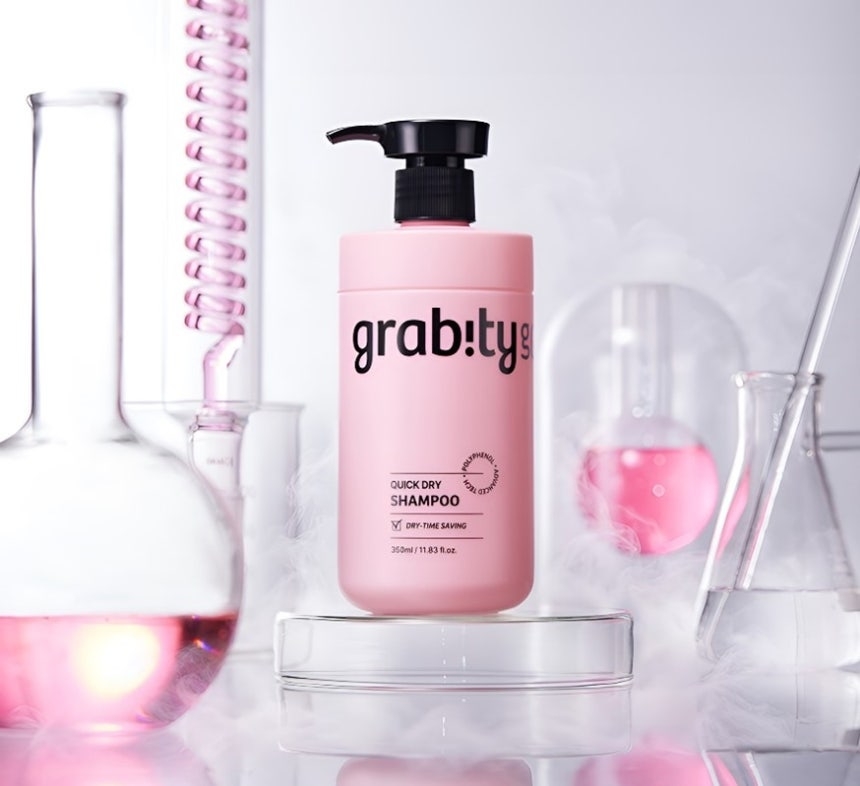
Polyphenol Factory, a startup founded by KAIST Distinguished Professor Lee Hae-shin of the Department of Chemistry, said it officially launched the Quick Dry Shampoo, a new product under its haircare brand Gravity, on Thursday.
At a pre-launch sale held at CJ Olive Young on Nov. 5, the entire stock sold out within 24 minutes of going on sale.
The core of the new product is a technology that rapidly removes residual moisture from the surface of hair strands. Conventional approaches to faster drying have largely relied on increasing the airflow and heat of a blow dryer. Gravity, by contrast, focused on altering the moisture state of the hair surface at the shampooing stage to reduce drying time.
In hair damaged by dyeing, bleaching or perming, lifted cuticles trap moisture and prevent it from escaping easily. Hair weakened by aging can also take a long time to dry.
To address this, the research team developed a polyphenol-based material technology called Drymax 609.
The technology works by having polyphenol compounds bind to the keratin surface of hair strands, forming a uniform coating layer. Moisture that had spread broadly across the hair surface beads up into rounded droplets, allowing it to fall away more easily.
Rather than stripping moisture from inside the hair shaft, the approach changes the state of surface water to improve drying efficiency.
The effect was confirmed in laboratory testing.
In a test conducted by P&K Skin Research Center on bundles of human hair, the group using the Quick Dry Shampoo saw surface moisture decrease by 56.14 percent between 2.5 and 5 minutes of blow-drying — approximately 1.90 times higher than the control group's reduction rate of 29.46 percent.
However, this figure represents a moisture reduction rate measured over a specific test interval and does not mean that the total time needed to dry a full head of hair is halved.
In a human application test, root volume improved by 23.56 percent immediately after use. Temporary hair moisture improvement was recorded at 24.93 percent, and cuticle roughness improvement at 20.57 percent.
Of the 22 participants, 95.45 percent responded "average or above" when asked whether their hair dried faster than usual.
The technology traces its origins to more than two decades of research by Lee into the adhesive properties of mussels. The polyphenol-bonding technology mimics the ability of mussels to cling firmly to rocks underwater and applies that principle to the surface of hair strands.
Lee published related research findings in the international journals Nature and Science in 2007. Since then, the technology has been applied to hair loss care and volume improvement, and with this latest product, its scope has been extended to accelerating hair drying.
"How quickly hair dries is not determined solely by the performance of a blow dryer — it is closely tied to how moisture stays on and leaves the hair surface," Lee said. "The significance lies in expanding the role of shampoo beyond simply cleansing, to encompass the drying process and volume changes that follow — making those part of the product's design."
nbgkoo@heraldcorp.com