Dried byproducts now allowed in regular trash bags; district supports 416 households with purchase subsidies this year
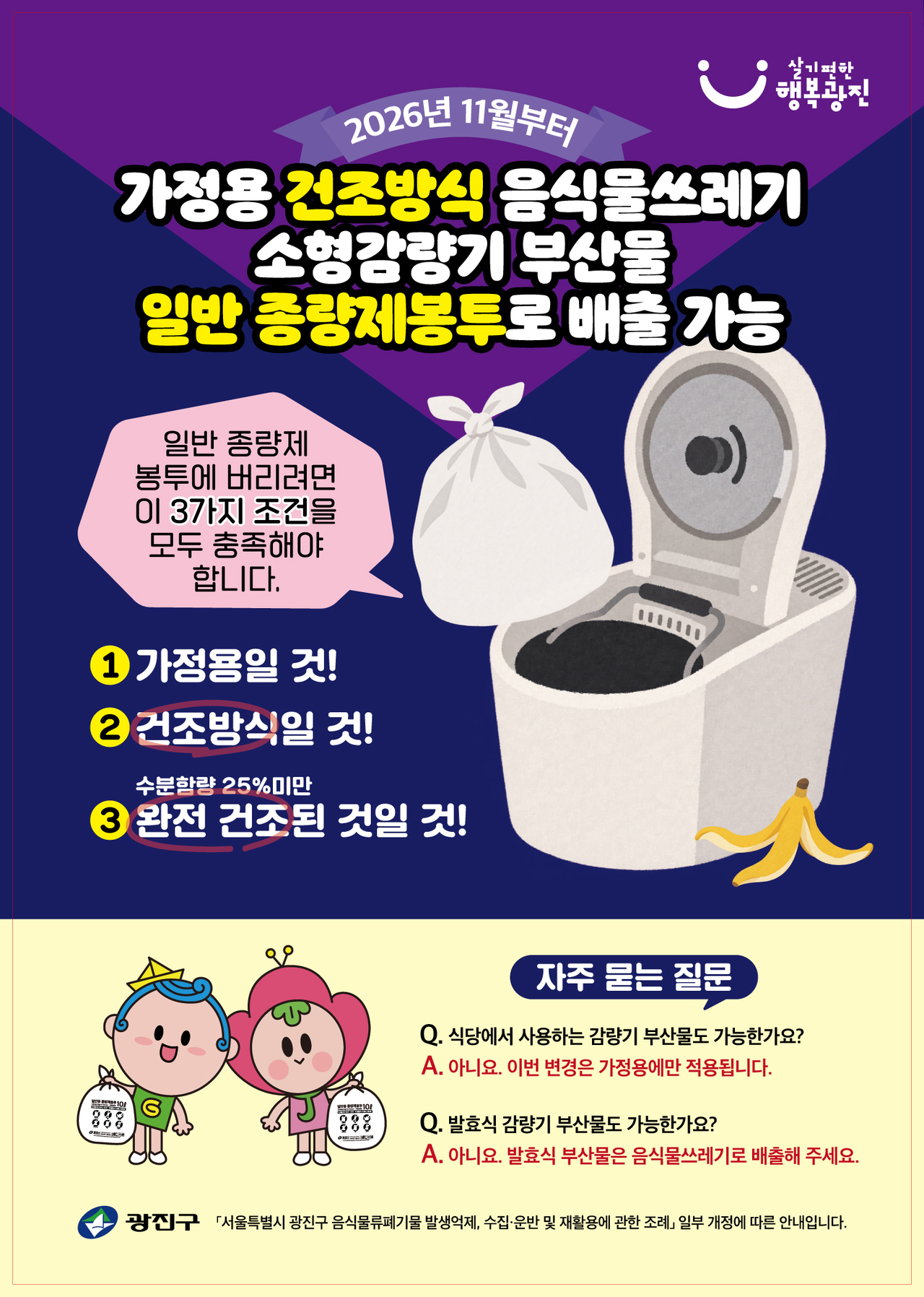
Seoul's Gwangjin-gu has relaxed its disposal rules to allow dried byproducts from household food waste reducers to be thrown out in regular pay-per-bag trash bags.
The district announced Thursday that it had amended its local ordinance on the reduction, collection, transport and recycling of food waste to ease the inconvenience residents face when disposing of food waste and to promote wider use of compact home reducers.
The central change in the amended ordinance is the establishment of new disposal standards for byproducts generated by household compact reducers.
Under the previous rules, byproducts remaining after food waste was dried and reduced by a home unit still had to be sorted and disposed of as food waste. Going forward, byproducts from drying-type compact reducers with a moisture content below 25 percent may be placed in regular pay-per-bag trash bags.
However, byproducts from fermentation-type compact reducers, or any byproduct with a moisture content of 25 percent or more, must still be disposed of as food waste, as before.
The district is also running a purchase subsidy project to encourage wider adoption of compact reducers. This year, it supported a total of 416 households with subsidies covering 30 percent of the purchase price, up to 210,000 won ($157), to promote food waste reduction at home.
The updated disposal standards will be communicated to residents through apartment management offices, neighborhood community centers and the district office website.
Gwangjin-gu District Mayor Kim Kyung-ho said he hopes the ordinance amendment will ease the disposal burden for residents using compact food waste reducers and help spread a culture of proper waste sorting. "We will continue to work toward reducing food waste and creating a cleaner living environment through practical, resident-centered policies," Kim said.
seouldream01@heraldcorp.com