Succession dilemmas for regional founders whose children have left
Don't retire on the sale price alone
Check your after-tax proceeds before selling
Review eligibility for the family business gift tax exemption
Missing post-transfer obligations can trigger back taxes
Compare lifetime gifts against inheritance-based succession
A 60-year-old founder — identified only by the surname Kim — runs an automotive parts manufacturing company in Daegu. Over 16 years, Kim built the firm to 70 employees and 18 billion won ($13.5 million) in annual sales, but retirement feels daunting: a daughter living in Seoul has no interest in taking over. The unlisted shares are valued at around 4.6 billion won. "I'm torn between selling the company I spent my whole life building and finding some other way to keep it going," Kim said.
Demand for tax consultations on inheritance, gifts and family business succession has been rising among regional entrepreneurs. Founders are increasingly exploring asset-transfer options as children settle in Greater Seoul or abroad, leaving no obvious family heir. Interest is growing in comprehensive wealth planning that addresses not only tax burdens but also how much retirement income parents will have left, whether children can afford the resulting tax bills, and whether the business can survive the handover.
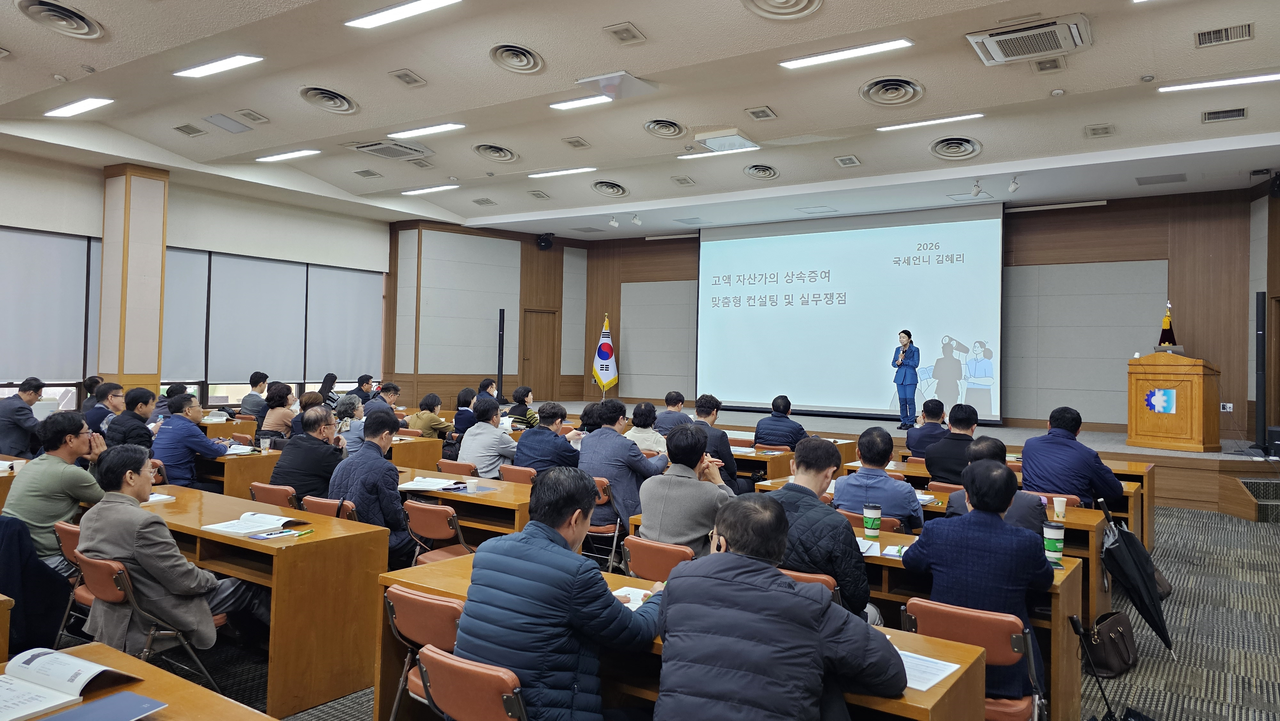
Kim Hye-ri, chief tax accountant at HKL Tax Corporation and a former National Tax Service audit team leader, spoke Nov. 5 at a seminar on inheritance and gift tax strategies for high-net-worth individuals at the Daegu Chamber of Commerce and Industry. Founders whose children are unwilling to take over must weigh more than just the tax cost of transferring shares, she said. "You need to compare a third-party sale, a succession by employees or executives, and bringing in an outside professional manager." Only after settling on a successor and a direction for the business, she added, can a tax-minimization strategy be properly mapped out.
Rushing succession for tax breaks can fracture families
Moving too quickly to transfer shares just to capture tax benefits can create management gaps or family conflict. Kim listed a child's willingness to take an active management role as the first thing a founder preparing for succession should confirm. If a child has no intention of running the company, the founder must broaden the options to include a third-party sale, a handover to employees or executives, or an outside professional management structure.
When a child is still undecided, there is no need to rush the share transfer. One approach is to have the child work at the company for a set period, gradually expanding their responsibilities, before making a final decision. "Rather than transferring shares on the parent's retirement schedule, the priority is confirming the child's management commitment and readiness," Kim said. "Once the parent's retirement timeline and the child's preparation period are aligned, a concrete share-transfer plan can follow."
Retiring on the sale price alone can backfire
Founders who decide to sell should not treat the expected sale price as their retirement fund at face value. The assessed value of shares and the actual transaction price can differ, and even a completed sale requires settling taxes and transaction costs. Retirement planning should be based on what remains after those deductions.
"The amount actually available to use is the sale proceeds minus the capital gains tax on the share transfer and transaction costs," Kim said. "You also need to think through whether the founder will be required to stay on at the company for a period after the deal closes, and how relationships with employees and business partners will be maintained."

Tax savings mean nothing if post-transfer obligations are missed
Once a child agrees to take over, the next step is examining the special tax treatment available for gifting family business shares. The regime taxes qualifying transfers differently from ordinary gifts, but eligibility depends on the parent's age and years in management, the company's industry and size, and the child's own succession qualifications.
Securing the special treatment does not end the tax-planning work. The child must fulfill ongoing requirements — including taking the position of chief executive and actively participating in management — and failing to do so can trigger back-tax assessments. "You should not decide to transfer shares simply because the tax rate is lower," Kim said. "First confirm whether the child can genuinely participate in management and meet the post-transfer obligations."
Lifetime gifts and inheritance-based succession should also be compared side by side. The family business inheritance deduction applies when a business is passed on through inheritance, with the deduction amount varying according to how long the business has been in operation, among other factors. Post-transfer management obligations apply here as well.
"Which approach is right depends on the family's and the company's circumstances," Kim said. The founder's health and retirement plans, the child's readiness to step into management, and the company's ownership structure and asset composition all need to be examined together, Kim added. "Whether the parent wants to step back from management immediately, or can wait until the child has gained enough experience, will also affect the timing and method of the transfer," Kim said.
Leaving other children's shares unresolved invites family conflict
Once the succession method is decided, the family should also establish clear principles for dividing management control and assets. When there are multiple children and one is designated to run the company, the family needs to discuss in advance what assets will go to the others and how the successor's role and compensation will be set. "Agreeing on dividend principles and key decision-making procedures in advance helps reduce conflict after the share transfer," Kim said.
Before dividing assets, the family's overall financial capacity must also be assessed. Inheriting shares does not automatically provide the cash to pay the resulting tax bill. The parent's other assets and liabilities need to be sorted out, and the child's tax-payment resources and the parent's post-retirement living expenses must be calculated together. Care must be taken to avoid a situation where reducing the child's tax burden leaves the parent without enough money for daily living and medical costs.
Artificial transactions to deflate share values are off-limits
Cleaning up a company's financial and tax records before a succession or sale is also essential. The value of unlisted shares is assessed by reflecting the company's profit and loss, net assets and holdings. Key items to review include provisional payments, transactions between the founder personally and the company, assets unrelated to the business, and unresolved tax issues. These factors can affect share valuation, sale negotiations and succession eligibility reviews.
However, fixating solely on lowering the assessed value is a mistake. "You should not create artificial transactions or move company assets around aggressively just to push down the valuation," Kim said. "Clean things up in line with actual business needs and the economic substance of each transaction, and keep the documentation." Clarifying the company's assets and business relationships, Kim added, can also help reduce the uncertainties a buyer must work through during the sale process.
Kim is scheduled to continue her inheritance and gift tax consulting lecture series at the Daejeon Chamber of Commerce and Industry second-floor conference room on Nov. 26, at the Korea Church Centennial Memorial Hall first-floor auditorium in Seoul on Dec. 7, and at the Kyowon Space Challenge Hall in Busan on Dec. 10.
forest@heraldcorp.com