Retiring Tillis, primary-defeated Cornyn hold casting votes on Judiciary Committee
White House accused of ignoring senators' nominees
Intraparty revolt complicates lame-duck judicial packing drive

Trump's words move global markets and economies. If keeping up with the flood of Trump news feels overwhelming, the Herald Business international desk delivers the essential stories — from Wall Street closing figures to market-moving developments — fast enough to read in one minute, whether you're commuting, eating alone, or winding down for the night.
President Donald Trump is pushing hard to install as many federal judges as possible before Democrats take control of the Senate next year — but the resistance is coming not from Democrats, but from within his own party. A group of outgoing Republican senators is blocking or withholding support for judicial nominees assigned to their states.
The Republican-controlled Senate had until recently confirmed Trump's second-term nominees to federal district and appeals courts with little dissent, approving 57 judges in all. Those lifetime appointments have allowed Trump to cement a conservative shift in the federal judiciary that is expected to outlast his time in office.
Republican leadership has aligned itself with that strategy. Senate Majority Leader John Thune of South Dakota said Nov. 9 that confirming judges would be his top priority for as long as Republicans hold their majority. Twenty-three judicial nominees are currently pending before the Senate.
By longstanding tradition, US senators play a central role in selecting federal judicial nominees from their states. Opposition from a home-state senator can in effect kill a district court nomination, because Senate custom requires that senator to submit a "blue slip" — a document signaling support — before confirmation proceedings can move forward. The White House has generally respected that tradition, though it has at times pushed conservative nominees through over a Republican senator's objections.
But the dynamic has shifted as the White House and Republican Senate leadership press ahead with confirmations during the lame-duck session before power changes hands in Congress, Reuters reported Sunday. Sen. Allen Armstrong of Oklahoma said the White House had in effect ignored a list of highly qualified candidates his office had submitted and pushed its own preferred picks instead. "We submitted a number of very well-qualified candidates to the White House, but the White House essentially ignored them and pushed forward with the people they wanted," Armstrong said, explaining the frustration driving the intraparty pushback.
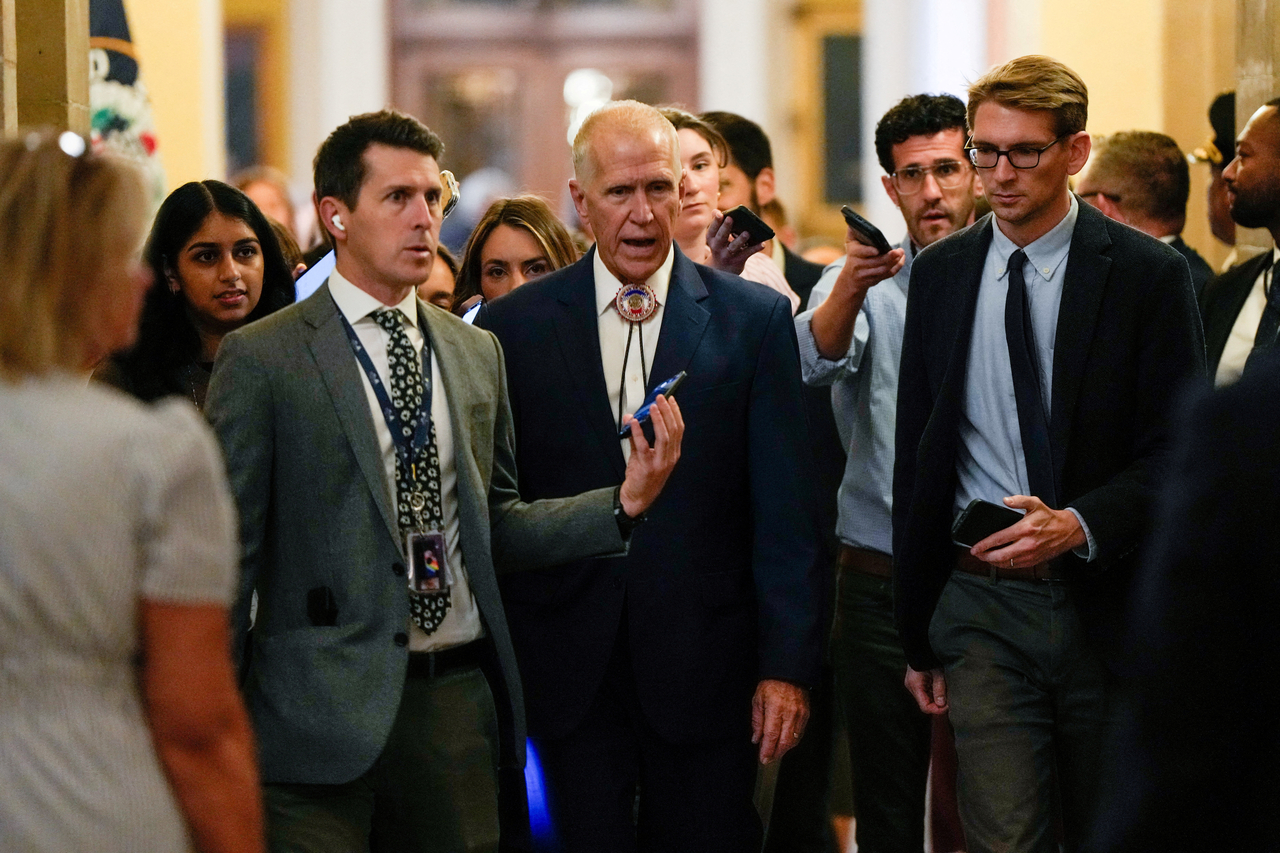
At the center of the resistance are two Judiciary Committee members who have little left to lose: Sen. Thom Tillis of North Carolina, who is retiring, and Sen. John Cornyn of Texas, who is serving out his final days after losing a Republican primary to a Trump-backed challenger. Both are positioned to deny nominees the votes needed to advance through the committee, and neither has reason to court favor with Trump or Republican leadership.
Tillis, whose relationship with Trump has soured, said Thursday that the White House had at times effectively told senators, "This is who we've chosen — we'd like you to get on board." He pushed back sharply. "That's not how things work around here," Tillis said. "The White House should have expected exactly this kind of reaction."
Cornyn has withheld support for T. Elliott Gaiser, Trump's nominee for a federal judgeship in Dallas. Gaiser, who is from Ohio, was nominated without going through the senator-led vetting process customary in Texas. He leads the Justice Department's Office of Legal Counsel, which has provided legal justifications for some of the Trump administration's most controversial policies — making him a reliable ally of the administration's agenda. Without Cornyn's blue slip, Gaiser cannot appear before the Senate Judiciary Committee at a hearing scheduled for Wednesday.
Nominee Jack West of Oklahoma has also run into trouble. West has won backing from conservative legal activists for defending abortion restrictions and supporting the inclusion of religious schools in charter school programs. Armstrong initially submitted a positive blue slip for West but later withdrew it. With Tillis also opposing the nomination, West faces an uphill battle to secure the votes needed when the Judiciary Committee takes up his confirmation on Tuesday.
The coming weeks represent the White House's last chance to complete the conservative judicial overhaul it has pursued since Trump's first term. Trump appointed 234 federal judges during his first term from 2017 to 2021, including three Supreme Court justices who cemented the court's current 6-3 conservative majority. Roughly one-third of all sitting federal judges are Trump appointees.
A White House official said in a statement that the administration expects all pending judicial nominees to be confirmed this year. But Rob Luther, a law professor at George Mason University who handled judicial nominations in the White House Counsel's Office during Trump's first term, said outgoing senators are now standing in the way of conservative nominees reaching the bench.
mokiya@heraldcorp.com