All 37 pharmacy schools nationwide must publish accreditation results on websites and in admissions guides
Schools that fail to apply for or receive accreditation face enrollment suspensions; repeat violations can lead to program closure
Interpreter support to be expanded for students with immigrant backgrounds
Survey of college students' housing types and rent to inform residential welfare policy
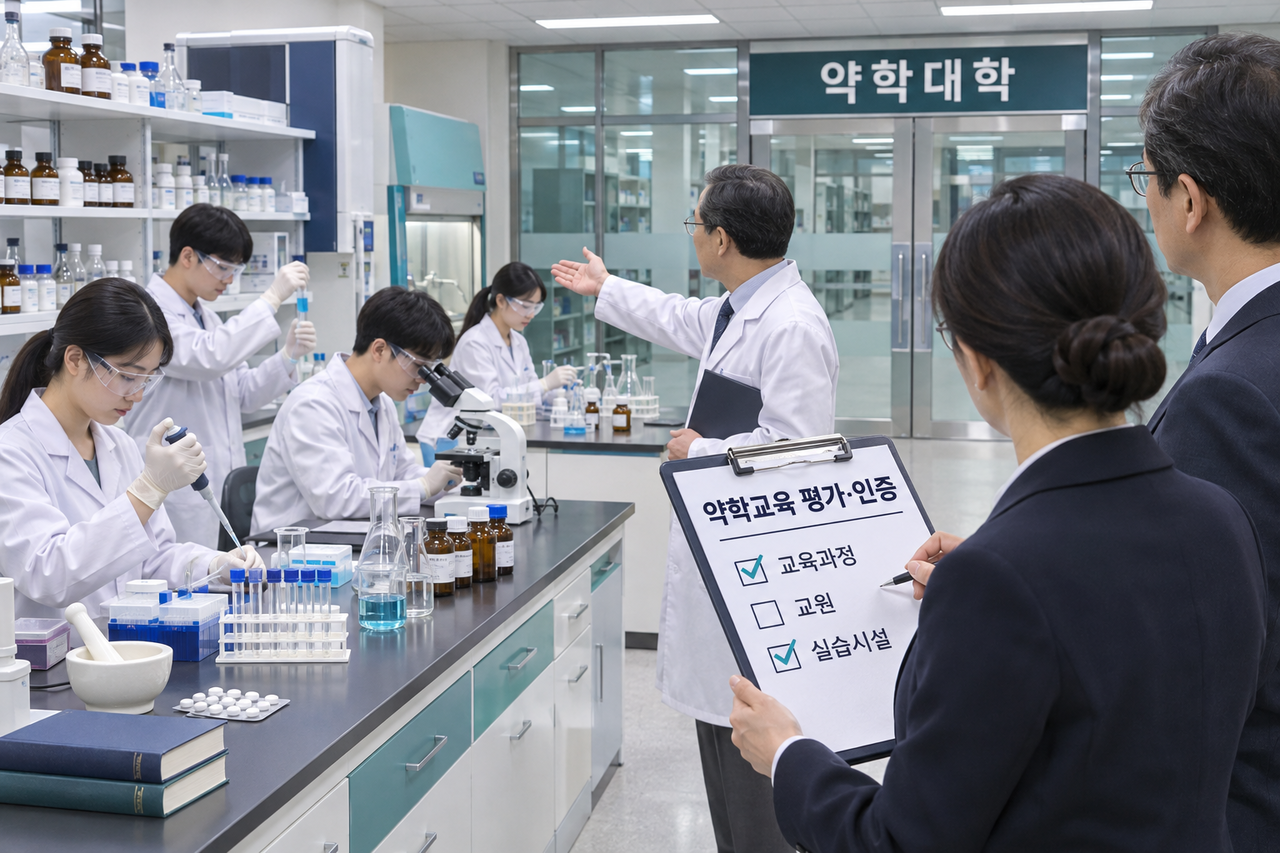
All 37 pharmacy schools nationwide will be required to undergo mandatory curriculum evaluation and accreditation, as medical schools already do. Schools that fail to comply will face sanctions including enrollment suspensions. A new interpretation and translation support system will also be established to help students with immigrant backgrounds.
The Ministry of Education said Tuesday that amendments to the Enforcement Decree of the Higher Education Act, the regulations on higher education institution evaluation and accreditation, and the Enforcement Decree of the Special Foreign Language Education Promotion Act passed the Cabinet meeting. The changes are follow-up measures setting out detailed procedures in line with revised legislation taking effect Friday.
Pharmacy schools will go through the same evaluation and accreditation process as schools offering curricula in medicine, dentistry, Korean medicine and nursing. The process involves an external body verifying that a school meets the standards required for education.
Schools seeking to launch a new pharmacy curriculum must apply for accreditation between 18 months and 15 months before the intended start date. Schools that have already received accreditation must reapply within a designated period before their certification expires.
Schools that fail to receive accreditation may reapply within a period set by the evaluation body, up to one year from the date they are notified of the result. Accreditation outcomes must be disclosed on school websites and included in all student recruitment guides for every academic year.
Penalties for schools that fail to apply for or receive accreditation have also been established. A first violation will result in an enrollment suspension of up to 100 percent of the admitted class. A second violation can lead to the closure of the relevant department or graduate school.
In addition, the Ministry of Education said it will strengthen language support for students with immigrant backgrounds. Specialized foreign language education institutions will work with schools, district education offices and special foreign language education centers to provide interpretation and translation services, and will also connect schools with the specialized language personnel they need. The minister of education will designate universities and other institutions with the relevant language expertise and educational capacity as official specialized education institutions.
Special foreign languages are those strategically important for national development; 53 languages are currently designated, including Arabic, Hindi, Kazakh, Polish and Portuguese. The amendments also specify the standards for establishing and operating education centers that help students learn these languages, and set out the considerations for district education superintendents when assigning and deploying specialized personnel to the centers.
Procedures for provincial and metropolitan education offices to draw up plans and undergo evaluations have also been established. Superintendents must submit the previous year's performance results to the minister of education by Jan. 31 each year, and their plans for the current year by March 31. The results of the ministry's performance reviews must be reflected in that year's plans.
Meanwhile, the ministry has also established a legal basis for surveying the housing conditions of college students. The survey will examine what types of housing students live in, how much rent they pay and whether they are satisfied with their living environment. The ministry plans to publish the results on its website and use them as foundational data for policies aimed at improving housing stability and welfare for college students.
"This amendment establishes a rigorous and transparent quality management system for pharmacy education on par with other healthcare curricula," Education Minister Choi Kyo-jin said. "We will continue to support all 37 pharmacy schools so they can establish themselves as institutions that produce outstanding healthcare professionals."
brunch@heraldcorp.com