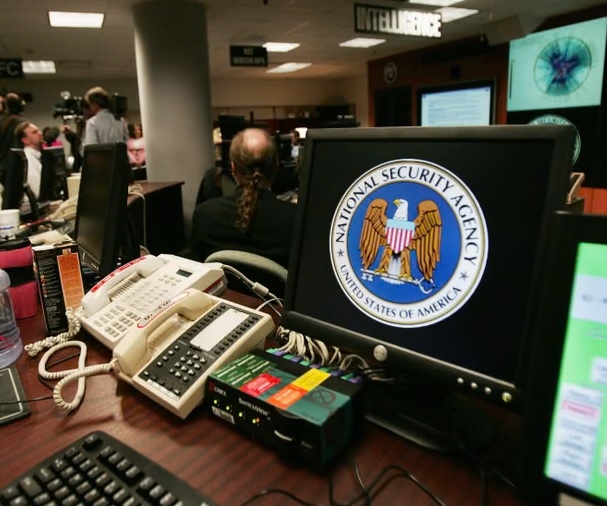
The National Security Agency suffered an internal network outage Tuesday (local time) after an error occurred during scheduled maintenance work — just two days after a router malfunction triggered the worst US aviation crisis since the Sept. 11 attacks, grounding more than 17,500 flights over three days. The NSA said the disruption was not caused by a cyberattack.
According to the Associated Press and other outlets, the outage prompted the NSA to assess the full scope of the disruption and stagger employee arrival times. The affected network, known internally as NSANet, is the agency's classified internal communications system.
White House communications aide Lauren Bies said in a statement to Newsmax that "there is no evidence of a cyberattack" and that "there is no crisis or anything of that nature for Americans to be concerned about."
In a press release, the NSA said "a temporary degradation occurred during scheduled routine maintenance" and attributed the disruption to an error in that process. "Some internal systems were affected, but mission-essential functions remain fully operational and our ability to protect national security is maintained," the agency said. It added that "NSA infrastructure is designed with multiple redundancies to sustain operations during planned maintenance or unexpected events."
CNN, citing two current and former US officials, reported that the outage would not affect the NSA's ability to deliver urgent intelligence to President Donald Trump, who is currently traveling in the Philippines and China. Multiple redundant systems and backup networks are in place to maintain communications with the president while abroad. Intelligence-sharing systems with the Five Eyes alliance — comprising the United States, the United Kingdom, Canada, Australia and New Zealand — were also unaffected, according to officials.
The outage has nonetheless drawn concern given that it followed the aviation crisis by just two days. CNN noted that it represents the latest in a series of significant technical failures, including a global Microsoft service outage that disrupted governments and businesses worldwide and an online banking disruption at JPMorgan Chase, the largest bank in the United States.
While CNN said there was "no evidence" that any of these failures were caused by cyberattacks, it said the incidents "vividly illustrate how technical failures can roil markets and potentially threaten national security." Bryson Bort, a cybersecurity adviser at digital security firm Huntress, said that even if the NSA outage involved no malicious intent, it clearly highlighted concerns about aging digital infrastructure.
The New York Times, citing an official, reported that NSANet had been unstable for several weeks and that employee frustration had been mounting. The official said the classified network outage was believed to have stemmed from a problem during a software patch applied as part of a system update, though it remained unclear which software was involved.
The NSA has experienced internal system failures before. In 2000, a technical malfunction paralyzed the agency's internal computers for nearly three days, halting intelligence processing operations.
Headquartered at Fort Meade, Maryland, the NSA is the US intelligence agency responsible for cybersecurity and is widely regarded as conducting the most extensive global signals intelligence collection in the American intelligence community. The agency employs more than 30,000 military and civilian personnel — a larger workforce than that of the Central Intelligence Agency.
kate01@heraldcorp.com