Utopia Orchestra makes first Korea visit on Tuesday
From Shostakovich to Stravinsky
Savage barrage of shifting meters and syncopation
Dozens of bows sliced through the air in unison and drove into the strings. Bang. Bang. Bang. The percussive blasts erupted. A single chord hammered the same point again and again, ferociously. The accents refused to land on familiar beats. The moment a listener tried to catch a breath, a horn burst out with a raw, metallic cry from an unexpected pulse — and by the time the ear reached for it, the music's heartbeat had already lurched somewhere else entirely.
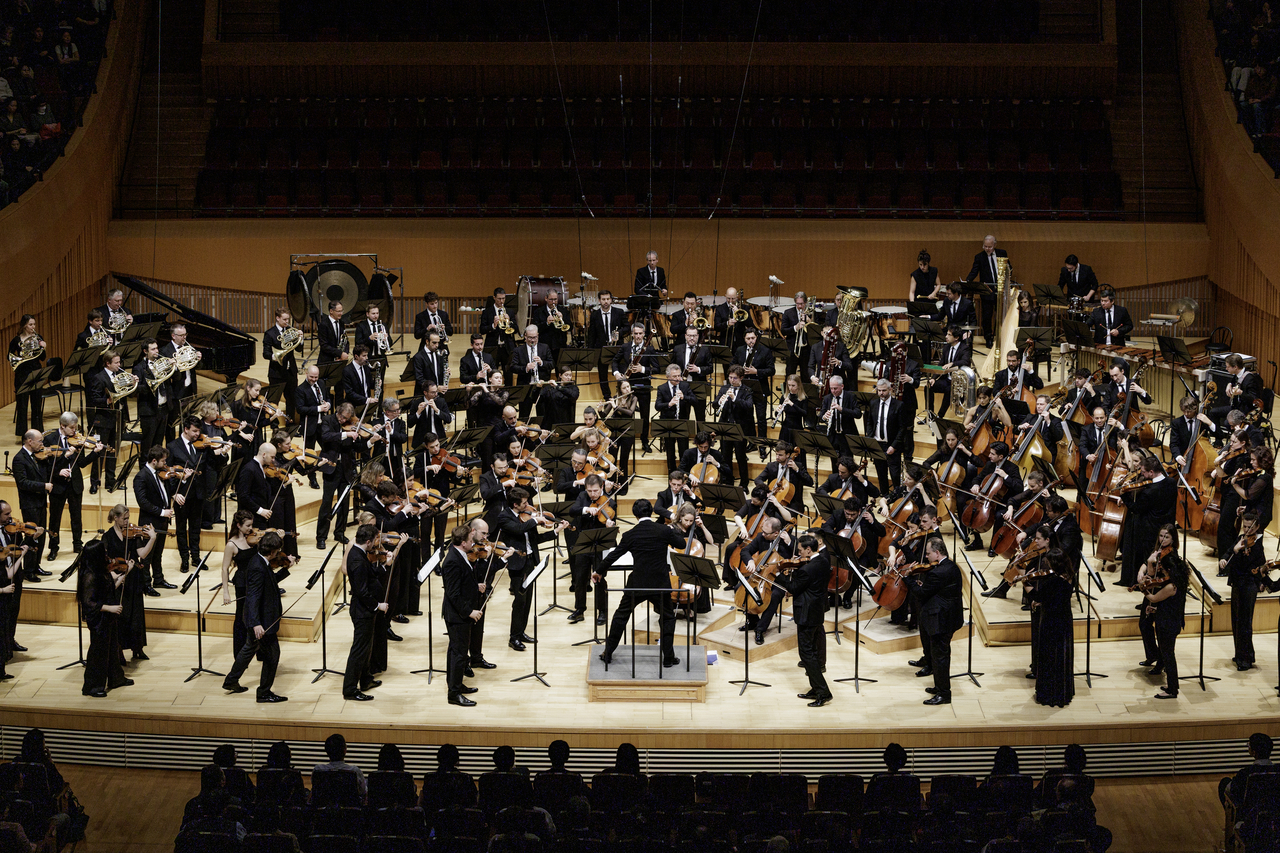
Chairs cleared from the stage, all 115 musicians except the cellists stood and bent their knees, absorbing the fractured rhythm with their entire bodies. At the center stood Teodor Currentzis, driving both arms up and down in violent arcs. Each downbeat sent sound surging from the floor and into the ribs of the audience. It was "Augurs of Spring" from Igor Stravinsky's "The Rite of Spring" — the same dissonance that had sent the Théâtre des Champs-Élysées in Paris into jeers and uproar 113 years ago, now shaking Lotte Concert Hall in Seoul again with an alien, overwhelming force.
Greek conductor Currentzis, 54, and the Utopia Orchestra — which he founded in 2022 — gave their first performance in Korea on Tuesday at Lotte Concert Hall. The first half featured violinist Daniel Lozakovich, 25, as soloist in Dmitri Shostakovich's Violin Concerto No. 1; the second half was "The Rite of Spring." The first work spent seven years locked in a drawer under Stalinist repression; the second demolished every familiar musical order of its time. Rather than smoothing over the wounds scored into both pieces, Currentzis tore them open with deliberate cruelty — then reached in with bare hands and pulled out the anxiety and violence coiled inside. By the time the roughly 39-minute "Rite of Spring" ended, the elegant concert hall had been transformed into a vast pagan altar reeking of blood.
A funeral abyss: tragedy's soliloquy under a single spotlight
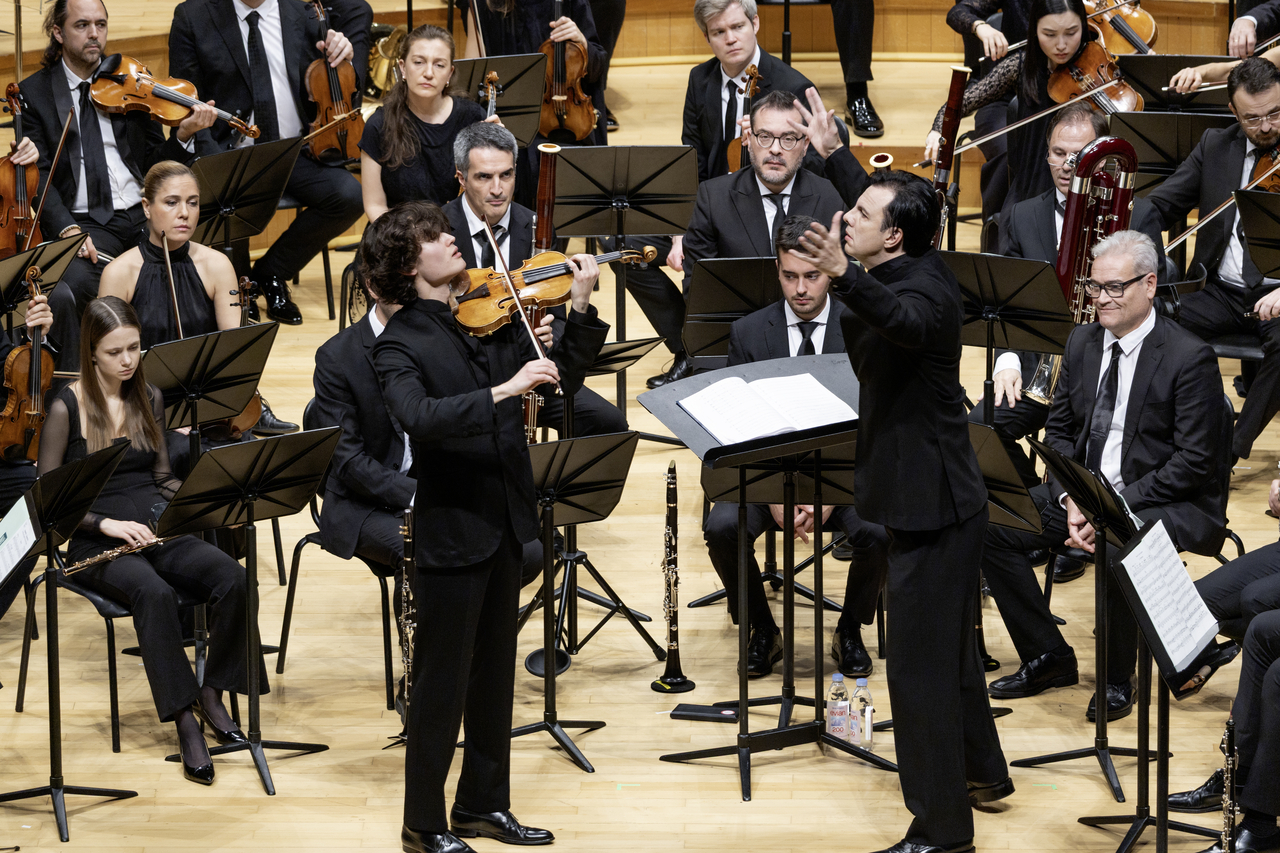
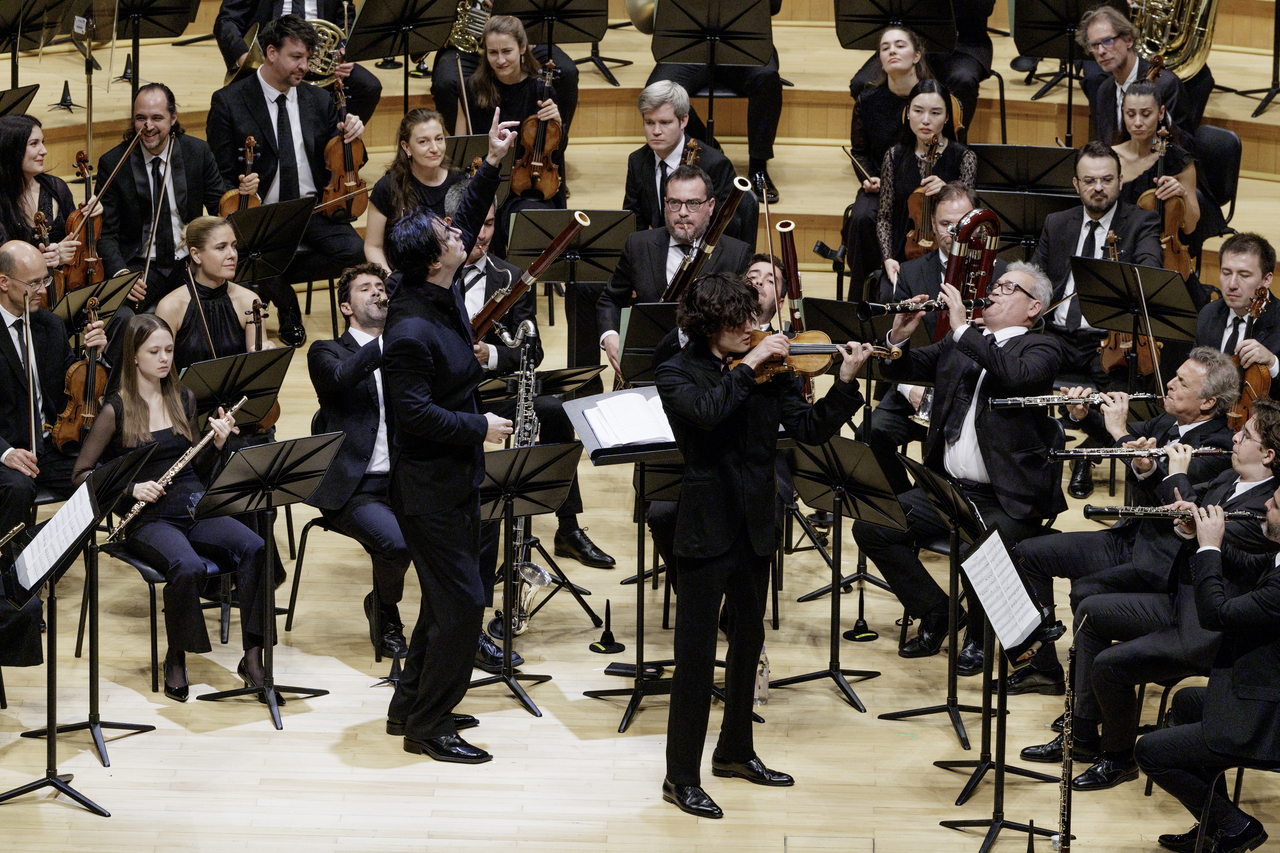
Eight minutes behind schedule, at 7:38 p.m., Currentzis walked onstage and abandoned the podium — choosing the floor instead. He conducted at the same height as soloist Lozakovich, meeting the violinist eye to eye, while the front row normally occupied by violins had been reassigned to oboes and other woodwinds. In a concerto stripped of trumpets and trombones, the woodwinds serve as sharp-tongued adversaries — echoing, twisting and at times mocking the solo violin's murmuring lines. By pulling those lethal rivals to within arm's reach of the soloist, Currentzis wove a tension that felt almost physical.
The first movement, "Nocturne," opened with a mournful murmur from deep below. Over the heavy darkness laid down by cellos and double basses, Lozakovich's violin rose like a thread of light. A hushed pianissimo stretched to the edge of breaking, climbed to a precarious high note, then slid back into shadow. Currentzis let his tall frame tilt at an angle, tracing slow arcs in the air with his left arm. Each time his half-curled index fingers drew small circles, the scattered particles of sound seemed drawn toward his fingertips. The orchestra breathed in microscopic increments, following the conductor's hands like the branches of a tall tree swaying in an invisible wind. Before his hand had fully fallen, the players' bows were already loading the next sound — reflexes forged by uncompromising rehearsal.
By the second movement, "Scherzo," the suppressed breath finally broke into a grotesque scream. Syncopated traps twisted the dance, and the notes scattered in every direction like creatures that had torn free of the page. The players shifted their weight onto their front feet and hurled rough sound outward. Currentzis's ten fingers curled into hooks, clawing, clutching and wrenching at the air — the hands of a sorcerer casting a spell. In the swirling sonic vortex where the woodwinds' razor-edged tones rose like knife points, the solo violin teetered on the verge of being swallowed whole. When the storm of a movement ended, Lozakovich reached for a towel and wiped the sweat away.
At the third movement, "Passacaglia," Currentzis snapped upright in an instant. As cellos, double basses and timpani stepped heavily into the 17-bar funeral bass theme, the horns roared above them. The Utopia horns had shed all gentleness. Their raw, metallic sound — a cry like a battle trumpet cutting across a field of combat — broke through reason's defenses and awakened something instinctual. The more the chilling bass line repeated, inescapable as fate, the more the violin floating above it cut deeper, more plaintive and piercing. An English horn, darker and richer than the oboe, took up that lament alongside the bassoon.
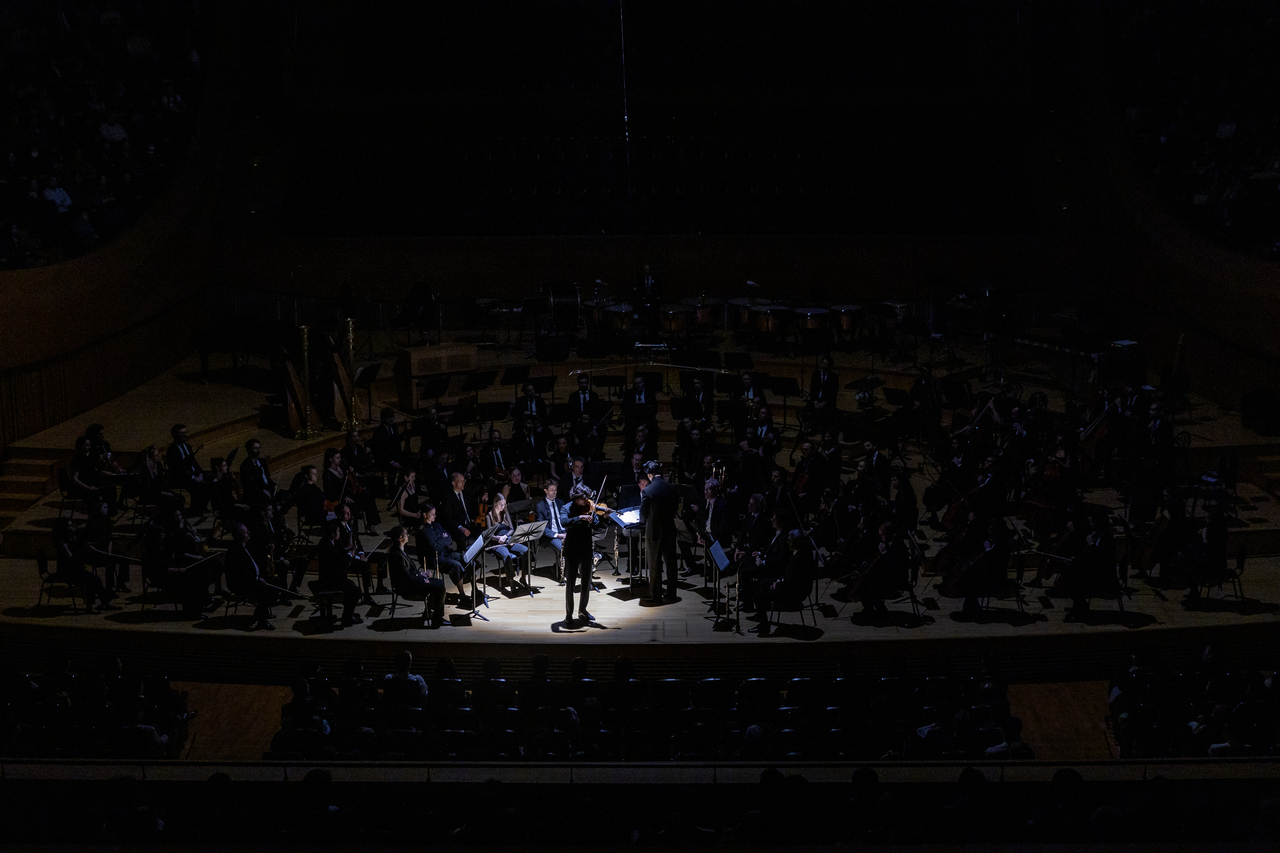
Then the stage went dark. As the cadenza began, the house lights dimmed slowly until the hall was swallowed in blackness — and a single cold spotlight fell on Lozakovich alone. It was Currentzis's staging. One violin remained where the orchestra had retreated. Sound scraped up from the lowest G string, tore through the air and rocketed to the highest register before plunging back to the floor, again and again. The shadows of the preceding movements were resurrected one by one at the tip of the bow. It was a desolate song sung over ruins — a fragment of a tragedy not yet finished. The increasingly fierce soliloquy hurtled without pause into the fourth movement, "Burlesque." The xylophone burst out, bright yet weighty, and the timpani shoved relentlessly from behind. Lozakovich seemed absorbed by the heat, walking toward the cellos and violas on the left and drawing the bow while facing the players directly. When the battle-scarred tutti cut off as if severed by a single blade, the audience erupted in a roar it had been holding back.
An altar stripped of chairs: a pagan rite erupting like a volcano
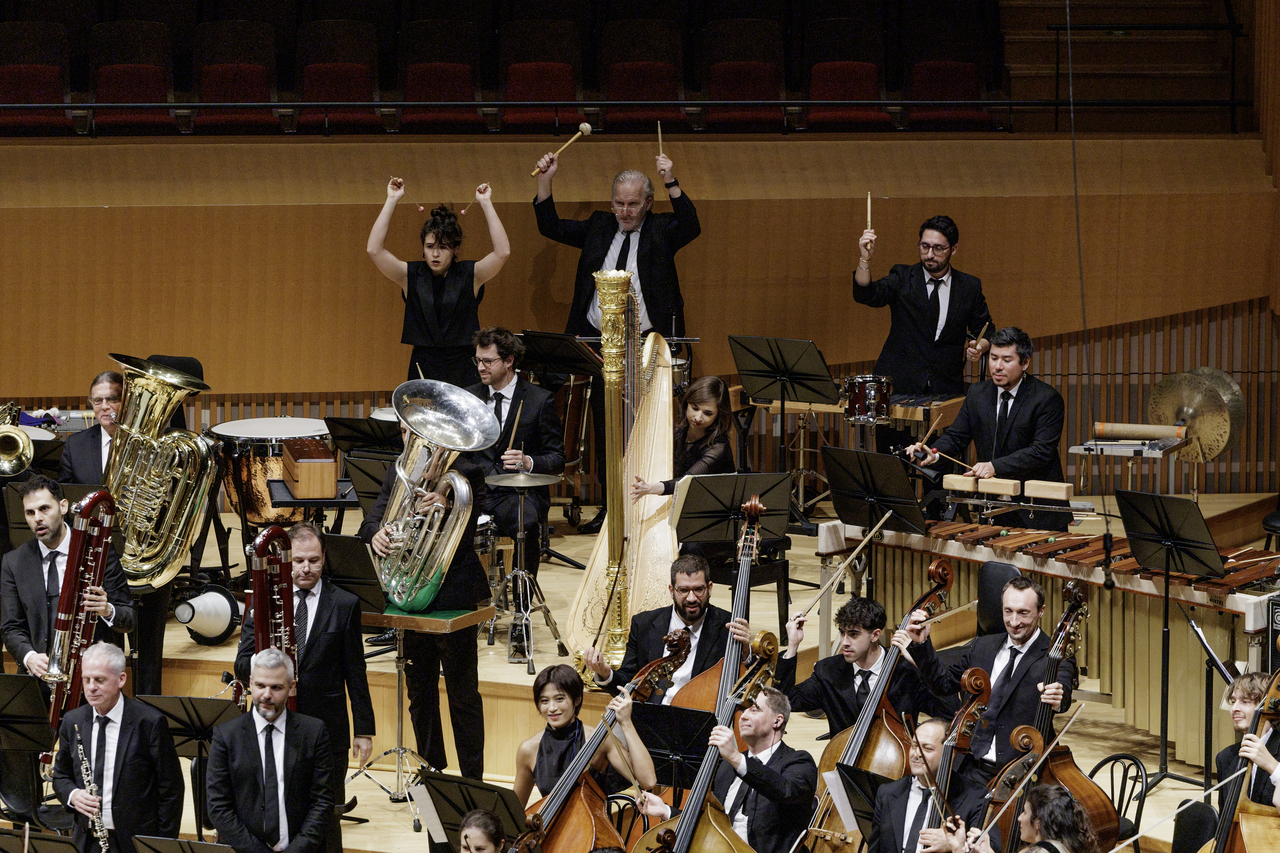
During intermission, the stage crew cleared every chair from the platform. The formation was completely different from the first half — first violins on the left from the audience's perspective, then violas, cellos and second violins, with the two violin sections split to opposite ends of the stage. Of the 115 musicians, all but the cellists played standing. It was a wall of human bodies filling the stage. Currentzis explained the choice: "The reason we played standing was for the acoustic effect, but I also wanted to add a visual sense of overwhelming force. Since this is our Korea debut, I wanted to show our own character clearly." At 9:01 p.m., the ensemble regrouped and the rite began. A bassoon's thin, eerily bleached high note rose slowly, strangling the silence, and announced the opening.
Currentzis's "Rite of Spring" was not the product of polished compromise. The instruments seemed to howl from every direction, each fighting for its own breath. The strings' sharp friction scraped across the space, the woodwinds wailed like animals, and the percussion struck like lightning. Currentzis refused to release the shards of sound as they careened toward one another. Each time his arms swept through the air as if parting a current, the fragments fused into a single tidal wave. The music wore the exterior of spectacle but carried inside it a skeletal structure as dense as opera. Thunder-like bass frequencies crawled up through the floor and sent a tingling through the audience's legs; hearts waiting for the next blow contracted helplessly.
When Part Two, "The Sacrifice," opened, the air froze in an instant. As the flute scattered an eerie, incantatory melody, the strings received its energy and writhed from within. It felt like poison boiling up in a witch's cauldron. In the midst of that taut tension, a viola player's bow slipped and fell to the floor — an unexpected mishap. But the music's pulse did not stop for a single second. Currentzis lifted and dropped his right heel, tapped the floor with his toe to subdivide the beat, while both hands danced a frenzied dance in the air. The moment the violas answered that gesture with pizzicato, the dreamlike atmosphere flipped instantly into cold dread.
From that point on, Stravinsky's score grants the performers not a single moment to breathe. Eleven consecutive blows within one measure signal the explosion of "Glorification of the Chosen One," and by the final "Sacrificial Dance," the metric geometry shifts relentlessly between 3/16, 2/16 and 5/16. No one could predict which moment the next accent would drive into the chest.
Currentzis pushed, poured out, demolished — and then built it all back up again. The dynamic plunge from a hushed pianissimo to a sudden fortissimo and back down held the audience in its grip until the very last note. Onstage, Currentzis was no longer a conductor but a priest presiding over a sacrificial rite; the musicians swaying and playing on their feet were the congregation performing the ceremony alongside him. When the final blow landed, the listeners in the hall were left breathless — like offerings that had danced themselves to death.
A club stripped of reason, a dance without end
Before the last chord's resonance had even settled, an encore descended without mercy onto hearts still pounding. It was "Tanzaggregat" by Serbian composer Marko Nikodijević. The strings fired sharp, high-frequency sounds into the air like electronic music, and the timpani hammered the floor mercilessly — thud, thud, thud — like an electronic beat. It was time, again, to dance like mad. "The Rite of Spring" had run for just under 40 minutes, but when the house lights came up, what remained in the hall was the scorching heat and exhaustion of having lost one's mind dancing at the center of a club for more than two hours.
Currentzis's performances have always been shadowed by extreme adulation and sharp skepticism in equal measure. That night, too, there were moments when the conductor's outsized gestures seized the eye before the music could, and instants when the orchestra's sheer volume swallowed the soloist's delicate articulation. Yet the density and control with which he extracted the dissonances and metric displacements imprisoned in the refined cage of the score — and transmuted them into the rhythms and pulse of a body running with blood — were an undeniable reality.
Before the performance, Currentzis spoke about "The Rite of Spring." "This music is dance, and it is ecstasy experienced through movement," he said. "So I believe the audience must also experience that emotional state together while listening to the performance." Currentzis proved that commitment in the most ferocious and complete way imaginable.
shee@heraldcorp.com