23rd Korea-Norway economic cooperation committee held after 10-year hiatus
HD Hyundai Marine Solution, Hanwha Aerospace among participants
'Geographically distant but economically complementary,' co-chair says
Next committee meeting to be held in Norway next year
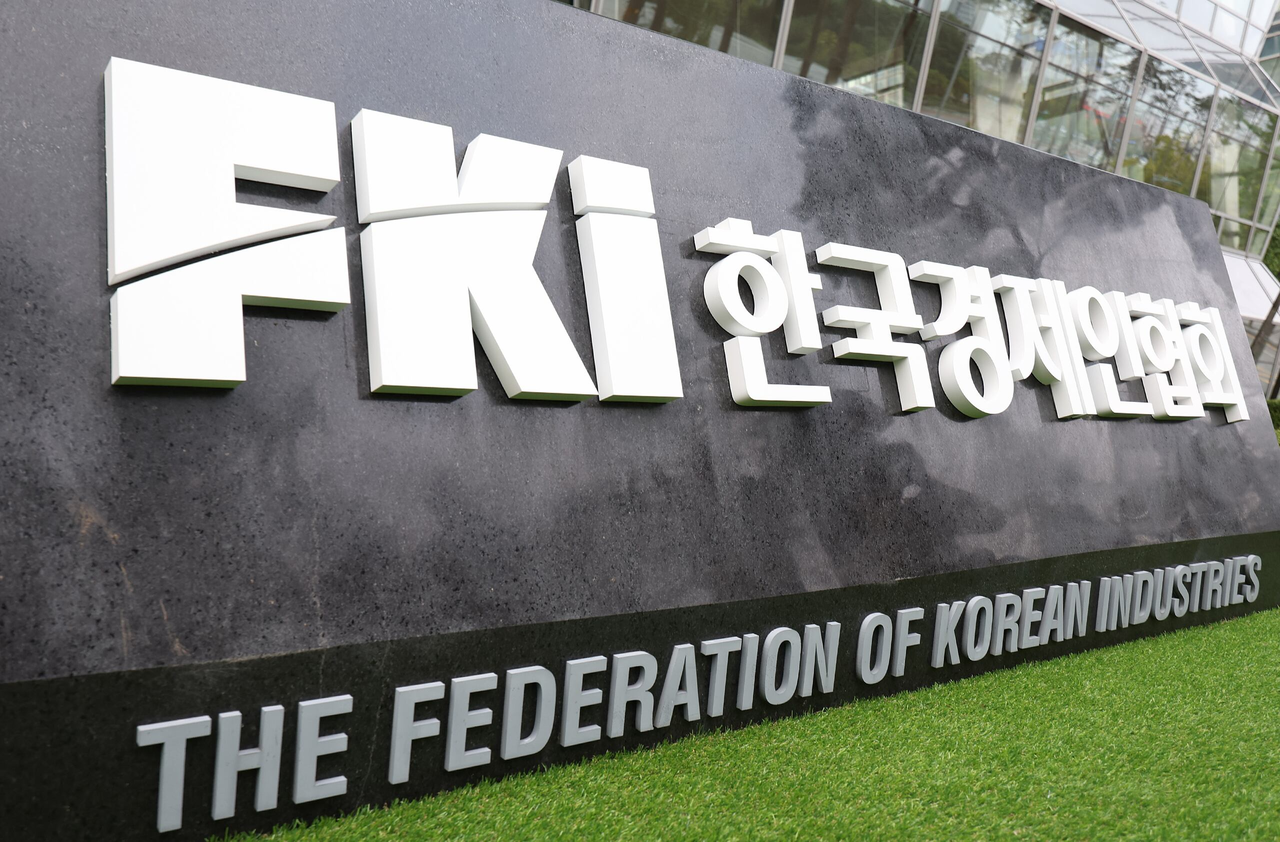
The Federation of Korean Industries said Friday it will deepen cooperation with Norway to strengthen global competitiveness in maritime, energy and infrastructure, and aerospace and defense.
The federation, known by its Korean acronym FKI, co-hosted the 23rd Korea-Norway Economic Cooperation Committee with the Confederation of Norwegian Enterprise at the FKI Tower Conference Center in Seoul. The committee meeting was the first in 10 years.
About 32 senior government officials and business leaders from both countries attended. The South Korean delegation was led by committee co-chair Kim Sung-jun, chief executive of HD Hyundai Marine Solution, and also included FKI Vice Chairman Kim Chang-beom, Hanwha Aerospace Chief Executive Lee Bu-hwan and Kim Young-man, director general for trade policy at the Ministry of Trade, Industry and Energy. Senior executives from Samsung Heavy Industries, HD Korea Shipbuilding & Offshore Engineering, SK Ecoplant, Hyundai Rotem, Hanwha Ocean, Posco and Korea Hydro & Nuclear Power also took part.
The Norwegian side was represented by committee co-chair Knut Ørbeck-Nilssen, chief executive of DNV, Norwegian Ambassador to South Korea Espen Fredrik Larsen and Idar Kreutzer, special adviser to the Confederation of Norwegian Enterprise. Industry participants included senior executives from Kongsberg Group, a global leader in maritime technology and defense and aerospace; Equinor, a global energy company; and Wallenius Wilhelmsen, a shipping and logistics firm specializing in vehicle carriers.
In his opening remarks, co-chair Kim said South Korea and Norway had built a long-standing partnership in shipbuilding and maritime industries, and that cooperation was now expanding into defense, the Arctic and AI. "Going forward, our collaboration will extend into ever newer domains and serve as a powerful engine driving innovation across industries," he said.
Co-chair Ørbeck-Nilssen said the two countries were geographically distant but "surprisingly complementary" economically, and expressed hope that the committee would establish itself as the core platform for private-sector economic cooperation between the two nations. He added that the committee would broaden its role to chart practical directions for deepening the economic and strategic partnership.
This year's meeting focused on expanding beyond the traditional shipbuilding and maritime partnership into future strategic industries. Discussions centered on three areas — advanced and low-carbon maritime technology, energy and infrastructure, and aerospace and defense — with a particular emphasis on translating technology cooperation between the two countries' companies into joint projects and entries into global markets.
At the plenary session, leading companies from both sides presented specific proposals for combining their respective technological strengths and industrial competitiveness to create new business opportunities.
Norway, a Nordic economic powerhouse, is regarded as a key partner for upgrading South Korea's shipbuilding technology, drawing on its world-class classification society expertise and maritime know-how in areas such as eco-friendly vessels and autonomous navigation.
In energy and infrastructure, Norway leads in next-generation energy industries such as offshore wind and carbon capture and storage, building on decades of experience in North Sea oil and gas development. The two countries are also pursuing joint offshore wind development.
In aerospace and defense, Norway has emerged as a strategic partner for South Korea's push into the European market. As a NATO member, Norway recently signed a contract to acquire the Chunmoo multiple-launch rocket system developed in South Korea.
Meanwhile, the FKI and the Confederation of Norwegian Enterprise agreed to hold the next economic cooperation committee meeting in Norway next year to sustain the momentum of strategic industry cooperation. The two organizations have alternated between Seoul and Oslo for the meetings since holding the inaugural session in Seoul in 1978.
jeongwan@heraldcorp.com