District expands disaster helpers to 1,176, operates 79 cold-wave shelters and two 24-hour emergency evacuation centers
Yangcheon-gu has launched a comprehensive cold-wave response plan centered on protecting vulnerable residents and expanding community-level cold-weather facilities ahead of winter.
The district said it established the "Winter Cold-Wave Comprehensive Response Plan" to prepare for sudden temperature drops and prolonged cold spells. The move comes as winter temperature swings have grown more severe — last winter, Seoul issued cold-wave advisories on 32 days, roughly three times as many as the previous winter. In response, the district expanded its protective workforce for vulnerable residents and strengthened cold-weather facilities and emergency response systems that residents can rely on in daily life.
The number of disaster helpers — who check on elderly people living alone and people with disabilities during cold snaps — will increase from 1,050 last year to 1,176 this year. Made up of neighborhood care teams, visiting nurses, senior care workers, building managers and local volunteer disaster-prevention groups, the helpers contact vulnerable residents by phone and in person when a cold-wave advisory is issued, checking on their wellbeing, monitoring their health and directing them to nearby cold-wave shelters.
Some 2,085 elderly residents enrolled in the customized senior care service will receive welfare check calls every other day during cold-wave advisories. Real-time safety monitoring will also run in parallel through AI speakers and Internet of Things-based care devices installed in 685 households.
District health centers will intensively manage about 1,300 health-vulnerable residents, providing home health visits and cold-illness prevention education. Hand warmers, thermal socks and other cold-weather supplies will also be distributed to help residents stay healthy through the winter.
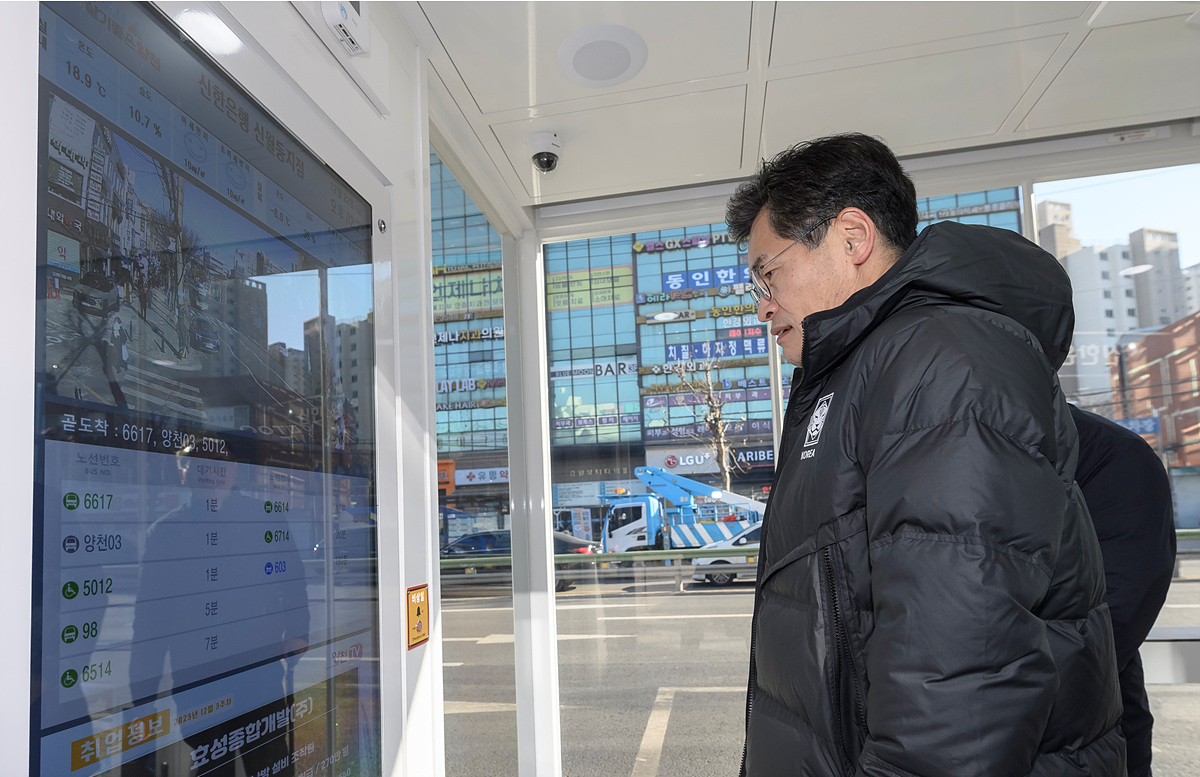
The district is also expanding cold-weather facilities to give residents more places to escape the cold in their daily routines. The number of wind-shield bus stop enclosures — known as "warmth charging stations" — will grow from 80 to 84. Three locations — Sinwol 4-dong, Omokgyo Station and the fountain plaza at Sinjeong intersection — will each operate a smart shelter called "Smart Maru," equipped with heaters and air purifiers.
Some 220 heated seats installed at 198 bus stops across the district will be monitored continuously through an integrated management system to improve comfort for public transit users.
A total of 79 cold-wave shelters will operate across the district, including 18 community service centers, 44 district-run senior centers and nine district-run libraries. The cold-wave shelter on the first below-ground floor of the district office building will be open from 9 a.m. to 6 p.m. on weekdays as well as weekends and public holidays.
When a cold-wave advisory is issued, two emergency evacuation centers — at the district office and Mokdong Mocha Hotel — will operate around the clock. A five-team cold-wave comprehensive support operations center will also be activated to handle emergencies and facility damage.
When reports come in of frozen water meters, power outages or other cold-related incidents, the district plans to activate an emergency contact network with relevant agencies — including the Gangseo Waterworks Business Office and Korea Electric Power Corporation — to carry out swift repairs.
"Cold waves in winter can pose an even greater danger to elderly people, health-vulnerable residents and others who need help, so careful attention and preparation are essential," Yangcheon-gu District Mayor Lee Gi-jae said. "We will continuously inspect cold-weather facilities and strengthen the protection system for vulnerable residents so that every resident can spend a safe and warm winter."
seouldream01@heraldcorp.com