The market-share gap between South Korea and China has widened sharply
China's growing clout in high-value vessel segments is driving the shift
A weakened shipbuilding industry would deal a blow to South Korea's economy and security
Individual shipbuilders are developing new technologies, but say government support is essential
Calls mount for fiscal support and deregulation
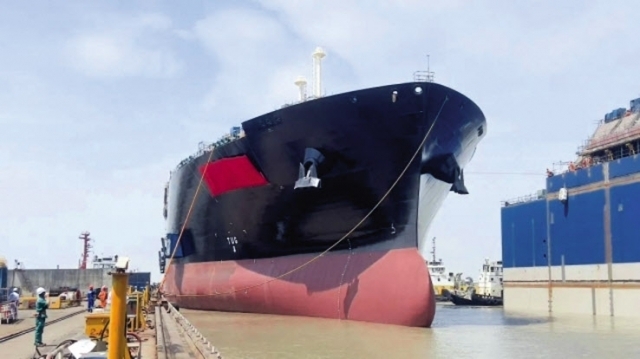
South Korea's standing as a global shipbuilding powerhouse is fading. Backed by sweeping government support and aggressive price competition, China has pushed the market-share gap with South Korea from roughly 19 percentage points to more than 62 percentage points in just five years. Industry officials agree that only broad, government-level support can reverse the slide and restore South Korea's position at the top of the industry.
Chinese shipbuilders move into high-value vessels, squeezing South Korea
The gap between China and South Korea in global new vessel orders stood at 62 percentage points in the January–October period this year, with China commanding a 77 percent share against South Korea's 15 percent, according to Clarkson Research, a British shipping and shipbuilding analysis firm. The two countries were separated by just 19 percentage points in 2021, meaning the gap has widened by more than 40 percentage points in five years.
China had long posted high order volumes, but South Korean shipbuilders were not particularly alarmed — Chinese yards were winning mostly low-margin vessels that the major Korean builders had little interest in, and China had yet to make a serious mark in the high-value segment. In the early 2020s, South Korea in effect held a near-monopoly on the global LNG carrier market and dominated the eco-friendly vessel segment as well.
The mood has shifted dramatically of late. Buoyed by government backing, Chinese shipbuilders have carved out a firm foothold in the high-value vessel market, and their overall order share has surged accordingly. In the LNG carrier segment — the flagship high-value vessel type — China has secured orders for 32 ships this year, closing to within about 10 vessels of South Korea's 44. In the ultra-large container ship market (vessels of 15,000 TEU and above), China is dominant: Chinese yards took orders for 93 ships in the January–October period, while South Korea was limited to just six. China is also consistently expanding its order book in the eco-friendly vessel segment.
Analysts say the gap is unlikely to narrow easily. Chinese government support shows no sign of letting up, and more Chinese shipbuilders are entering the high-value vessel market. Hengli Heavy Industry has recently moved into the LNG carrier segment, adopting a speculative-build model in which it constructs vessels first and then sells them to shipping companies. China State Shipbuilding Corp. (CSSC) is on track to deliver the world's first ammonia-fueled bulk carrier before the end of the year.
"When the domestic shipbuilding industry was going through restructuring in the mid-to-late 2010s, China was nurturing its shipbuilding sector at the national level — and as a result, China took the top spot in the global market," an industry official said. "As long as China maintains its strong price competitiveness, it will not easily give up that lead."
'The big three must collaborate to counter China'
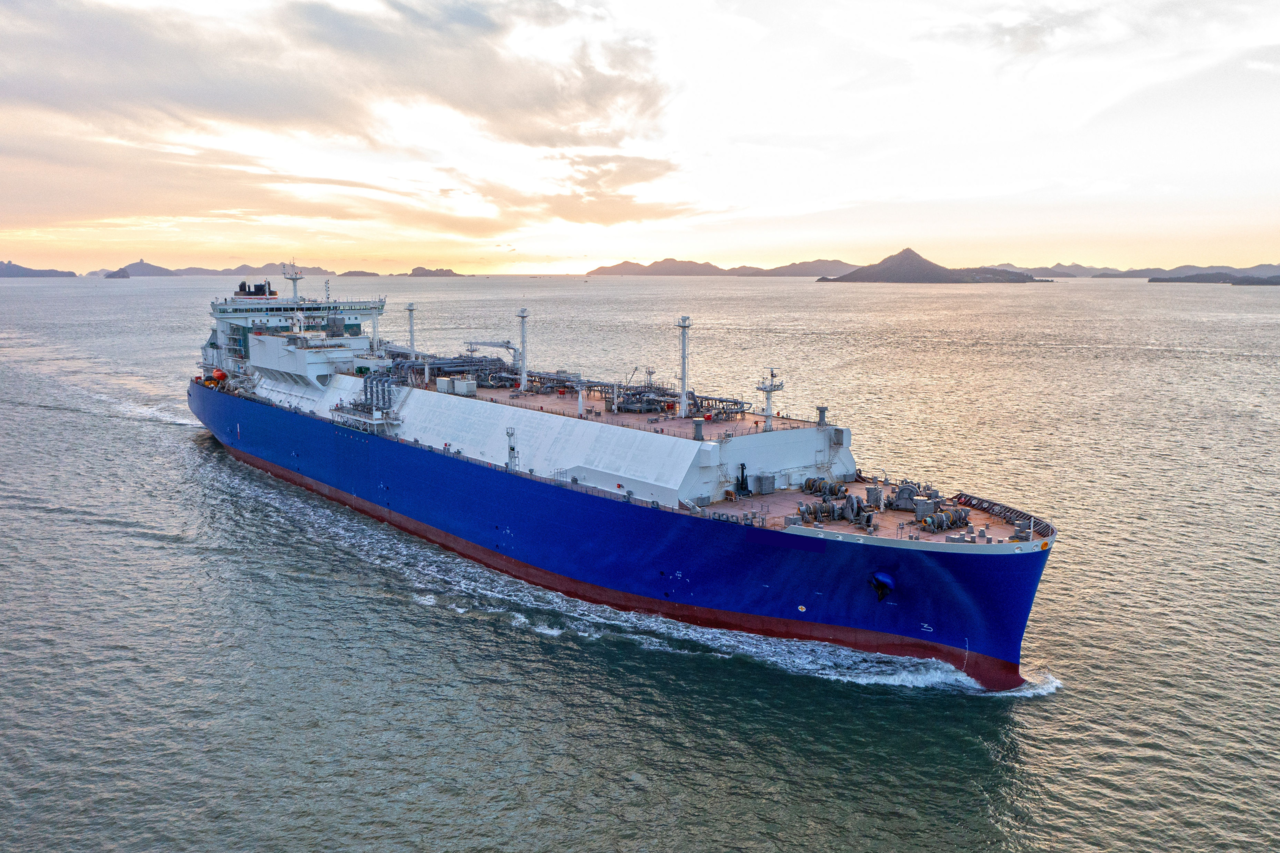
If China's rise goes unchecked, South Korean shipbuilders could find their survival at stake. For now, the major yards have secured more than three years' worth of work and are posting record earnings — but the calculus changes once the market enters a correction. If order volumes fall and South Korean builders lose out to China in the competition for new contracts, they could face a severe work shortage.
The risks extend beyond the balance sheet. A retreat in shipbuilding could also undermine South Korea's security and logistics competitiveness. "Shipbuilding today is closely tied to national security," said Yang Jong-seo, a visiting professor of naval architecture and ocean engineering at Seoul National University. "If the industry declines, we will face problems supplying naval capabilities in time during wartime."
South Korean shipbuilders are investing heavily in next-generation vessels — including small modular reactor-powered ships — to stay ahead of China. They are also scaling up robot deployment at their yards to narrow the cost gap with China and boost productivity. HD Hyundai, for instance, has set a target of introducing 3,000 robots across its shipyards by 2030.
Even so, the industry says individual companies can only do so much on their own, and is calling on the government to step in. Specifically, it is urging fiscal support and deregulation to remove barriers to new technology development. "Support is needed on multiple fronts, including expanding the zones available for smart-ship demonstration testing," Yang said.
Some in the industry are also calling for a formal collaboration framework among the three major South Korean shipbuilders — HD Korea Shipbuilding & Offshore Engineering, Hanwha Ocean and Samsung Heavy Industries. The argument is that, to compete against Chinese shipbuilders that are growing ever larger, South Korean yards need to join forces in areas such as zero-carbon technology and smart shipyard development.
However, one industry official cautioned that such cooperation would be difficult in practice. "Given the businesses each company is focused on building up, and the competitive relationships between them, it is realistically hard for domestic shipbuilders to join hands," the official said.
yeongdai@heraldcorp.com