
3.5% wage hike, 500 new hires agreed; restructuring plan suspended; joint TF to address retirement age, working hours
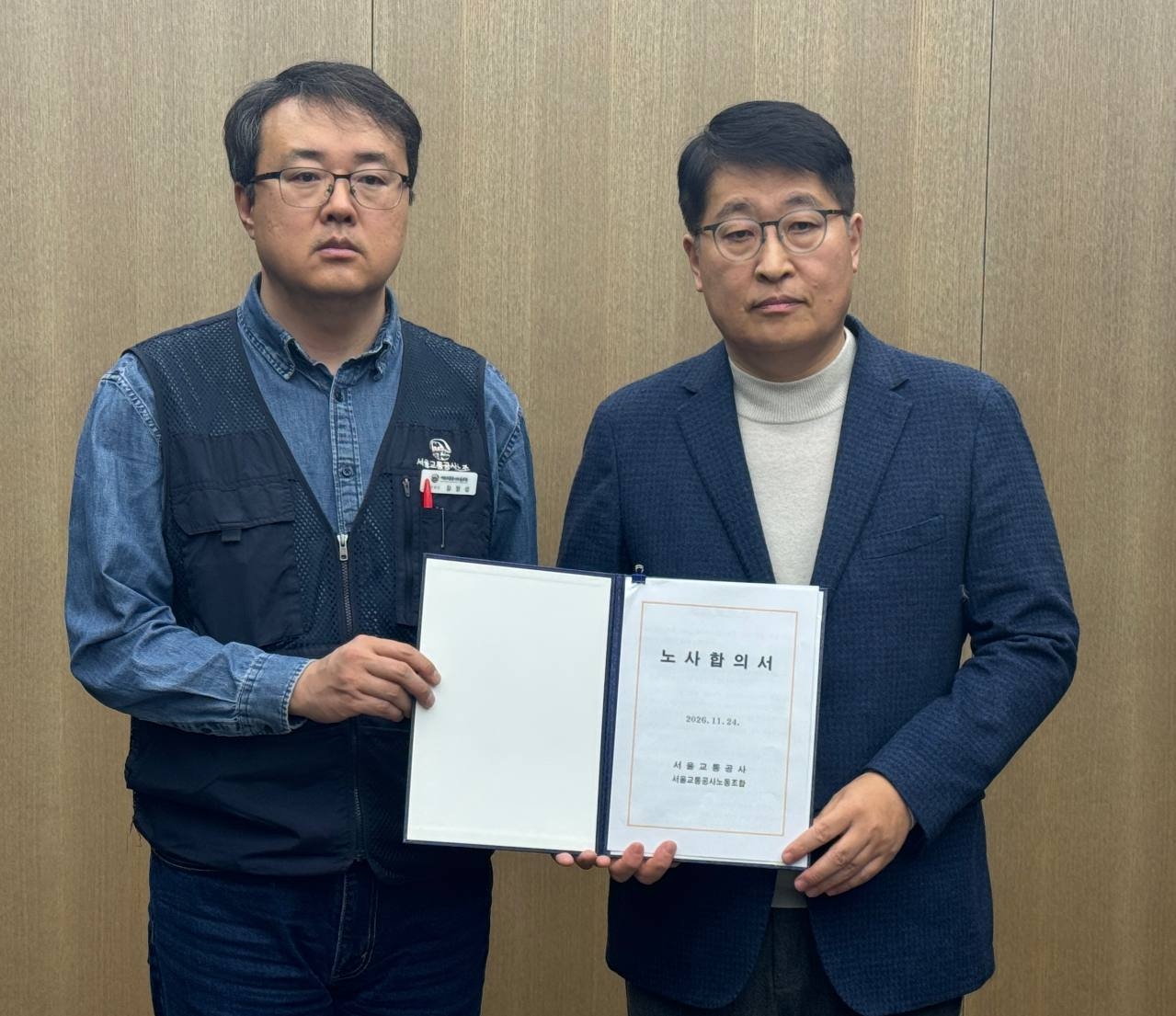
Seoul Metro and its unions reached a wage and collective bargaining agreement just hours before a planned general strike, averting a commuter crisis on the city's subway network. The two sides agreed to raise wages by 3.5 percent, hire 500 new workers and suspend an existing restructuring plan. With all three of the company's unions withdrawing their strike notices, the feared morning rush disruption did not materialize.
Seoul Metro concluded wage and collective bargaining talks Wednesday with three unions — the Seoul Metro Workers' Union (Union No. 1), affiliated with the Korean Confederation of Trade Unions (KCTU); the Seoul Metro Integrated Union (Union No. 2), affiliated with the Federation of Korean Trade Unions; and the Olbareun Union (Union No. 3).
Negotiations between management and Union No. 1 began at the company's headquarters in Seongdong-gu, Seoul, at around 10:04 a.m. Tuesday, with the fourth round of full talks repeatedly suspended and resumed through the night. The two sides signed a labor-management agreement at around 2:40 a.m. Wednesday, roughly 16 hours and 40 minutes after talks began. Union No. 2 and Union No. 3 reached separate agreements with management at around 3:15 a.m. and 4:15 a.m., respectively.
The central sticking point in the negotiations was the scale of workforce reductions and new hiring. Management and the unions agreed to suspend implementation of an existing management reform plan that called for cutting 2,212 positions, and to hire 500 new employees instead.
The unions had demanded 800 new hires, arguing that the existing restructuring plan had already eliminated more than 1,700 positions and left a staffing shortfall of around 800. Through negotiations, the two sides narrowed their differences and settled on 500 new hires.
Wages will rise by up to 3.5 percent against last year's total personnel costs, with increases from seniority-based pay steps reflected separately at up to 1.4 percent. The unions had initially demanded a 6.6 percent wage increase but lowered their demand to 3.5 percent ahead of the final round of talks.
The agreement also calls for establishing a joint labor-management TF to respond to policy changes being pursued by the government and the legislature, including extending the retirement age and shortening working hours. The parties also agreed to improve shift systems for frontline workers in operations, station services and technology, strengthen safety management, and enhance working conditions to support work-life balance, including parental leave.
The unions said the agreement did not meet all of their demands but that they had weighed several factors in accepting it — including the suspension of the restructuring plan, meaningful gains on wages and working conditions, and the disruption a general strike would have caused to the public.
Kim Jeong-seop, chairman of Union No. 1, said the company currently faces a staffing shortfall of around 800 workers and that the union had agreed to 500 new hires. "We will push for swift recruitment so that public safety on the subway is maintained and young job seekers benefit," Kim said.
Unions No. 2 and No. 3 reached agreements on the same terms as Union No. 1 on core issues including the wage increase and new hiring, though some details related to working conditions differ between the agreements.
The three unions had earlier announced they would launch a general strike from the first train of the day if wage and collective bargaining talks broke down. The Seoul Metropolitan Government and Seoul Metro had prepared emergency transport measures in response, including maintaining subway service at 100 percent of normal capacity during the morning rush and 81 percent throughout the day, and expanding city bus operations.
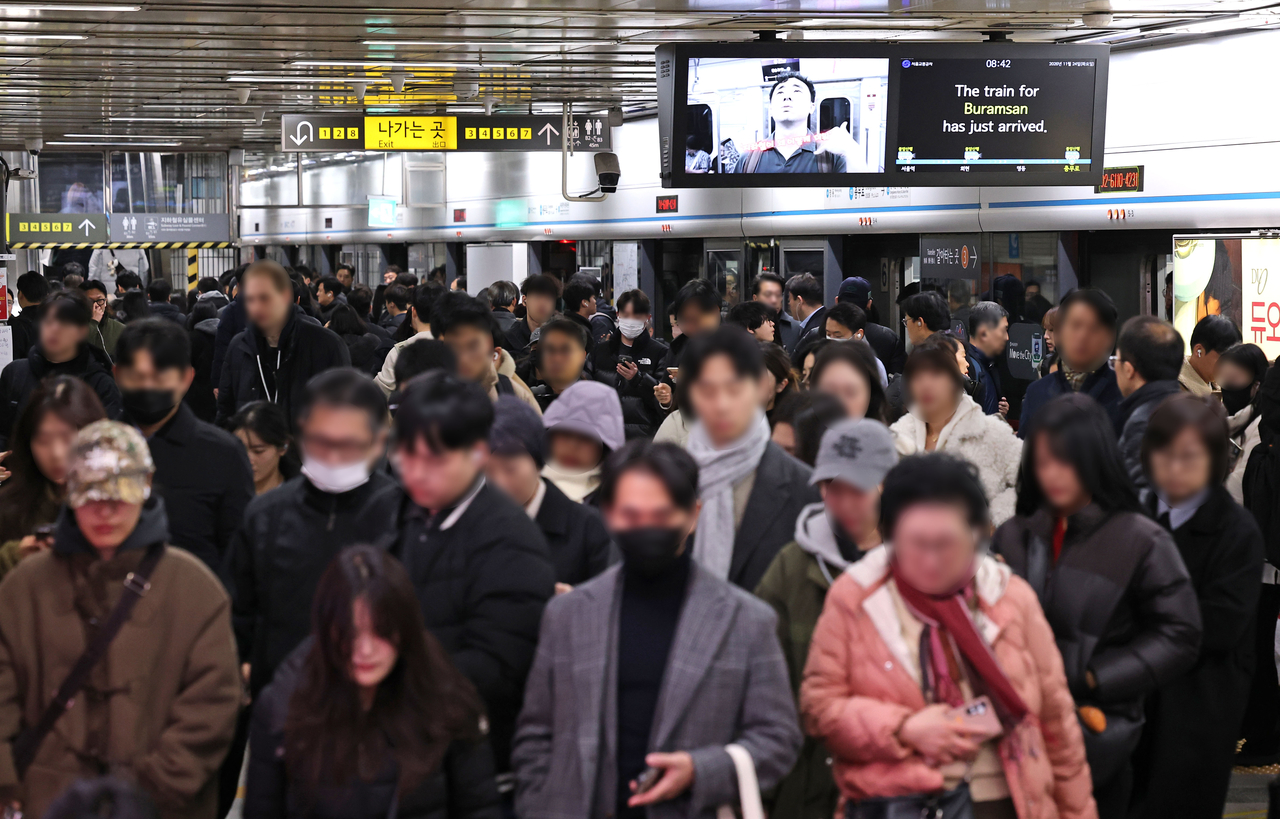
With all three unions withdrawing their strike plans before the first trains of the day, Seoul's subway ran on a normal schedule.
fact0514@heraldcorp.com





