
Redevelopment breakthrough after 20 years — up to 30 stories, 2,521 units planned; 31.96% of project site falls within UNESCO World Heritage buffer zone; district submits petition signed by 1,308 residents to Cultural Heritage Administration and Seoul Metropolitan Government
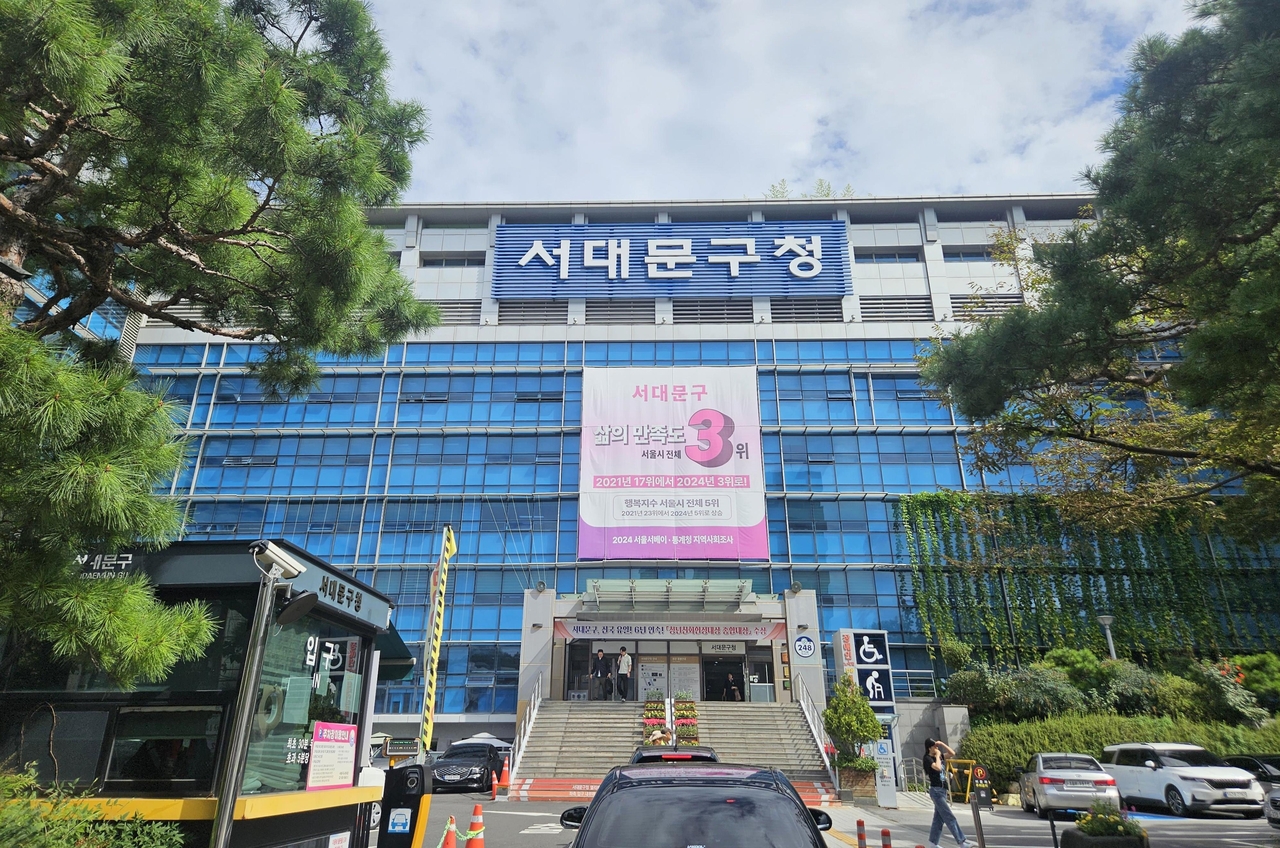
Seodaemun-gu in Seoul is pushing for a buffer zone boundary adjustment and regulatory reform to prevent the pursuit of UNESCO World Heritage designation from derailing a long-stalled redevelopment project in the Gaemi Village area of Hongje-dong.
The district said Wednesday it had formally submitted a proposal to the Cultural Heritage Administration and the Seoul Metropolitan Government this month, backed by signatures from 1,308 residents of affected redevelopment zones, calling for regulatory improvements to protect residents' property rights and prevent further delays to the project.
The area drawing particular concern is the district around 9-81 Hongje-dong, which integrates Gaemi Village, Munhwa Village and the former Hongje District 4 zone.
Since the area was released from development restrictions in 2006, various redevelopment schemes have been attempted — including a private housing construction project, a residential environment management project, a Moa Town initiative and a residential regeneration innovation district — but each has repeatedly run into obstacles, including restrictions on building height to protect the Inwangsan mountain landscape, limits on land-use reclassification and poor project viability.
A breakthrough came Sept. 23, when the Seoul Metropolitan Government finalized its fast-track integrated planning scheme. The city confirmed a plan to merge Gaemi Village, Munhwa Village and the former Hongje District 4 zone into a single redevelopment area, creating a residential complex of up to 30 stories and 2,521 units on a 134,565-square-meter site.
Since Oct. 14, the district has been advancing the plan formulation process, including a public review period and consultations with relevant departments.
New regulatory concerns have emerged, however: 43,020 square meters of the redevelopment site — 31.96 percent of the total — falls within the buffer zone designated for the "Seoul City Wall of Hanyang" UNESCO World Heritage nomination.
The Seoul Metropolitan Government's fast-track plan already incorporates landscape preservation measures, including the restoration of roughly 30,000 square meters of parkland on the slopes of Inwangsan, the securing of visual corridors and building height guidelines that take the Inwangsan ridgeline into account.
A review by Seodaemun-gu found that the area sits 115.3 meters below the fortress wall ridgeline and is largely hidden from the wall by steep terrain, meaning its impact on the heritage landscape is limited.
Given those topographical characteristics and the existing landscape preservation plan already in place, the district argued that the need for additional regulation should be reconsidered, and called for the Gaemi Village area to be excluded from the World Heritage buffer zone.
Concerns extend beyond projects within the buffer zone itself. The Hongje District 4 redevelopment project and the Hongje-Muakjae transit-oriented area redevelopment project lie outside the buffer zone but could still be subject to a World Heritage Impact Assessment depending on the outcome of preliminary reviews.
The district said the scope and criteria for applying impact assessments to areas outside the World Heritage zone remain unclear, potentially leading to building height restrictions, changes to architectural plans and delays in permits. It added that if project association members are required to bear additional costs — including fees for impact assessment studies — project viability could deteriorate and the financial burden on residents could grow.
In response, the district gathered resident input and submitted a proposal calling for: a rational boundary adjustment, including excluding the Gaemi Village area from the buffer zone; clarification of the scope and selection criteria for World Heritage Impact Assessments; revision of the Special Act on the Conservation, Management and Utilization of World Heritage and the guidelines for preparing and operating World Heritage Impact Assessment reports; and regulatory improvements to protect residents' property rights and prevent disruption to redevelopment projects.
Seodaemun-gu District Mayor Park Un-gi said the redevelopment plan for Gaemi Village — crafted by the city with both landscape preservation and project viability in mind — must not be derailed again by the World Heritage designation process. "Rather than demanding one-sided sacrifice from residents of a specific area in the name of the public value of World Heritage designation, we must reform the system so that the preservation of cultural heritage and the lives of residents can both be respected," Park said.
seouldream01@heraldcorp.com





