
AI, semiconductor selloff sustains safe-haven demand
US 10-year Treasury yield hits 2-week low at 4.912%
November consumer confidence at 103.3, far above forecasts
December rate hike probability approaches 100%
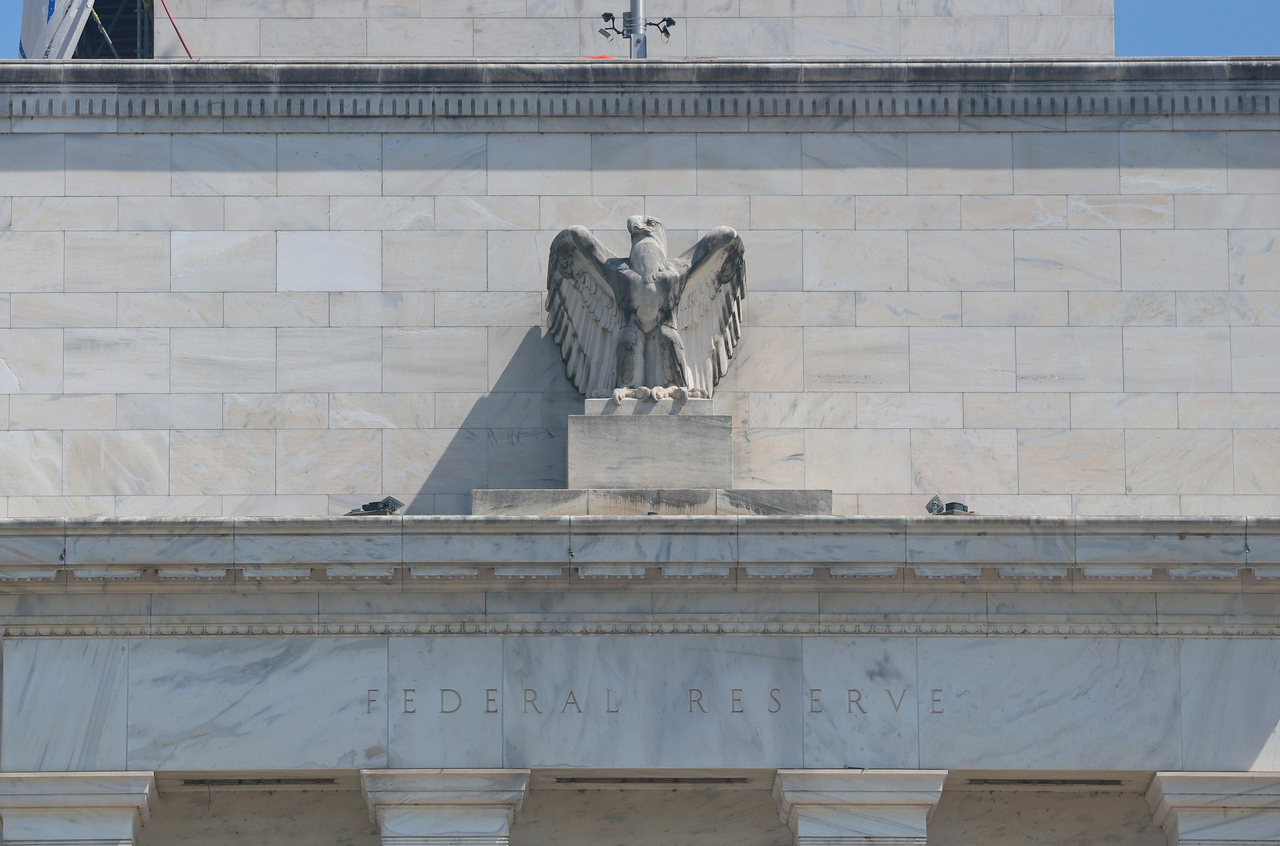
Investors are closely watching the release of the core personal consumption expenditures (PCE) price index — the Federal Reserve's preferred inflation gauge — as a flight to safety triggered by a sharp selloff in AI and semiconductor stocks pushed government bond yields lower across the United States, Europe and Japan.
The yield on the benchmark 10-year US Treasury note fell to 4.912% on Tuesday (local time), its lowest level in about two weeks, according to Investing.com. The 2-year yield, which is more sensitive to Fed monetary policy, was little changed at 4.666%, while the 30-year yield slipped 0.3 basis points to 5.292%. Bond yields move inversely to prices.
Long-term yields fell more sharply than short-term yields, narrowing the spread between the two maturities to about 25 basis points (1 basis point = 0.01 percentage point).
Robust demand for US Treasuries was also evident at auction. The Treasury Department sold $69 billion in 2-year notes on Tuesday (local time) at a yield of 4.700%, slightly below the pre-auction when-issued rate of 4.703% — a sign of strong investor demand.
The bid-to-cover ratio, a measure of auction demand, rose to 2.65 times from 2.59 times at the previous sale. The 2-year yield, which stood at 4.700% just before the results were announced, dipped to 4.696% afterward.
Market attention is now turning to the core PCE price index for October, due Wednesday. The core PCE is the Fed's primary inflation reference when setting monetary policy. It rose 0.3 percent month-on-month in September, and markets expect the same reading for October — though a higher-than-expected print could reinforce the Fed's rate-hiking stance.
A stronger-than-expected reading in US consumer sentiment is also adding to expectations that the Fed will keep tightening for longer. A rebound in consumer confidence could fuel household spending and stoke inflationary pressure, while easing fears of an economic slowdown would give the Fed more room to raise rates further.
The Conference Board said Wednesday that its consumer confidence index rose 11.4 points to 103.3 in November (1985=100), up from 91.9 in October. That was the highest reading since January last year and well above the consensus forecast of 92.2 compiled by Dow Jones.
Some Fed officials have also signaled support for further rate increases. New York Federal Reserve Bank President John Williams, speaking Tuesday (local time) at the College of Mount Saint Vincent in New York, said monetary policy needs to be adjusted "to bring inflation back to our 2 percent goal in a timely and sustainable way," adding that recent economic data show "inflation remains too high" even as the US economy stays on solid footing.
Fed funds futures tracked by the CME Group's FedWatch tool are pricing in a near-certain probability — effectively 100 percent — of a rate hike at the Fed's Dec. 9 meeting. That is up from 89 percent on Friday, when global equity markets sold off sharply. The probability of a 50-basis-point "big step" increase stands at about 5 percent.
yckim6452@heraldcorp.com





