
Share applying to semiconductor contract programs rises from 7.3% to 16.3%
Medical school application share falls from 73.6% to 67.1%
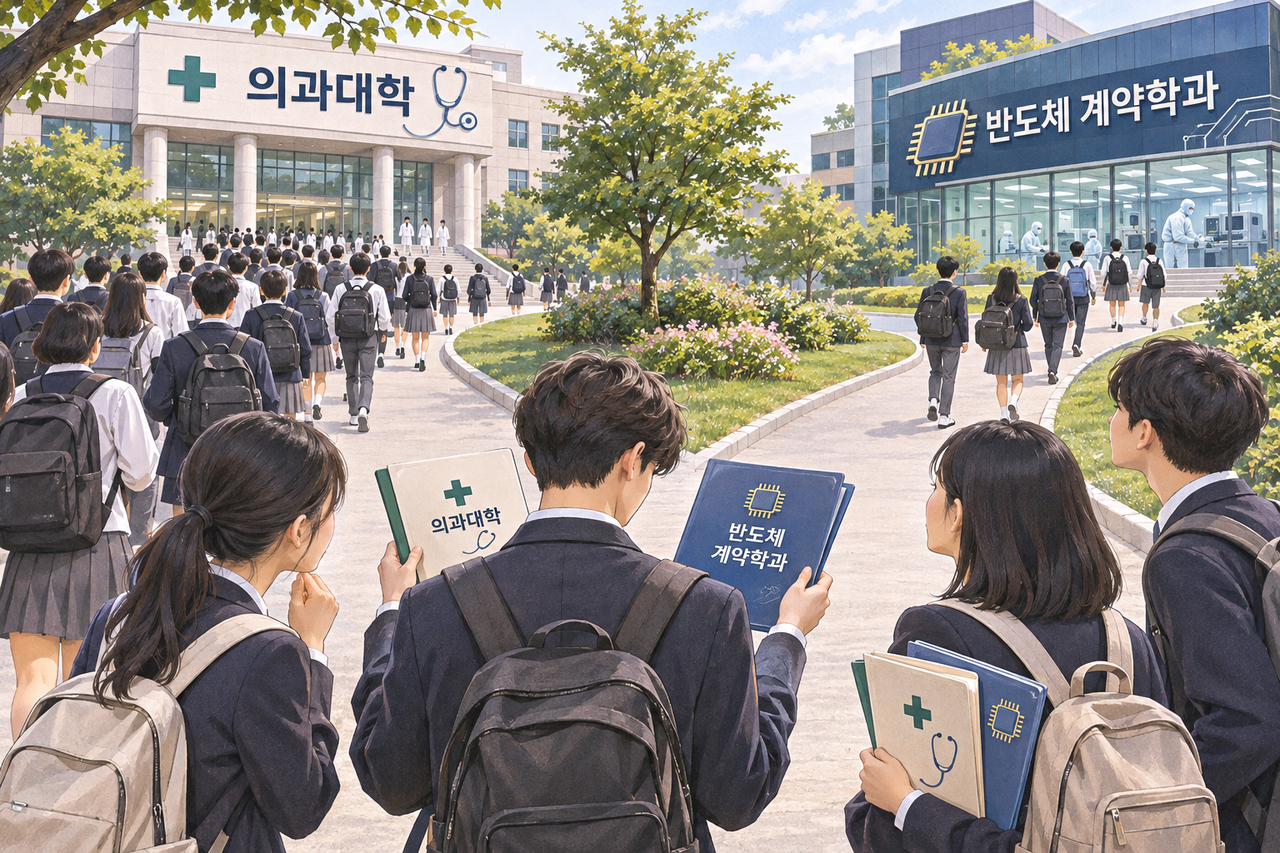
Top-scoring science-track students showed a slight shift away from concentrating their early admissions applications on medical schools this year, with a higher share turning to semiconductor contract programs, according to new data. Analysts say the preference for medical school remains strong, but signs of diversification are emerging.
College admissions consultancy Jinhaksa released Wednesday an analysis of application trends among science-track students who scored in the 1.0 grade band — between 1.00 and 1.09 — on their school-based assessments and disclosed their early admissions choices through the company's service. The science-track classification covered students who completed more science coursework than social studies coursework in high school. The data covered applications for the 2026 and 2027 academic years.
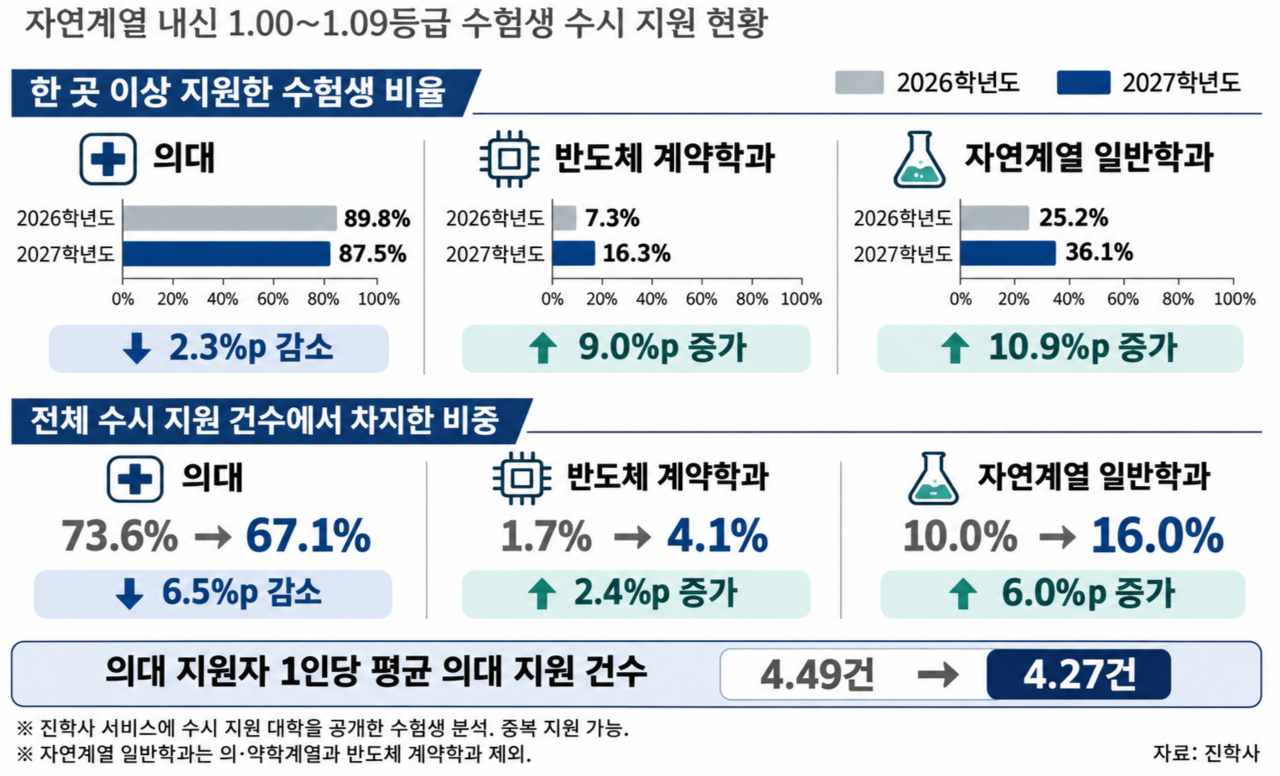
Among those analyzed, the share who applied to at least one semiconductor contract program rose 9.0 percentage points, from 7.3 percent last year to 16.3 percent this year — roughly one in six top-grade applicants. The proportion of all early admissions applications directed at semiconductor contract programs also climbed, from 1.7 percent to 4.1 percent.
By contrast, the share of students who applied to at least one medical school edged down 2.3 percentage points, from 89.8 percent to 87.5 percent. The average number of medical school applications per applicant fell from 4.49 to 4.27. Medical school applications as a share of all early admissions applications fell 6.5 percentage points, from 73.6 percent to 67.1 percent.
Jinhaksa suggested that structural changes in medical school admissions may have played a role. Most of the increase in medical school enrollment slots this year stemmed from the creation of a new regional physician track, while the number of seats filled through the standard early admissions process actually shrank — a dynamic that may have made it harder even for top students to concentrate all their applications on medical schools.
Applications to general science-track programs outside medicine, pharmacy and semiconductor contract departments also increased. The share of students who applied to at least one such program rose 10.9 percentage points, from 25.2 percent to 36.1 percent, and those programs' share of total applications grew from 10.0 percent to 16.0 percent.
However, the findings are based on students who chose to disclose their application information through Jinhaksa's service and may not reflect the full applicant pool. Because students can apply to multiple programs simultaneously, the percentages by program category add up to more than 100 percent.
"Top students still strongly prefer medical school, but there is a growing sense that semiconductor contract programs and other non-medical fields are being actively considered as viable options," said Woo Yeon-cheol, director of the admissions strategy research institute at Jinhaksa. "Given that the number of medical school seats available in the regular admissions round this year is actually smaller than last year, the trend toward diversification seen in early admissions could well carry over into the regular round."
brunch@heraldcorp.com





