
A recent report comparing the golf course industries of South Korea and Japan, published by the Korea Leisure Industry Research Institute, lays bare the crisis gripping domestic golf. The average weekday total cost per round in South Korea stands at 228,900 won ($170) — 3.9 times Japan's 59,300 won. Green fees alone come to 167,600 won, roughly three times the Japanese rate. Despite South Korea having about 4.99 million golfers compared to Japan's 3.6 million, Korean golfers average just 9.4 rounds a year, barely half Japan's 16.9.
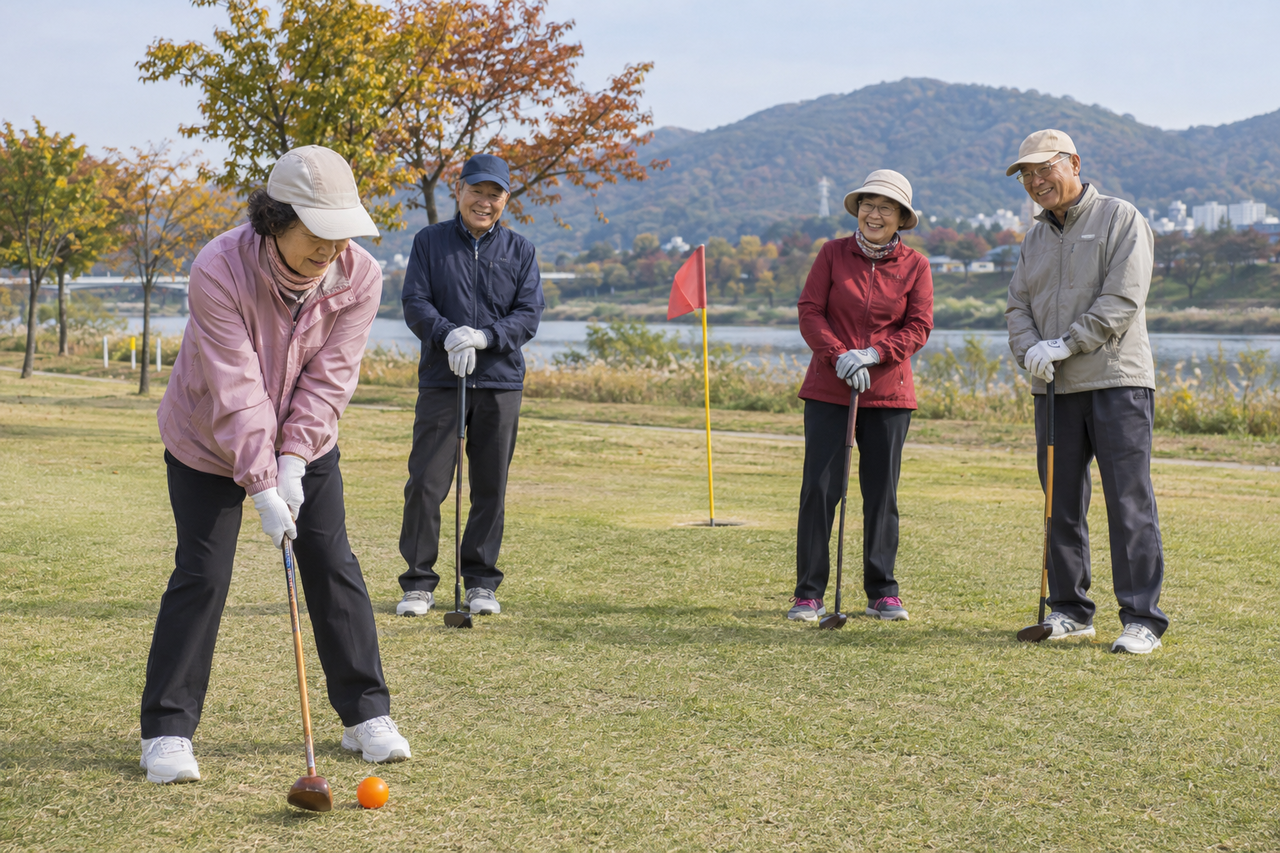
Visitor numbers at domestic golf courses peaked in 2022 and have been declining for three consecutive years. Frustrated by the cost, many golfers are heading abroad — to Japan and elsewhere — in search of affordable, pleasant rounds. The Korean golf industry, once likened to a goose that lays golden eggs, has become ensnared in the high-cost trap it built for itself. What makes this all the more striking is that while traditional golf courses groan under steep barriers to entry, an entirely different story is unfolding on the other side: park golf, which is growing at a remarkable pace, driven largely by seniors.
Just a few years ago, park golf was seen as little more than a modest pastime for elderly residents along neighborhood riverbanks. It has since established itself as a mainstream recreational sport and a major consumer industry catering to seniors. When registered members of the Korea Park Golf Association are combined with unregistered enthusiasts, the total is approaching 1 million. The Cheongju City Park Golf Association alone, of which this columnist is a member, counts 6,000 members. The number of park golf courses nationwide has grown to more than 560, and related merchant transactions have surged more than 110 percent over the past two years, capturing both the wallets and the footsteps of seniors across the country.
The diverging fortunes of traditional golf and park golf ultimately come down to the height of the barrier to entry. Traditional golf demands upward of 200,000 won and half a day or more for a single round. Park golf, by contrast, is free for local members and costs only around 5,000 to 10,000 won for visitors from other areas. Walking the fairways on foot — no caddie, no cart — provides a solid aerobic workout, while the compact swing mechanics place minimal strain on the joints. It is little wonder that retirees and middle-aged adults looking after their health have embraced it so enthusiastically.
Above all, park golf's greatest appeal is that anyone — even someone who has never touched a traditional golf club — can reach the highest level through steady, dedicated effort. Becoming a tour professional in traditional golf requires close to 1 billion won, and even then the odds of success are no more than 1 to 2 percent. Park golf is a completely different world. Precision and feel matter more than the power needed for long drives, and with fewer variables in play, anyone who shows up at the course every day for five to ten years can attain elite-level skill and a reputation to match.
In practice, a significant number of South Korea's current top-ranked park golfers have no background in traditional golf whatsoever. Prize money at park golf tournaments has grown to rival that of the Champions Tour — the senior professional circuit — while additional expenses beyond accommodation and meals are almost nonexistent. This columnist has competed on the Champions Tour for years, but in terms of value for the investment, park golf wins by a wide margin.
This enthusiasm is reshaping local economies and everyday life. This year, 3,500 people from across the country sat the Ministry of Culture, Sports and Tourism's practical examination for lifestyle sports instructor certification at the Miho River course in Cheongju, while 900 candidates turned out for the disability-course referee qualification exam. Every time a tournament or examination is held, nearby accommodation fills up and local restaurants thrive. It is no surprise that local government heads are racing to make park golf course construction a centerpiece of their campaign pledges.
That said, park golf still has considerable challenges to overcome before it can take root as a sport for the ages. Course infrastructure remains insufficient relative to the rapidly growing number of enthusiasts, reservation battles are fierce in the Greater Seoul area, and there is an urgent need for systematic etiquette and rules education for newcomers.
Particularly troubling is a distorted market ecosystem built around overpriced equipment, and it must be corrected. The performance differences among park golf clubs on the market are negligible. Clubs that cost around 300,000 won to manufacture are being sold for 1 million to 3 million won — a markup that amounts to profiteering at the expense of seniors. For a park golf club to justify a production cost exceeding 400,000 won, it would practically need gold or diamonds set into the head. The price bubble in equipment must be deflated, and golfers who assume that expensive automatically means better need to rethink that assumption. Ninety percent of what determines the outcome is the player's skill; the club accounts for no more than 10 percent.
The era of rapid expansion is giving way to a moment that calls for qualitative maturity. The essence of sport lies not in the display of a privileged few but in the enjoyment and health of the many. Just as the excessive costs and high-handed practices of traditional golf courses paradoxically fueled park golf's rise, the sport's advance into everyday life — through a lowered threshold — reminds us of what sport is truly for. A slightly imperfect scorecard hardly matters. The simple fact of being able to walk green fairways with good companions, club in hand, is a blessing in itself. There is no better time to start park golf than now. No one has failed to encounter the opportunity — they have simply not yet seized it.
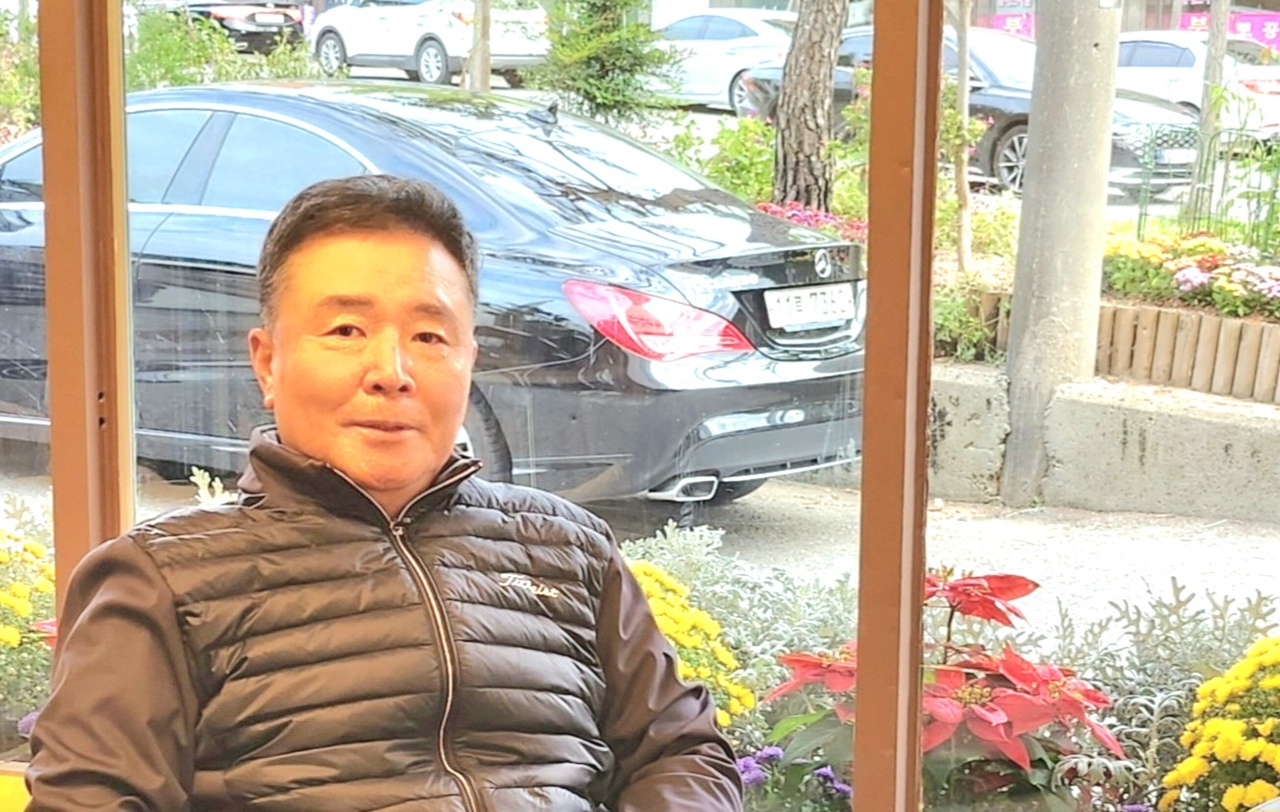
*Kim Ki-ho, who writes under the pen name Eobu Vito, is an active professional currently competing on the KPGA Champions Tour. A popular columnist whose byline has been recognized since his days at Golfskycom, he will share insights on golf and life with readers. Your continued support is appreciated.
sports@heraldcorp.com





