
Experts say OS has built a foundation to compete with Android and iOS; global market share remains at 5%
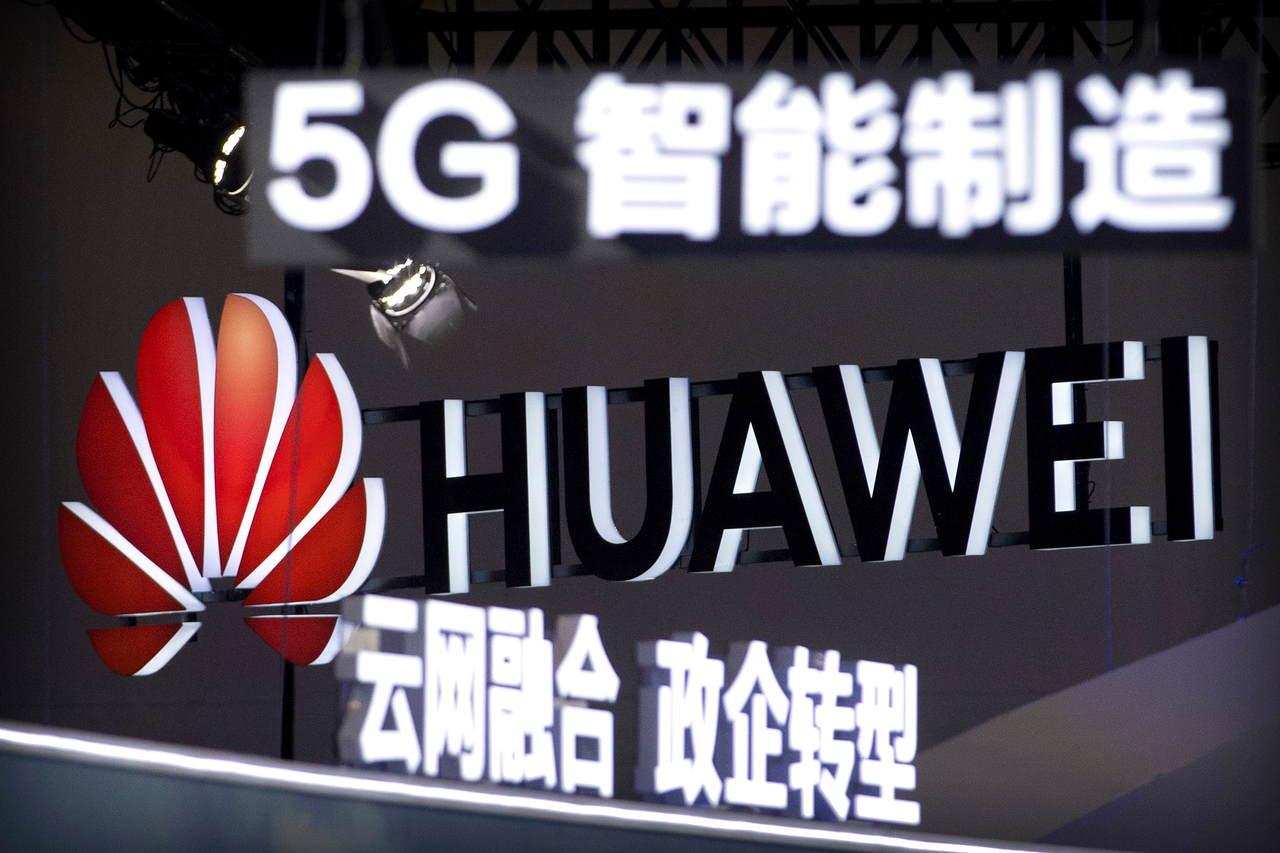
The number of devices running the latest versions of HarmonyOS — the proprietary operating system developed by Chinese telecom equipment maker Huawei in response to US technology sanctions — has surpassed 100 million.
Huawei announced Tuesday that smartphones, tablet PCs and personal computers running HarmonyOS 5, 6 and 7 had collectively exceeded 100 million units, according to China's state-run Global Times on Wednesday.
The HarmonyOS ecosystem now offers more than 460,000 applications and services and has attracted more than 12 million registered developers.
Huawei Executive Director Yu Chengdong described the milestone as "a landmark moment" on Chinese social media platform Weibo. Yu said the HarmonyOS ecosystem had crossed a critical threshold in scale and entered a new phase of enhanced technical maturity, improved usability and innovation-driven growth.
Industry analyst Liu Dingding told the Global Times that the achievement "demonstrates the further expansion of the HarmonyOS ecosystem and lays a solid foundation for competing with mainstream mobile operating systems such as Android and Apple's iOS."
Huawei first unveiled HarmonyOS in 2019, after the US Commerce Department placed the company on its export control list and Google announced it would suspend some business cooperation with the firm.
Built on an independent architecture, HarmonyOS uses neither the Linux kernel nor Android open-source code, instead relying on a self-developed OS kernel, programming language and AI framework, according to Xinhua News Agency.
Chinese experts said the milestone symbolizes the country's push for technological self-reliance and independent innovation in the face of US technology sanctions.
Xiang Ligang of the Zhongguancun Modern Information Consumption Application Industry Technology Alliance told the Global Times that the mobile OS market at the time was in effect dominated by Android and Apple's iOS, and that a supply cutoff could have left not only Huawei's smartphone business but all of China without an operating system it could independently control.
"Huawei's development shows that US efforts to suppress Chinese technology have not succeeded and have, to some extent, actually spurred China to expand investment in key areas such as operating systems and semiconductor design and manufacturing," Xiang said.
Analyst Liu said HarmonyOS could further strengthen China's domestic software and hardware ecosystem by spurring innovation across related industries, including Huawei's Kirin semiconductors, Chinese-made memory chips, display panels and HarmonyOS-native applications.
However, some observers note that HarmonyOS's growth has been concentrated in China's domestic market, and it remains uncertain whether the OS can shake the global duopoly held by Android and iOS.
HarmonyOS held a 24 percent share of China's smartphone market by sales volume in the second quarter of this year, surpassing Apple's iOS at 18 percent, according to market research firm Counterpoint Research. Its global market share, however, was limited to 5 percent, compared with 75 percent for Android and 20 percent for iOS.
Caixin, a Chinese financial media outlet, noted in a recent in-depth report on Huawei that the lack of Google Mobile Services and a shortage of widely used international applications remain persistent obstacles to HarmonyOS's expansion in overseas markets.
mokiya@heraldcorp.com





